
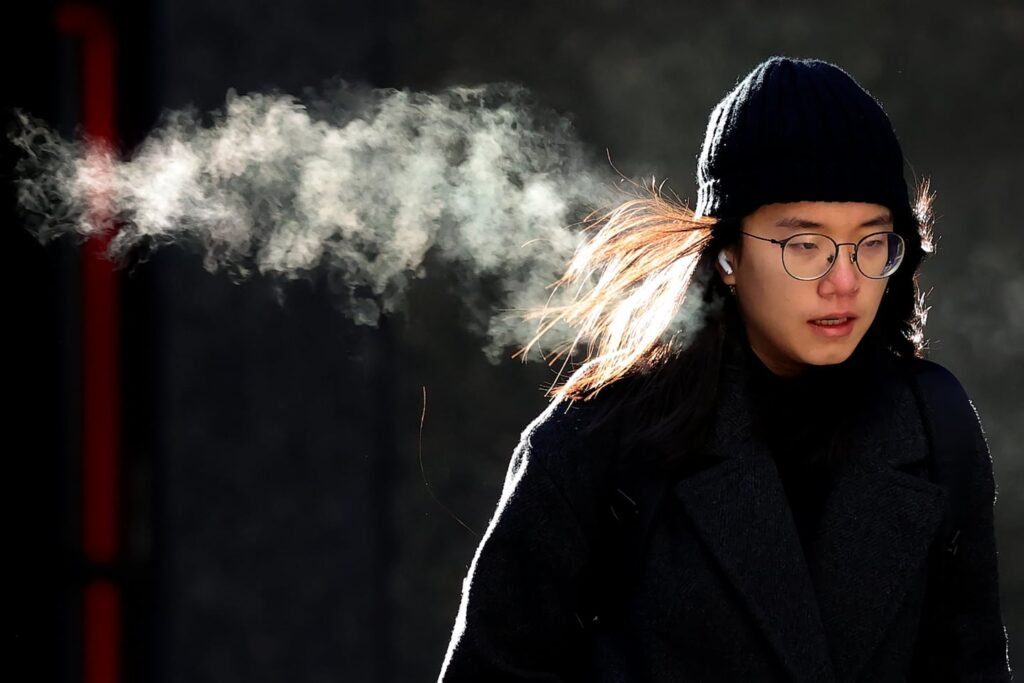
Michael Rawlins, associate director of the Climate System Research Center at University of Massachusetts Amherst, said these disruptive cold spells might make some wonder, “What happened to global warming?”
“It’s still happening,” he said. “But that doesn’t mean that you’re not going to get these extreme cold outbreaks.”
This December marked the coldest in years for parts of New England. The region kicked off the month with an early winter snowstorm and strong blasts of Arctic air that drove record-setting low temperatures. More cold snaps followed, culminating in an icy New Year’s Eve complete with snow showers. In Boston, temperatures in the city averaged slightly below freezing at 31.3 degrees Fahrenheit, making it the chilliest December since 2017.
Still, 2025 was on the whole one of the hottest years on record. Global temperatures have continued to surge, driven by the burning of fossil fuels that release vast amounts of planet-warming emissions. Last year also marked the first time that the three-year temperature average exceeded 1.5 degrees Celsius above pre-industrial levels, a key warming threshold set by nations in a landmark treaty on climate change that seeks to avert its worst impacts.
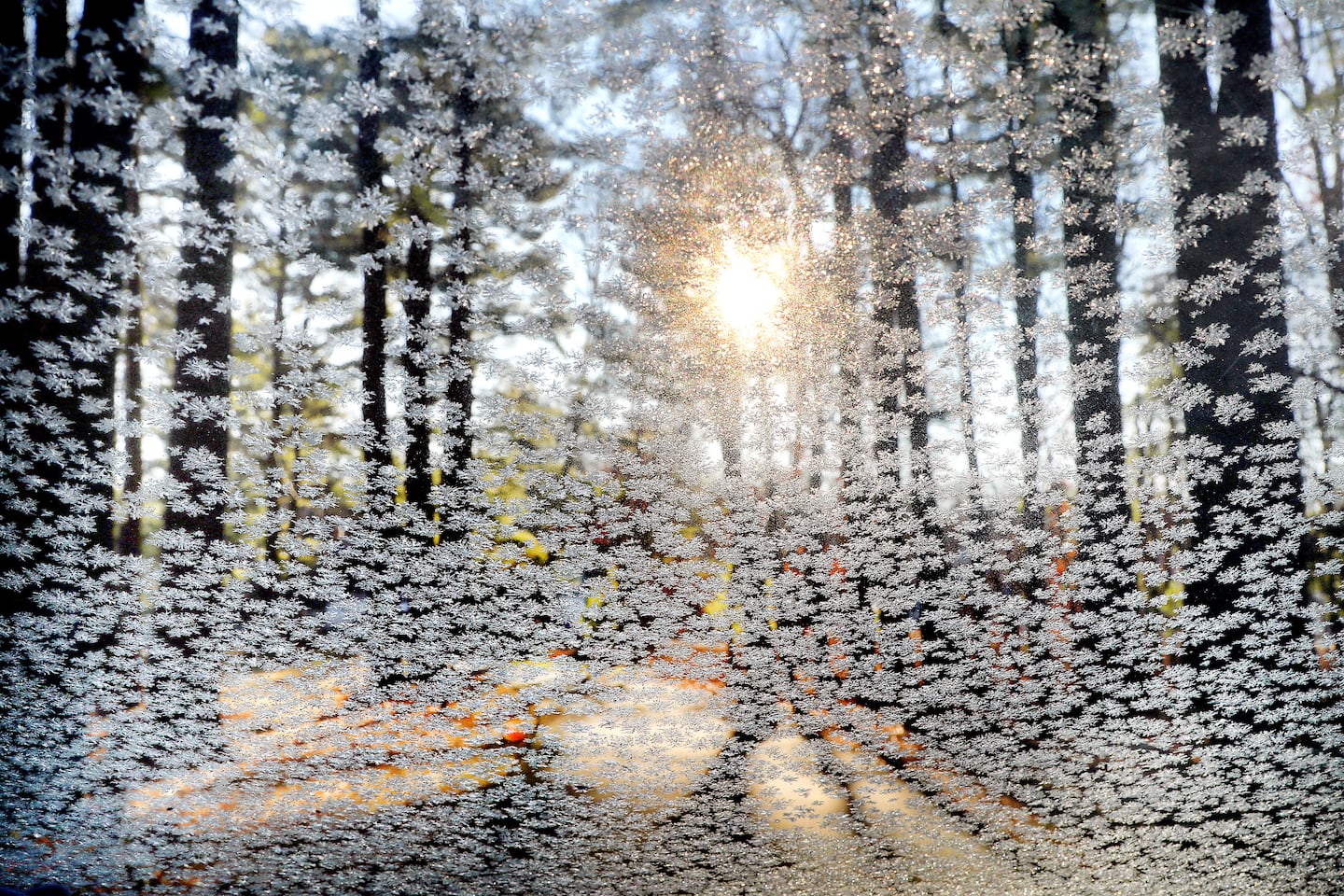 Frost covers the windshield of a car in Pembroke on Dec. 9.John Tlumacki/Globe Staff
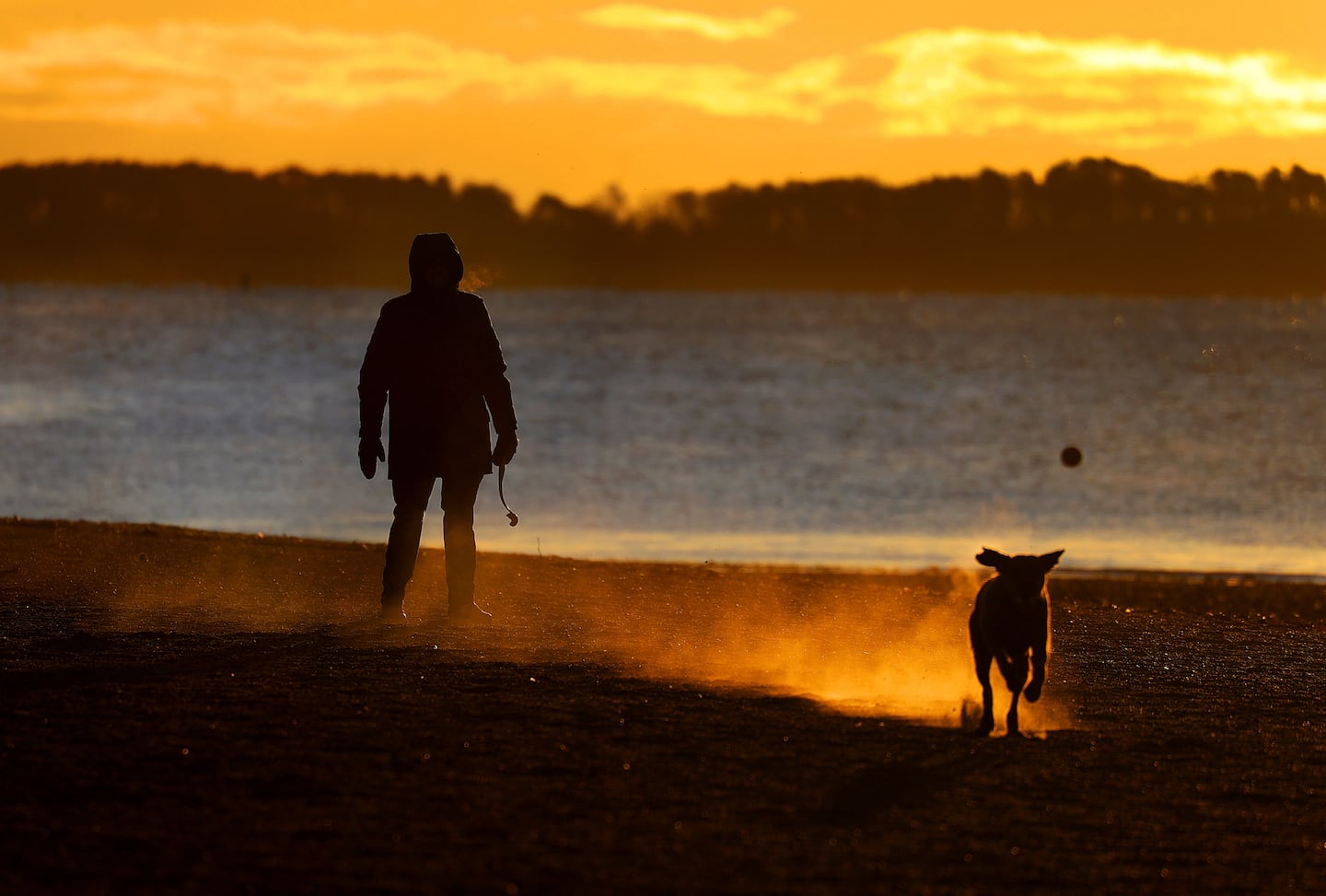 Tim O’Rourke watches his dog, Nollie, as they played on a South Boston beach.David L. Ryan/Globe Staff
To understand how a warming climate can unleash such bitter cold, some climate experts are looking north.
Some research suggests that rapid warming in the Arctic can make the polar vortex, a mass of frigid air swirling above the North Pole, more likely to stretch down over North America. As climate change warms the Arctic faster than the rest of the planet, the ice floating on the Arctic Ocean is disappearing, which may be causing the polar vortex to weaken or become elongated more often.
Sitting farther south is the polar jet stream, fueled by the temperature contrast between the Arctic and temperate regions. As the Arctic warms, that temperature difference is shrinking, potentially making the jet stream more likely to meander and driving certain extreme weather patterns.
Jennifer Francis, a senior scientist at Woodwell Climate Research Center in Falmouth, first proposed this idea in a 2012 paper. Since then, hundreds of studies have been published on the subject. Though there is a consensus that climate change is influencing the jet stream, the field is still evolving, and it is too soon to say whether climate change is responsible for any specific cold spell.
“We’re still trying to untangle all the different bits and pieces that make these interactions work in the atmosphere,” Francis said.
Francis said that this year, a marine heat wave in the North Pacific Ocean and the lack of sea ice in the Arctic Ocean north of Scandinavia — both exacerbated by global warming — could be creating patterns in the jet stream that drive colder weather in the Northeast. She said the polar vortex this December has been periodically stretching down over North America, reinforcing cold spells.
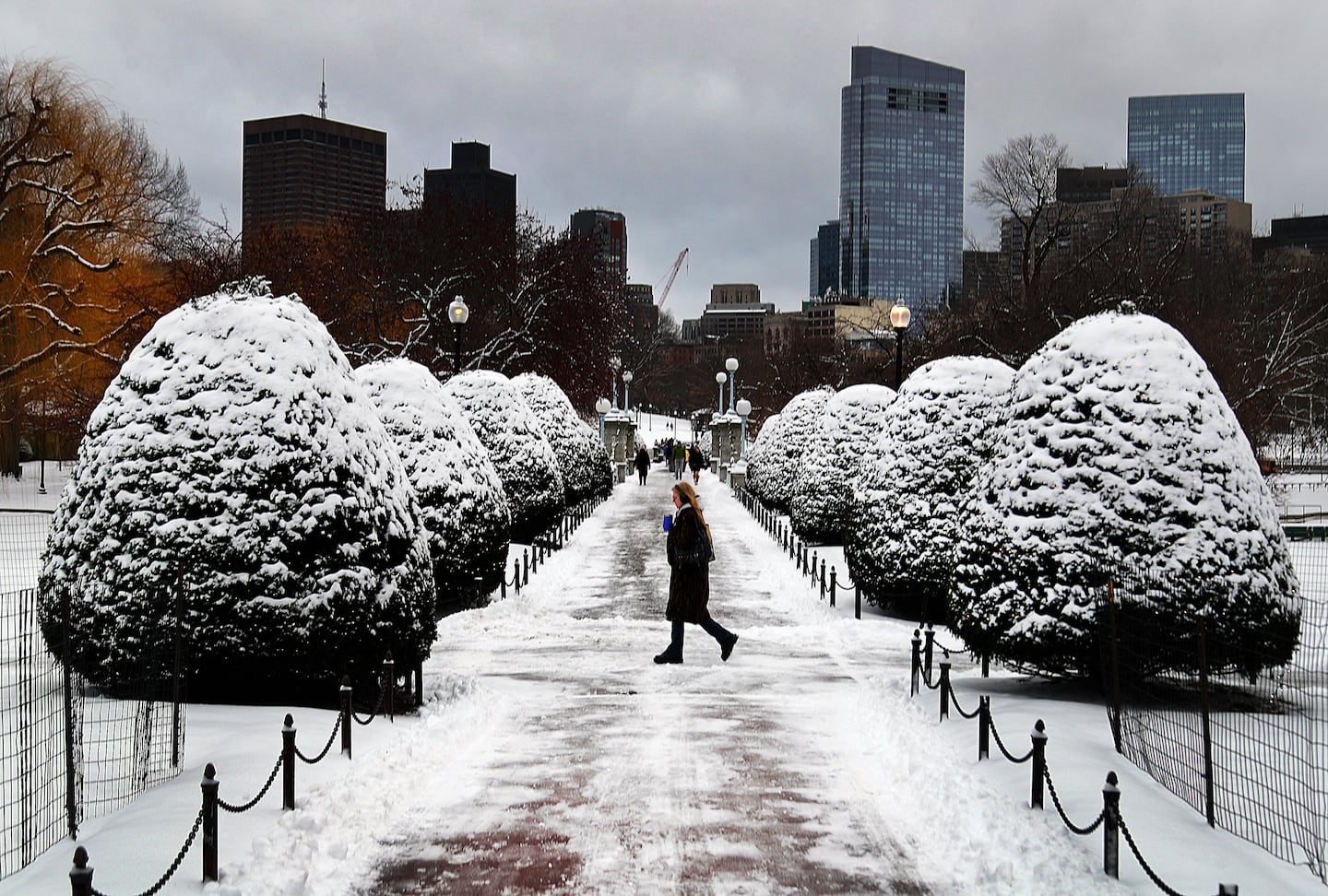 A woman walks through the Public Garden in Boston on Dec. 27.John Tlumacki/Globe Staff
Not all researchers agree. A Dartmouth team challenged the idea that the jet stream’s recent meandering waves are unusual in a study published in June. They analyzed the jet stream’s winter variability since 1901 and found that the jet stream was wavier — bending off of its relatively straight course — during periods of the 20th century than it is today.
“We don’t think there’s strong evidence yet that climate change is making this sort of cold snap and jet stream waviness more intense,” said Jacob Chalif, a Dartmouth graduate student and co-author. “At least not yet.”
Some experts pointed to the current La Niña conditions, a climate pattern marked by below-average sea surface temperatures across swaths of the Pacific Ocean, as another cause for the cooler weather. El Niño and La Niña events occur irregularly, every two to seven years on average.
Ambarish Karmalkar, a geosciences assistant professor at the University of Rhode Island, said La Niña winters have brought chillier temperatures in the past, but December’s La Niña was relatively weak, and there is significant variability in how the climate pattern impacts local temperatures.
“There is no one variable that could explain everything that we experience regionally in temperatures,” he said.
Expectations for how the winter should feel may also have changed as the region warms. According to a study published in early December, New England has already warmed by more than 4.5 degrees Fahrenheit since 1900, making it one of the fastest-warming regions in the world. In Massachusetts, the state has lost about 30 days with snow on the ground annually since the early 2000s.
“Even as New England warms in the long run, we’re still going to experience record lows, snow storms, and cold months,” said Stephen Young, a professor of environmental sustainability at Salem State University and lead author. “But it’s very clear from the data that we are warming up.”
Michael Iacono, the chief scientist at Blue Hill Observatory in Milton, said the coldest December on the observatory’s record was in 1989, when temperatures averaged 17.4 degrees Fahrenheit. The final mean temperature recorded there for December 2025 was 28.9 degrees.
“That’s extreme,” he said. “We’re nowhere near those conditions.”
The year as a whole, he said, averaged about 50 degrees, making it the coldest year since 2019. The five years in between were the warmest five-year period on record at the observatory, which maintains a climate record that dates back to 1885.
The cold and dry weather of December is expected to continue at least through the start of January. But New England could see some relief later in the month.
Forecasters at the National Oceanic and Atmospheric Administration predicted that much of southern New England could be in for a warmer-than-normal winter. The rest of the region has a roughly equal chance of above or below normal temperatures.
Kate Selig can be reached at kate.selig@globe.com. Follow her on X @kate_selig.