
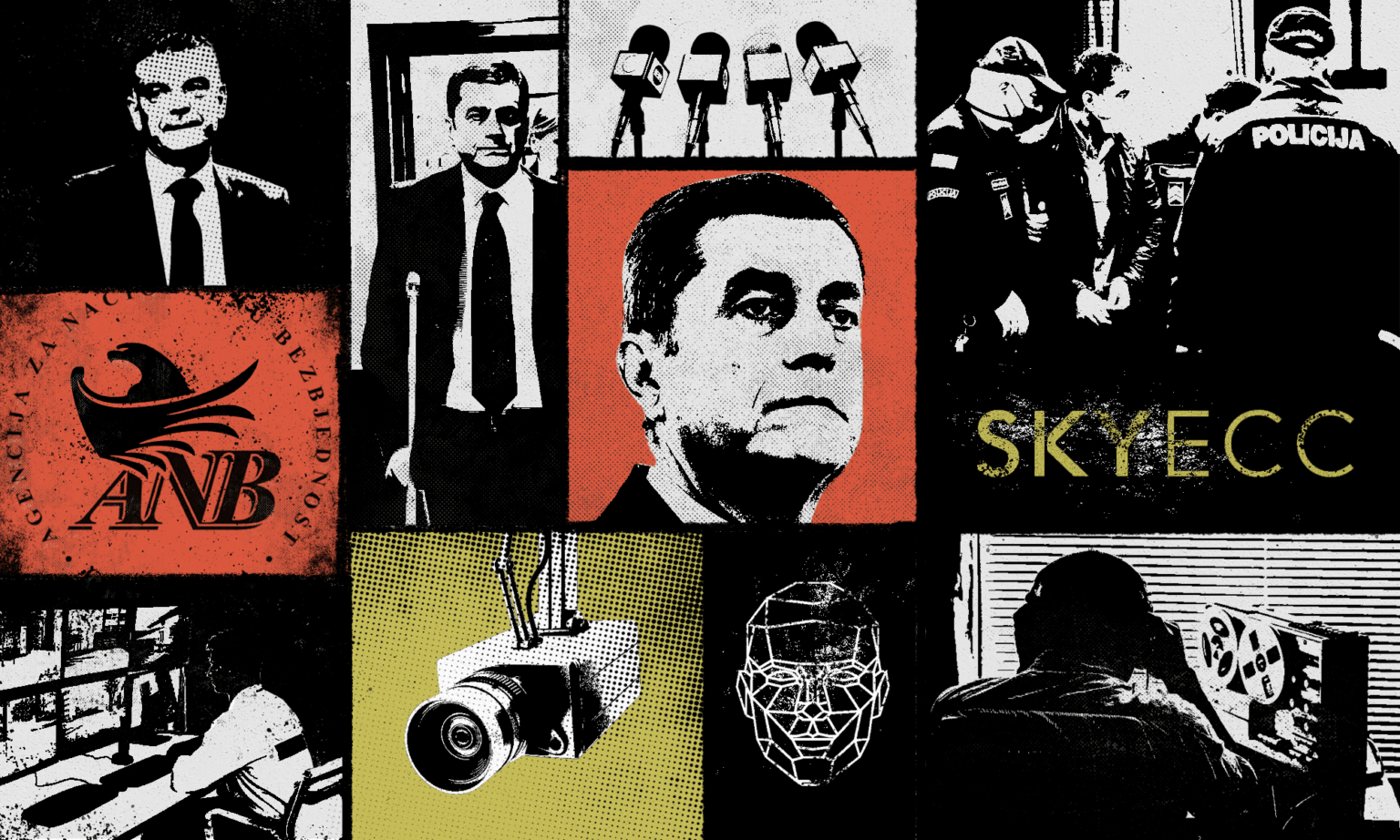
Last year, citing official data, Vijesti reported that a total of 775 ‘special investigative actions’ were conducted in Montenegro in 2022-2023, involving wiretapping and covert photography.
As a result, however, indictments were filed against just 34 individuals, raising questions about proportionality and oversight.
“Special investigative measures must be used only when no other method can achieve the objective and with full respect for proportionality,” said criminologist Velimir Rakocevic. “In practice, the reasons for ordering surveillance are sometimes insufficiently specified, yet courts still approve them.”
Authorities have also introduced surveillance cameras in public spaces in the capital Podgorica and the coastal towns of Bar and Budva.
The equipment, supplied by Israeli company AnyVision [since renamed Oosto], includes facial recognition software, though the police say they do not use this feature and the cameras are only there for traffic safety.
Nevertheless, civil society groups say the potential for misuse is high. Suljevic said it is not only the police operating security cameras in public places in Montenegro.
“There have been cases, like in Kotor, where significant parts of the city were under illegal video surveillance, reportedly installed by criminal clans,” he said. “Even after the cameras were removed, no one was held accountable.”
He warned that introducing facial recognition software without reforming the security sector would pose “a serious risk to privacy and democracy”.
In 2017, the European Court of Human Rights ruled that Montenegro’s installation of cameras in university lecture halls without university consent violated the right to privacy.
Suljevic said it is not only domestic political actors who have an interest in abusing surveillance technology in Montenegro, which is a member of NATO but is also subject to significant influence from neighbouring Serbia via pro-Serbian political figures currently sharing power.
“It is an open question whether surveillance systems could serve not only internal political control but also the interests of foreign actors, such as Russia or Serbia, or criminal clans,” he said.
The public, he added, remains insufficiently aware of its rights when it comes to privacy.
“Violations of privacy often go unrecognised and unreported,” he said. “Real protection requires not only legal frameworks but also public education and stronger institutional capacity.”
The EU Delegation in Podgorica said it was “closely” monitoring legislative and institutional developments in Montenegro’s intelligence sector.
“Measures must be lawful and justified by concrete needs, ensuring respect for fundamental rights,” the delegation told BIRN in a written response.
Komnenic, the journalist, expressed scepticism about the readiness of the parties now in power to break with the practices of the DPS.
“When we talk about security,” he said, “we are living in total anarchy, which they exploit in ways we can only guess at.”