
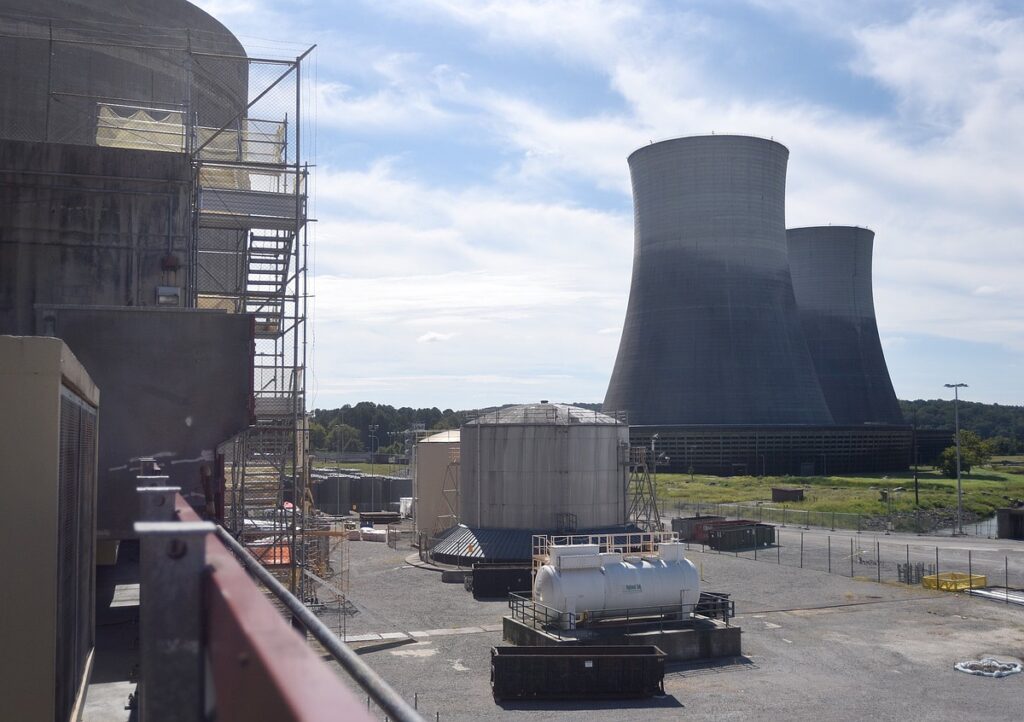
While a release of radiation from the Sequoyah Nuclear Plant in Soddy-Daisy is unlikely, it’s not impossible.
That’s why the Tennessee Valley Authority sends annual calendars to residents within 10 miles of the nuclear plant in partnership with state and local emergency management offices.
The calendars include safety information for neighbors of nuclear plants. TVA, the nation’s largest government-owned utility, owns and operates the Sequoyah plant. Of TVA’s three nuclear plants, Sequoyah, north of Chattanooga, is the closest to a major city.
(READ MORE: See inside Sequoyah plant with $140M new generator)
“We expect Sequoyah Nuclear Plant to operate safely,” this year’s calendar says. “However, if an emergency occurs at the plant, TVA will inform state officials at once.”
The most recent major nuclear accident in the U.S. occurred at the Three Mile Island plant in Pennsylvania in 1979. No plant workers or members of the public had detectable health effects of the small release, according to the U.S. Nuclear Regulatory Commission.
The Three Mile Island accident changed safety guidelines in the highly regulated nuclear power industry, which supplies around 20% of electricity in the U.S. and is headed for a possible major expansion.
The Sequoyah plant generates enough electricity for 1.3 million homes and employs around 840 full-time workers.
Here are nine things the public should know in the event of a nuclear emergency, according to this year’s calendar.
EMERGENCY LEVELS
There are four classifications of nuclear emergencies established by the U.S. Nuclear Regulatory Commission and adopted by TVA and the state of Tennessee.
— Notification of Unusual Event: This event poses no safety threat, but is out of the ordinary and reported to federal, state and local authorities.
— Alert: This event could reduce safety at the plant, and emergency agencies are alerted, but backup systems are working and no action is needed by the public.
— Site-Area Emergency: This event means a significant problem has occurred with plant safety systems that could lead to a release of radioactivity, so sirens may be sounded, alerting the public to listen to radio or TV updates.
— General Emergency: This event has compromised safety systems and a release of radioactivity is likely, so state and local authorities are activated and nearby residents will be told to shelter in place or evacuate.
SIRENS, ALERTS
The Tennessee Emergency Management Agency operates sirens within a 10-mile radius of the Sequoyah plant.
The sirens are part of the “prompt notification system,” which is designed to direct people to emergency alert system stations on their radio or TV. The primary emergency alert radio station in the area is WUSY-FM (100.7) in Chattanooga.
The state’s emergency management agency can send text messages that include the nature of the emergency and what actions should be taken. The calendar includes a link to sign up for Hamilton County emergency alerts.
A siren or text alert does not mean residents should evacuate. It means residents should tune in to look for instructions.
Just because residents hear sirens doesn’t mean there’s an emergency, however. The state agency tests the sirens on the first Wednesday of every month at noon, and the calendar marks these days.
‘STAY INSIDE’
One of the main actions residents may be asked to take in the event of an emergency at Sequoyah is to go inside and stay inside until further notice.
In this event, residents should close doors and windows, shut off systems that draw air into the house and check on neighbors if they are told it’s safe to be outside. Residents should not use the phone unless they have an emergency, so that lines can stay open for official business.
Even if residents are staying inside, they should make plans to evacuate.
EVACUATION ORDER
If authorities take the more drastic step of ordering evacuations, residents should remain calm and not rush, according to TVA and emergency agencies.
As residents leave, they should lock the house and tie a white cloth or towel on the door to alert emergency management officials that everyone is evacuated.
Residents should use their own transportation or ride with a neighbor, keeping windows up and air vents closed and listening to emergency updates.
Local police officers will secure the evacuated area, not allowing unauthorized people in, and state radiological health officials will monitor the area and notify residents when it is safe to return.
If an evacuation is ongoing, residents who were not ordered to evacuate should stay off the road.
WHAT TO PACK
TVA and emergency management officials provide this list of what to pack before leaving your home following a nuclear evacuation order:
— TVA emergency calendar
— Medications
— Personal hygiene products
— Foods that meet diet restrictions
— Blankets and pillows
— Cash, credit cards and important documents
— Items for kids (like toys or books)
— Change of clothes
— Potassium iodide tablets
The tablets can limit the amount of radioactive iodine absorbed by the thyroid gland. Residents within 5 miles of the Sequoyah plant can pick up the tablets at the Health Department on Third Street in Chattanooga.
WHERE TO GO
The 10-mile emergency planning zone around the plant is broken into 28 sectors with their own evacuation routes and destinations, which are each local schools.
The routes are along Highway 27, State Route 58, Mowbray Pike, Hixson Pike, Middle Valley Road, Georgetown Road, Harrison Pike and South Lee Highway. In a nuclear emergency, the routes will be patrolled by law enforcement.
The routes and destinations can be found listed in the calendar and on TVA’s website.
SCHOOL RELOCATIONS
First priority in a nuclear emergency would be the safety of children, according to TVA and emergency agencies.
Schools and childcare facilities in the 10-mile zone around the Sequoyah plant are paired with another facility for relocation. Children will be under the supervision of school officials during relocation.
(READ MORE: Senate confirms four Trump nominees, restoring quorum)
The list includes one school and one childcare facility in Bradley County and 26 schools and 17 childcare facilities in Hamilton County.
FARMING, GARDENING
It may be difficult for gardeners to save plants that were not already harvested before the nuclear emergency, though these plants should be washed and peeled if used. Crops that were already harvested should be stored inside.
Livestock farmers should take care of milk animals first and provide as much shelter to animals as possible. Farmers should use stored feed when possible.
RADIATION LIMITS
Radiation exists in the natural environment, and the average American is exposed to around 620 millirem of radiation each year. The Nuclear Regulatory Commission limits individual doses of radiation to 5,000 millirem a year, measured across the body.
TVA sets a limit of 1,000 millirem a year for any worker, and additional exposure requires written approval, the calendar said. Surveys around TVA plants have shown no increase in radiation above normal natural levels, according to the federal utility.
Contact business reporter Daniel Dassow at ddassow@timesfreepress.com or 423-757-6318.