
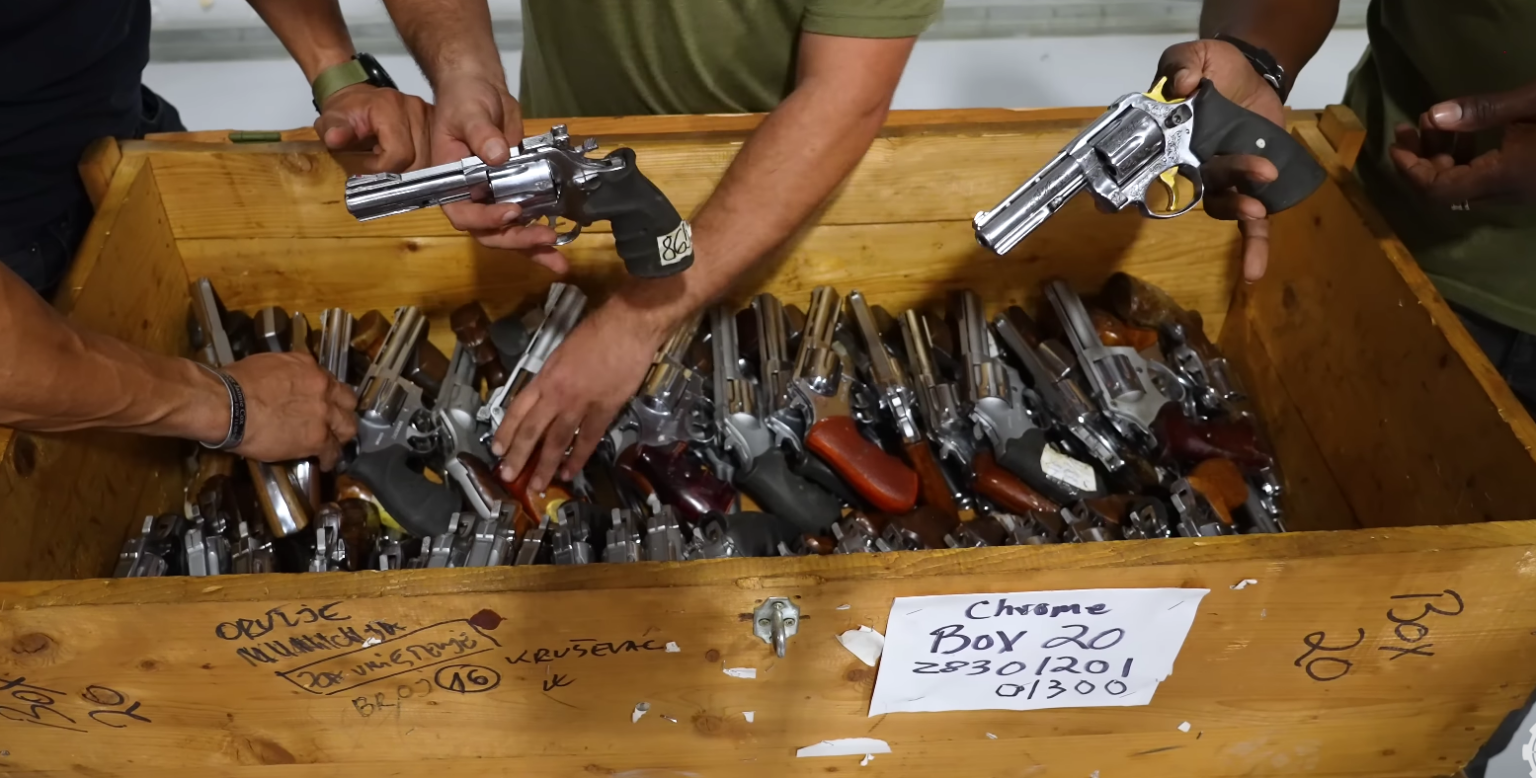
One leading international organisation working in the field of small arms – and which agreed to comment only on condition that it not be identified – questioned the legality, telling BIRN: “What we can say is that it would not make sense for weapons to be marked in this way if they were sold legally.”
Serbian law does not regulate the sale of surrendered or seized weapons, an omission that experts say is ripe for exploitation; responding to a Freedom of Information request seeking information on whether police have been selling surplus, surrendered or confiscated weapons, the Serbian interior ministry said “such information is not contained in any document in the [ministry’s] possession”.
The police itself did not respond to requests for comment. Nor did Zastava, the manufacturer in the town of Kragujevac, or Classic Firearms. Zastava Arms USA, the exclusive importer of Zastava products to the US, said it was “not involved in any way” in the guns’ import.
Awash with weapons
Serbia has one of the highest rates of gun ownership in the world, generally attributed to the wars of the 1990s and the collapse of federal Yugoslavia.
Before the most recent campaign for gunowners to hand over their weapons, in 2023, there were an estimated 39 privately-owned firearms per every 100 people in Serbia.
The 2023 campaign followed two mass shootings in two days that May: the killing of nine children and a security guard at a Belgrade school by a then 13-year-old boy, followed by the killing of nine people and wounding of 12 when a man went on a gun rampage in two villages southeast of the capital.
At the time, Serbian officials said the campaign cut the number of legally owned firearms in the country to roughly 570,000, from some 766,000 before.
The interior ministry told BIRN that the collected weapons were stored in police warehouses.
According to arms export data provided by the Serbian trade ministry, in the past three years just one Zastava M83 was exported from Serbia to the US.