
The findings from this initiative were institutionalized and shared widely across Moldova’s public sector. The e-Government Agency went on to launch M-Learn, a government-run digital training platform that now hosts learning modules for any public institution interested in replicating this approach.
Services That Reach Everyone, Anywhere
Digitalizing dozens of public services means most citizens no longer need to visit government offices to file paperwork or receive official documentation. That is especially valuable for Moldovans living abroad or in the country’s remote rural areas.
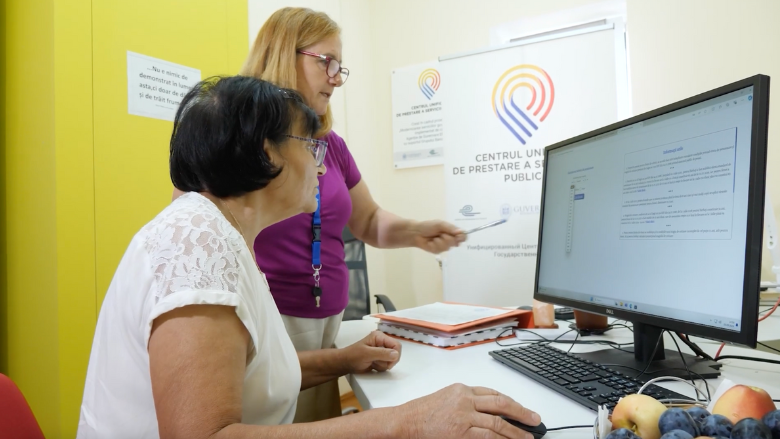
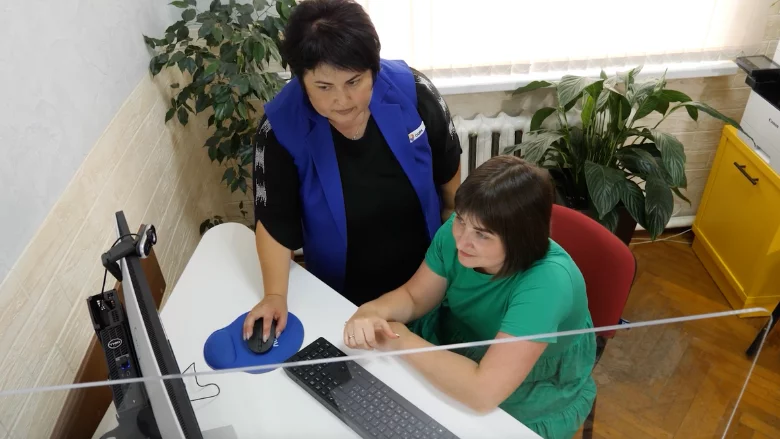
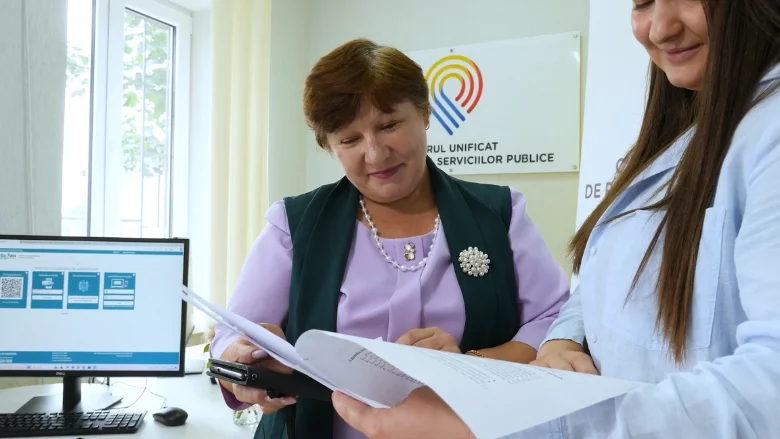
To ensure inclusiveness, MGSP also established a countrywide network of more than 100 Unified Service Delivery Centers (CUPS) physical locations where citizens without internet access or digital skills can receive support in accessing online services. The government plans to expand the CUPS network to 200 centers in the coming years.
These centers are having a tangible impact. Cristina Esan, a mother living in Corjauti village who recently applied for both an energy bill compensation program and her newborn’s biometric passport, explains the difference the nearby CUPS has made for her: “It’s a great advantage, you don’t spend too much time, and for a mother, it’s very important to have this service in the village, because it’s very difficult to travel with a newly born child to the district center”.
Promoting a New Public Service Culture
The project did more than upgrade technology—it has helped reshape the culture of public service in Moldova. New quality standards and a performance evaluation framework were introduced to ensure consistency and accountability. Many services were redesigned to proactively address life events such as childbirth, retirement, or starting a business—removing the burden from citizens to initiate requests themselves.
This transformation has brought clear benefits to Moldovans:
- Time savings by cutting down waiting lines and paperwork. For example, the time it takes to obtain a driver’s license was reduced by 44%, while the time to obtain and receive unemployment benefits was reduced by 66%.
- Lower transportation costs: The creation of rural-based CUPS is estimated to have saved disadvantaged rural residents hundreds of thousands of Moldovan lei alone.
- Improved service quality: Digitalization has streamlined and simplified essential public services, which are now just a click away. This is particularly relevant for members of the country’s diaspora, who no longer have to travel back to Moldova to access routine services.
As MGSP draws to a close, the project leaves behind a solid foundation for Moldova’s broader digital ambitions. The reforms and innovations piloted through this initiative are directly supporting the implementation of the country’s Digital Transformation Strategy 2023–2030.
By digitalizing with purpose, Moldova is not only embracing modern tools—it is building a more transparent, inclusive, and responsive public administration for generations to come.