
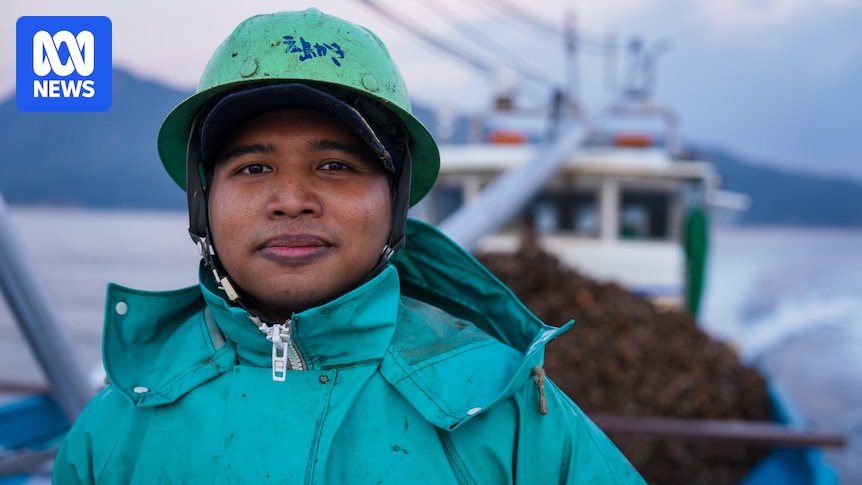
It is pre-dawn on Etajima Island, and the crew of an oyster farming business are wasting no time getting down to business.
The fishers will spend several hours harvesting oysters before returning to the mainland to shuck them well into the afternoon.
It is hard work but worth it; Etajima oysters are renowned across Japan for their rich, umami flavour.
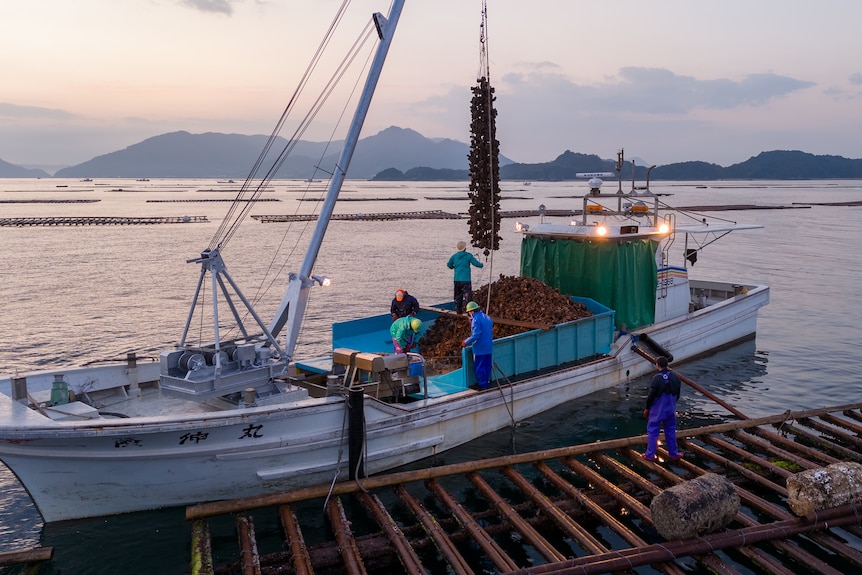
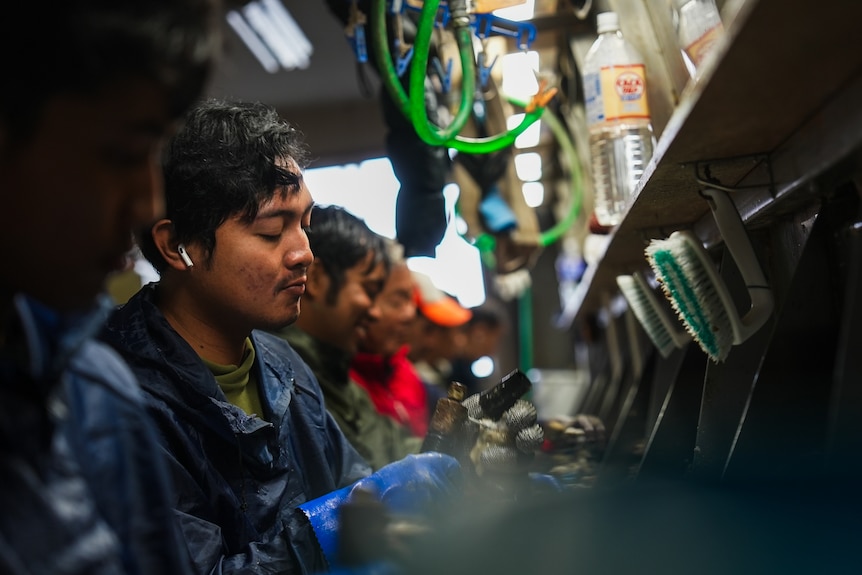
The majority of Etajima’s oyster industry workforce are migrants. (ABC News: James Oaten )
“This clean water combined with nutrient-rich seas creates an environment where incredibly delicious oysters thrive,” says oyster farmer Ryota Kakiuchi.
Fishing is an intrinsic part of Japanese culture, and oyster farming is the biggest industry on Etajima.
But finding local crew nowadays is near impossible.
The island — like much of Japan — is suffering from a rapidly aging population, with almost half of its residents aged over 65.
So, to keep the industry alive, Etajima has been forced to import its workforce. The crew that works with Mr Kakiuchi are from Indonesia and Vietnam.
“The income is bigger compared to Indonesia,” Indonesian fisher Ikomanga Purnarjaya says.
“I felt stagnant in Indonesia, no progress,” his Indonesian colleague, Mahfud Anahal Arrosyid, says.
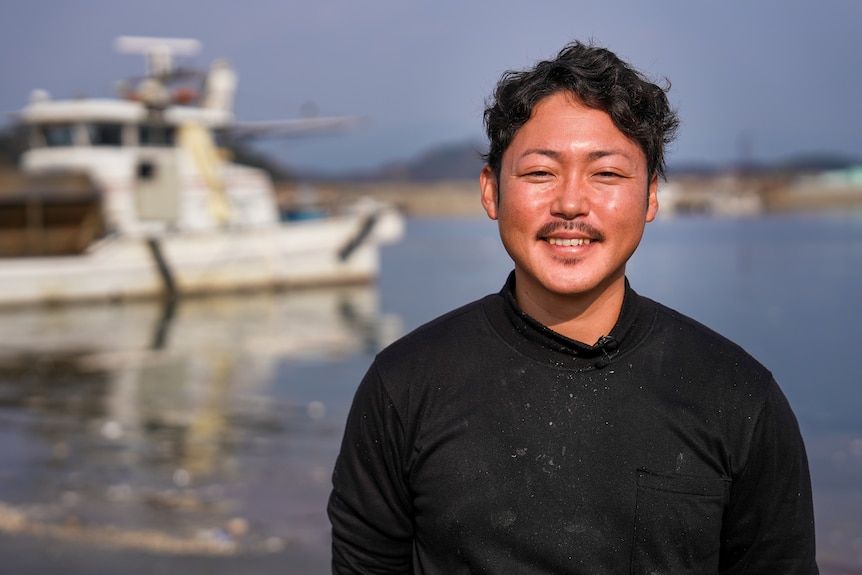
Ryota Kakiuchi says Etajima is known for its delicious oysters. (ABC News: James Oaten )
Today, more than 90 per cent of Etajima’s oyster industry workforce are migrants.
“Without those foreigners, the industry would probably have gone under by now,” Mr Kakiuchi says.
The population problem
Japan has a population problem that has been decades in the making.
Birth rates in the country began shrinking after World War II but have been continuously dropping since then.
In 2025, Japan recorded its lowest number of births in more than a century.
The government has tried to push policies encouraging women to have more children, but it has largely failed.
Newborns in Japan fall to a new low
Until recently, it avoided immigration to plug worker shortages.
Now Japan has the oldest population on earth, draining the economy of labour and income taxes, while putting a strain on resources.
“The number one reason why Japanese companies go bankrupt is because they can’t attract labour,” economist Jesper Koll from Monex Group says.
In recent years, Japan has seen two major population trends.
First, the Japanese population — particularly Japanese nationals — has been dropping for well over a decade.

Jesper Koll says a lack of labour is impacting Japan’s economy. (ABC News: James Oaten )
In 2024, the most recent year on record, the number of Japanese nationals shrank by a record 889,970 people.
Second, immigrants have been entering the country at record levels.
The immigrant population now totals some 3.9 million people — 3.21 per cent of the total population — almost double what it was in 2012.
It is still a relatively small number, but in a country renowned for its homogeneity, it is significant.
“What is fascinating is that every day the Japanese population declines by about 2,200 people,” Mr Koll says.
“But over the last 18 months, every day about 1,200 people received a work permit to come and work in Japan.”
But such a huge change brings challenges.
Japan has strict social norms, and there is growing community concern about whether new migrants will harm social cohesion.
At the national level, conservative Prime Minister Sanae Takaichi has vowed to introduce tougher immigration policies. Polls show such rhetoric is broadly popular.
During national elections in September, the anti-immigration party Sanseitō grew from one upper house seat to 15 on a Trump-esque “Japan First” policy platform.
It is still a minor party, but the sudden increase in support was noteworthy.
Building cohesion
The people of Etajima are no strangers to such tensions.
In 2013, a Chinese oyster farm intern killed the company’s president and another colleague. He was reportedly suffering from severe loneliness and isolation.
It may be an isolated event from over a decade ago, but the murder has cast a long shadow.
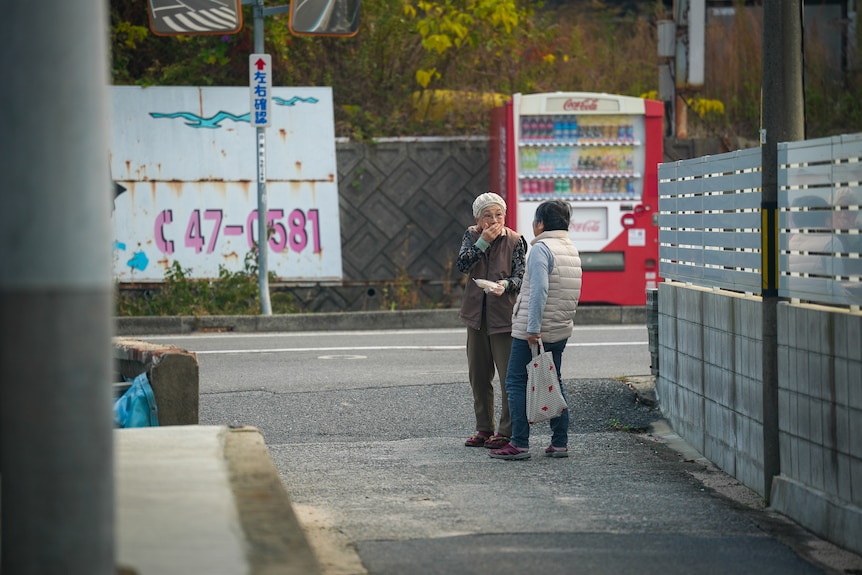
Almost half of Etajima’s population is aged over 65. (ABC News: James Oaten )
To this day, many elderly residents on the island are trepidatious, even nervous, about new arrivals.
“The early days [after the murder] were the worst,” one elderly resident tells the ABC.
“I was a bit scared.”
Local government surveys show only a small fraction of the local population — 6 per cent — want to engage with the foreign residents.
That is in contrast to 60 per cent of immigrants who want to “actively engage” with their Japanese neighbours.
It is a challenge for Yukio Yamamoto, who works for the local council’s human rights division.
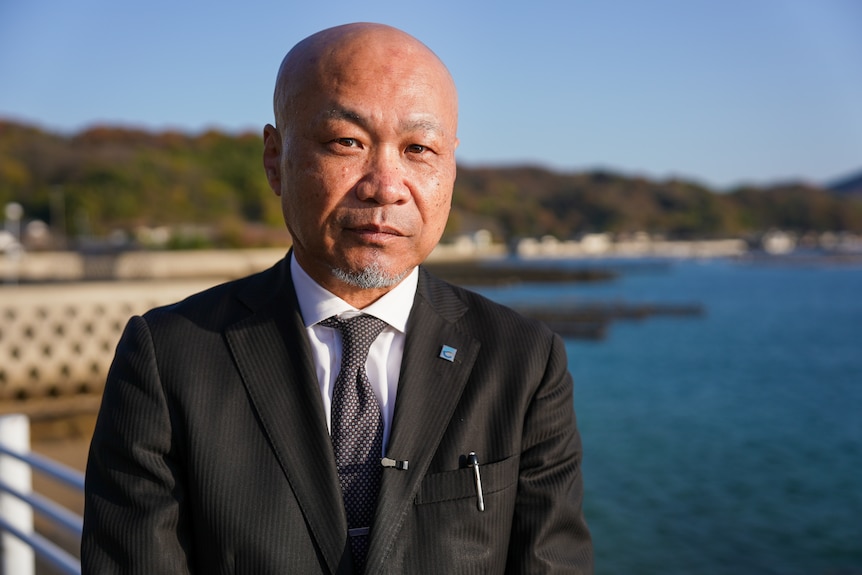
Yukio Yamamoto works for the Etajima City Council’s human rights division. (ABC News: James Oaten )
“Most elderly people haven’t had much contact with foreigners before, so I imagine that’s why the survey shows these results,” he says.
“If you conducted a survey in companies where people work alongside foreigners, I think the results would be different.”
To help build cohesion, Etajima City provides free language and culture classes for migrant workers.
The local government also holds large multicultural events, with food and dancing showcasing the island’s increasingly diverse community.
For Mr Yamamoto, it is all about building “everyday connections”, rather than one-off events.
A local says new migrants to the island bring a sense of vitality. (ABC News: James Oaten )
“Unless we broaden the base of these efforts, coexistence between foreigners and Japanese people won’t progress,” he says.
“I believe this is not just an issue for Etajima, but for the whole of Japan.”
And while change may be slow, for many in the community, it is working.
“It brings a sense of vitality, and in that respect, I think it’s a good thing,” one local tells the ABC.
‘Incredible pragmatism’
Mr Koll says the aging population has cost the economy about 1 per cent of growth annually over the past decade.
But he says Japan has approached the issue of immigration with “incredible pragmatism”, studying migration programs in comparable countries before acting.
The main scheme for low and mid-skilled workers — known as the Technical Intern Training Program — provides a worker with a visa for a set number of years, without their family.
A dating app will launch in Tokyo to try and boost Japan’s falling birth rate
Simply put, it imports temporary workers, not permanent community members.
“Whether they will actually adapt into Japanese society, actually set up a family here, that’s still sort of an open question mark,” Mr Koll says.
On Etajima, the change does feel more permanent.
In the past decade, the number of foreigners has doubled.
Mr Kakiuchi understands adapting to Japanese culture can be tough for new arrivals, but says the efforts to build community cohesion are worth it.
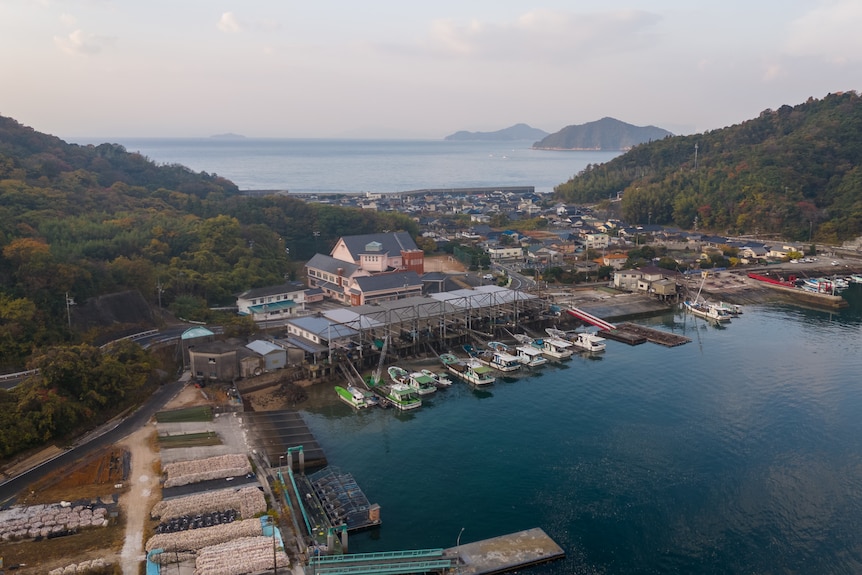
The town has been made livelier thanks to the foreign workers, Mr Kakiuchi says. (ABC News: James Oaten)
“Our foreign employees blend into our environment more readily than we imagined,” he says.
“As it’s a town with a small population, I think having them here makes the town livelier.”