
iNDICA NEWS BUREAU-
Scientists are raising fresh alarms about a little-known group of microorganisms that live freely in the environment, warning that they pose a growing threat to public health as climate change and ageing water systems create more favorable conditions for their spread.
A new study published in the journal Biocontaminant says free-living amoebae, sometimes called brain-eating amoebae, are becoming more dangerous worldwide.
Researchers say rising temperatures, deteriorating water infrastructure, and weak monitoring systems are allowing these pathogens to survive and spread in water sources that people often consider safe.
The study was led by a team of environmental and public health scientists, with corresponding author Longfei Shu from Sun Yat-sen University in China.
The researchers found that these amoebae are especially hard to control because they can survive extreme conditions that usually kill other microbes. They can tolerate high heat, resist common disinfectants such as chlorine, and persist inside water distribution systems.
Amoebae are single-celled organisms commonly found in soil and water. Most species are harmless, but a small number can cause severe and often deadly infections.
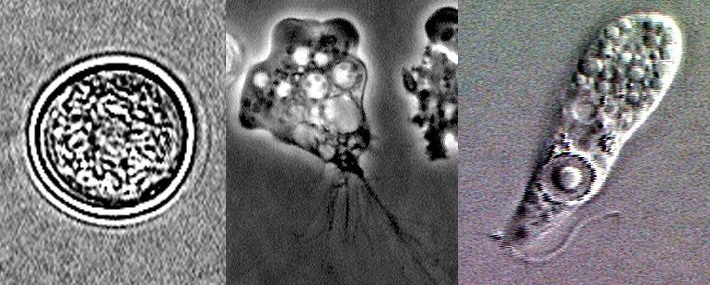
One of the most dangerous is Naegleria fowleri, widely known as the brain-eating amoeba. It can cause a rare but nearly always fatal brain infection when contaminated water enters the nose, usually during swimming or other water-related activities. In recent years, Naegleria fowleri has been linked to several deaths in Kerala, drawing attention to the risk in warmer regions.
The study also highlights another hidden danger. Amoebae can act as carriers for other harmful bacteria and viruses by sheltering them inside their cells. This allows those microbes to survive water treatment processes and spread through drinking water systems.
Researchers warn that this “Trojan horse” effect may also help antibiotic-resistant bacteria persist and spread.
Climate change is expected to make the problem worse. As global temperatures rise, heat-loving amoebae are likely to expand into new areas where they were previously uncommon. Recent outbreaks linked to recreational water use in several countries have already increased public concern.
The researchers are calling for a coordinated One Health approach that brings together human health, environmental science, and water management. They say stronger surveillance, better diagnostic tools, and advanced water treatment technologies are needed to reduce risks before infections occur.
The study concludes that addressing the threat from free-living amoebae will require integrated solutions that focus on protecting public health at its environmental source, rather than responding only after infections are detected.
Image: CDC/Wikipedia