
Published on
January 4, 2026
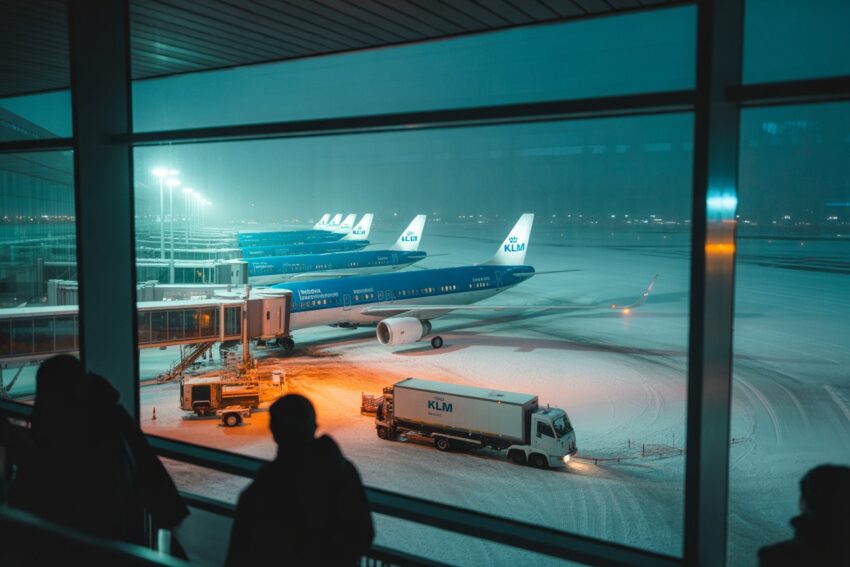
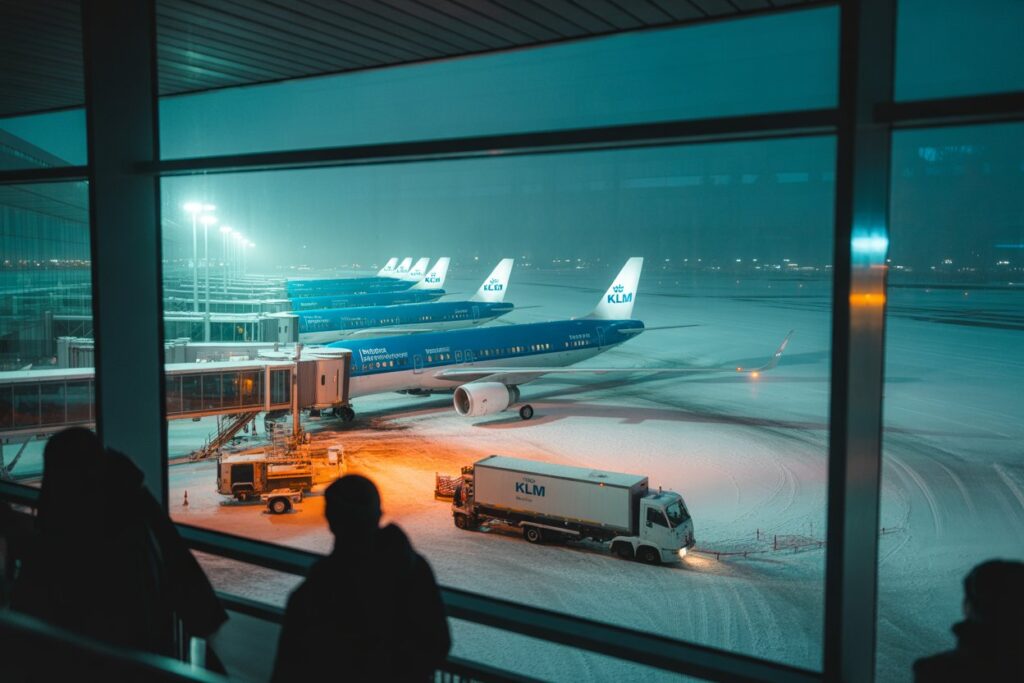
As the first weekend of 2026 began, the Netherlands was transformed into a glittering, sub-zero landscape. But for those caught in the gears of the nation’s transport system, the “Winter Wonderland” felt more like a logistical nightmare. On Saturday, January 3, 2026, a powerful Arctic system brought heavy snowfall and freezing winds across the country, effectively paralyzing Amsterdam’s Schiphol Airport and causing widespread disruption on the roads and rails.
The numbers are as cold as the weather: over 500 flights at Schiphol were affected, leaving tens of thousands of travelers stranded in one of Europe’s busiest aviation hubs.
The disruption at Schiphol wasn’t a sudden surprise, but rather an escalating crisis. Following a difficult Friday, Saturday morning saw 128 departures and 136 arrivals canceled by midday. An additional 238 flights faced significant delays.
The problem wasn’t just the snow on the runways; it was a “perfect storm” of operational hurdles:
- De-icing Backlogs: Every departing aircraft required specialized de-icing treatment, a process that takes time and creates a bottleneck during peak hours.
- Runway Capacity: Due to high winds and snow clearance, the airport was often forced to operate with only two runways instead of the usual three or four.
- Safety Gaps: Air traffic control had to increase the distance between landing aircraft to account for slippery surfaces, reducing landing capacity by nearly 65% at certain intervals.
KLM, the national carrier, was the hardest hit. By the evening of January 3, the airline announced that the disruption would bleed into Sunday, January 4, with nearly 300 additional flights already pre-emptively canceled for the following day.+1
Roads and Rails: The Ground Struggle
The chaos wasn’t limited to the skies. Rijkswaterstaat, the Dutch infrastructure agency, reported a “high-risk” day for motorists. Despite salt trucks spreading over 8.6 million kilos of salt since 7:00 a.m., the combination of freezing rain and low traffic volumes during the Christmas holidays meant that salt was less effective at melting the ice.+1
Several serious accidents were reported, including a tragic fatal collision near Apeldoorn on the N304. Elsewhere, trucks slid into ditches on the A6 and N377, highlighting just how unforgiving the “black ice” conditions had become.
On the tracks, the NS (National Railway) struggled with switch failures and snow-clogged infrastructure. Intercity services between major hubs like Utrecht, Amsterdam, and Eindhoven ran at a fraction of their normal frequency. Travelers were met with the dreaded “reduced service” banners on station boards, with some delays stretching to over 40 minutes.+2
The Human Element: Stranded in the Cold
Statistics tell one story, but the atmosphere at Schiphol told another. Thousands of passengers—many of them families returning from Christmas breaks—were seen camped out near boarding gates and check-in desks.
For many, the frustration was compounded by the timing. “We just wanted to get home before work starts on Monday,” one traveler told local media. “Now we’re told the next available flight isn’t until Tuesday.” Airlines like KLM have activated emergency rebooking policies, allowing passengers to change their travel dates for free through early February. However, with hotels in the Amsterdam area reaching 100% capacity due to the cancellations, finding a warm bed for the night became a secondary mission for many.
Looking Ahead: Will the Thaw Arrive?
The KNMI (Royal Netherlands Meteorological Institute) maintained a Code Yellow warning for most of Saturday. While the heaviest snowfall began to taper off by Saturday night, the danger remains. Sub-zero temperatures are expected to persist through Sunday morning, meaning that any slush on the roads will refreeze into a treacherous glaze.
For those planning to travel on Sunday, January 4, the advice remains clear:
Check the App: Do not leave for Schiphol or the train station without checking for real-time “Canceled” or “Delayed” statuses.
Allow Extra Time: Even if your transport is running, the journey to the station or airport will likely take twice as long as usual.
Know Your Rights: Under EU law (Regulation EC 261/2004), while airlines aren’t required to pay “compensation” for weather-related delays, they are required to provide “duty of care,” including meals and hotel accommodation for overnight delays.
The January 2026 snowstorm is a stark reminder of how even the most advanced infrastructure can be humbled by nature. As the Netherlands works to dig itself out, the priority shifts from speed to safety. The snow may be beautiful, but the goal for the next 48 hours is simply to get everyone home—safely.
