
Bulgaria’s entry into the eurozone has triggered a wave of consumer alerts over suspected price manipulation, with watchdog groups warning that some traders are exploiting confusion during the early days of the transition.
Speaking on Nova TV, Bogomil Nikolov from the “Active Consumers” association said his organisation has received a series of troubling complaints from citizens, pointing to speculative behaviour and poor practices shortly after January 1.
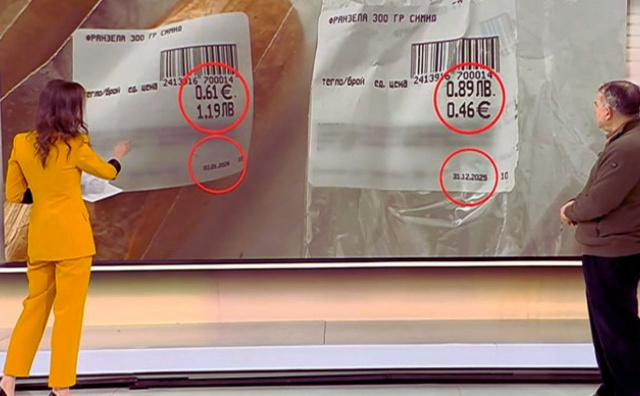
One of the clearest examples involves a 300-gram loaf of “Franzella Simid” bread sold in a major retail chain. Within just 48 hours, its price rose from 0.89 leva (about €0.46) on December 31 to 1.19 leva (around €0.61) on January 2. The increase of roughly one-third over two days, Nikolov stressed, is difficult to explain with normal market logic.
An even more striking case concerns an order from a well-known pizza chain. Although the correct bill amounted to €9.58 (18.75 leva), the final charge reached an astonishing €36.67, nearly four times higher. Nikolov suggested this may have been a technical mistake, but urged consumers to check receipts carefully and remain vigilant to avoid being overcharged.
Online retailers are also drawing criticism. Complaints have been filed over sharp and seemingly unjustified price hikes for household goods. Plastic storage boxes that cost €5.23 on January 1 were offered the very next day for €10.22, while another model reportedly doubled in price from €12 to almost €24. In a separate case, a consumer flagged rain boots that previously sold for 49.99 leva (or even 34.99 leva with a discount) now listed at 49.99 euros, equivalent to about 97.77 leva.
According to Nikolov, such practices amount to an “own goal” for businesses, as they risk driving customers away. He reminded traders that unjustified price increases can lead to serious penalties, with fines reaching up to €50,000.
Banks have not been spared from scrutiny either. One consumer reported that when depositing 1,400 leva after January 1, the bank applied an exchange rate of 1.965 instead of the official fixed rate of 1.95583.
“There should be no lev accounts after the New Year, as they are automatically converted,” Nikolov explained. “If cash leva are deposited, the exchange must be done at the official fixing. Any deviation from that is grounds for a complaint.”
Source: Nova TV