
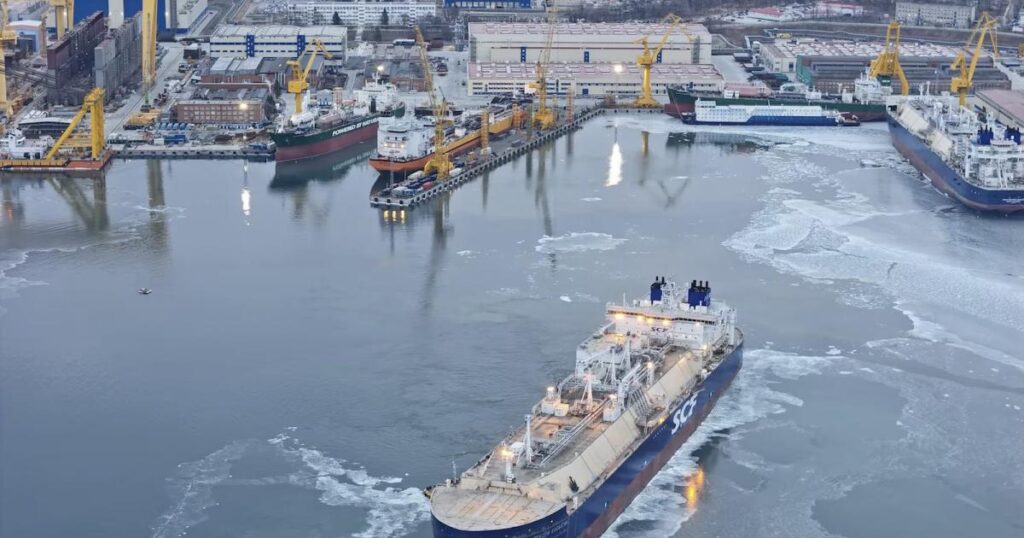
While that volume remains only a fraction of ALNG2’s full design capacity, it is a significant improvement over the winter of 2024/25, when Novatek was forced to shut in production for extended periods because it had no access to Arc7 ice-class vessels capable of operating in heavy Arctic ice.
Lower ice-class vessels insufficient
The importance of the specialised Arc7 fleet was underscored earlier this winter when the Arc4-class LNG carrier Buran attempted to reach ALNG2 in early December.Despite multiple attempts and escorts from nuclear-powered icebreakers, the vessel failed to reach the terminal, demonstrating that lower ice-class ships cannot reliably serve the project during winter.
With Aleksey Kosygin joining the fleet, Novatek is expected to keep a steady flow of LNG moving from ALNG2 to the Saam FSU through the winter months and onward to Asian markets.
In the past four months, the company has completed 20 LNG deliveries from the project, providing much-needed revenue to the project, though the cargoes are being sold at discounts of up to one third to prevailing market prices.
For Russia’s shipbuilding industry, the delivery of the Aleksey Kosygin is both a symbolic achievement and a reminder of ongoing constraints.
While it demonstrates that Russia can, eventually, assemble highly complex Arctic LNG carriers at home, the years of delay and reliance on foreign-built hulls highlight the lasting impact of sanctions and the uncertainty surrounding the remaining Arc7 hulls and future vessels.