
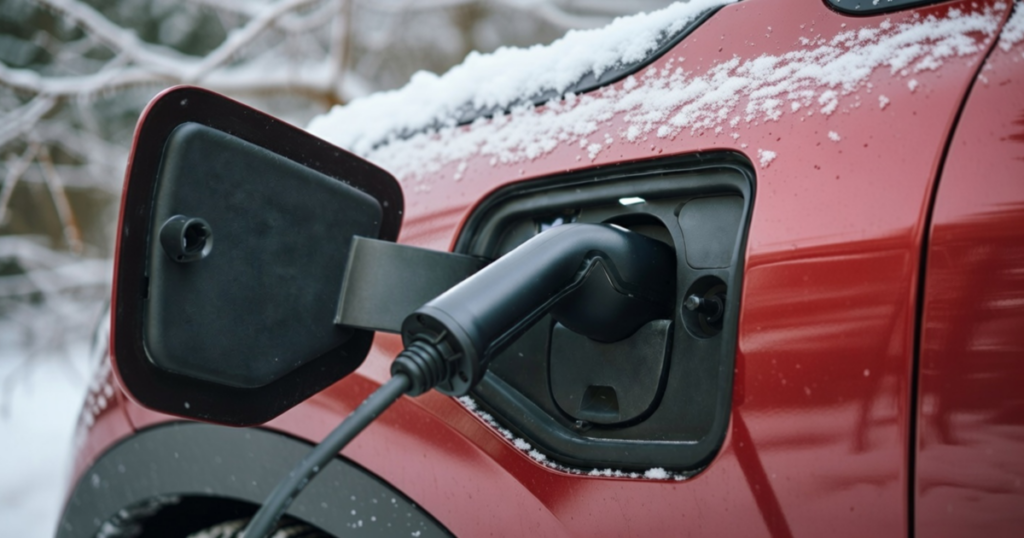
Italy closed 2025 with a solid rebound in electric vehicle adoption. Battery electric car registrations reached 94,230 units, marking a 46.1% year-on-year increase and lifting the EV market share to 6.2%, up from 4% in 2024.
By contrast, the overall Italian car market contracted by 2.1%, with total registrations standing at 1.53 million units for the year.
As of 31 December 2025, Italy’s circulating EV fleet reached 365,091 vehicles, highlighting steady progress despite the country’s continued lag behind other major European markets.
December spike driven by incentives
Momentum accelerated sharply at the end of the year. December EV registrations more than doubled year-on-year (+107.2%) to 12,015 units, pushing monthly market share to 11.1%, compared with 5.5% in December 2024.
This surge was largely driven by deliveries linked to incentive schemes launched in October, underlining once again the strong dependence of demand on short-term policy measures.
While incentives proved effective in unlocking postponed purchases, the concentration of registrations also exposed the market’s structural fragility.
Italy still behind the European curve
At European level, Italy remains below the leading markets. Data for January–November 2025 show EV market shares of 22.8% in the UK, 19.6% in France, 18.8% in Germany and 8.8% in Spain, all recording faster and more consistent growth trajectories.
According to Motus-E president Fabio Pressi, the Italian figures should be read as both an opportunity and a warning.
The combination of incentives and greater availability of mass-market electric models has confirmed latent consumer interest, but closing the gap with Europe requires continuity and predictability.
Fleet taxation seen as decisive lever
“The effect of the incentive rush will fade within a few months,” Pressi warned, stressing that the next phase must be planned now to provide certainty for both consumers and industry. In that context, corporate fleets are seen as a central growth lever.
Fleets play a dual role in stabilising demand and feeding the second-hand EV market, making electric vehicles more accessible to a broader audience. However, Pressi argues that Italy’s fleet taxation framework is outdated, largely unchanged since the 1990s, and increasingly misaligned with European ambitions.
Following the recent update of the EU fleet mandate, Motus-E considers a deep reform of corporate fleet fiscality no longer deferrable, if Italy is to build a structurally resilient EV market.
Commercial vehicles also gain ground
Beyond passenger cars, electric light commercial vehicles (N1) recorded strong growth in 2025, with registrations up 118% to 8,234 units, even in the absence of dedicated incentives. Market share more than doubled, from 2% to 4.6%.
The heavy-duty segment also showed early momentum. Electric N2 and N3 vehicle registrations rose by 185.6% year-on-year to 594 units, lifting market share to 2.2%, compared with 0.7% in 2024.
From rebound to consolidation
Italy’s 2025 results confirm that demand exists and can be activated quickly, but also that the market remains highly policy-dependent. As incentives taper off, long-term planning, fiscal stability and fleet electrification will determine whether the rebound turns into sustained growth.
If those conditions are met, Italy could finally move from catch-up mode to structural alignment with Europe’s electric transition.
Discover Mobility Portal Data
Discover Mobility Portal Data, a new, exclusive market-intelligence platform offering reliable datasets and essential reports to support informed decision-making across the automotive sector—from combustion and electric vehicles to charging infrastructure.
Research, trend analysis and well-organised statistics, presented with clarity and precision, together with up-to-date insights—all just one click away. With Mobility Portal Data, better decisions are within reach.
READ MORE
-
Electric car registrations surged in Italy during 2025, outpacing the wider automotive market. However, industry voices warn that without fiscal stability and a strong push on corporate fleets, growth risks losing momentum.
-

Driven by fiscal incentives and regulatory certainty, Norway closed 2025 with electric vehicles dominating registrations, while Europe moves into a new phase of infrastructure and pricing alignment under AFIR.
-
El mercado español de vehículos electrificados cerró 2025 con un alza cercana al 91% y una cuota de market share que ya roza el 20% del total.