
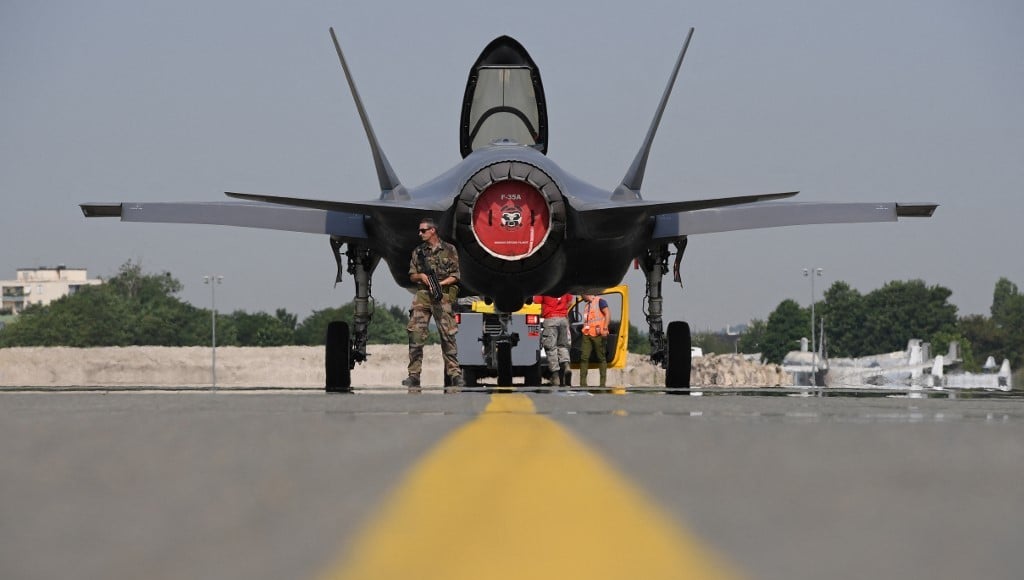
Turkish President Recep Tayyip Erdoğan has renewed calls for Turkey to be readmitted to the US-led F-35 fighter jet program, claiming that the move would strengthen NATO’s collective defense and help boost ties with Washington, Bloomberg reported.
In written responses to questions from Bloomberg, Erdoğan said Turkey’s exclusion from the program was unjust and reiterated that Ankara had already paid for the aircraft.
The dispute dates back to US President Donald Trump’s first term, when Washington removed Turkey from the multinational F-35 consortium in 2019 after Ankara took delivery of a Russian missile system despite objections from its Western allies.
Since its expulsion from the F-35 program, Ankara has lobbied for reinstatement, arguing that its expulsion was unfair. The issue has resurfaced amid reports of renewed contacts between Ankara and Washington on fighter jet cooperation.
“Türkiye’s receipt of the F-35 aircraft for which it has already paid, and its reintegration into the program, are important and necessary” for better ties with the US and NATO’s defense, Erdoğan said.
The United States argues that the S-400 Russian missile system poses a security risk to NATO technology and could compromise sensitive data on the stealth aircraft.
The purchase triggered sanctions under the Countering America’s Adversaries Through Sanctions Act (CAATSA), which are still in force.
Erdoğan said he personally raised the issue with Trump during their meeting at the White House in September, signaling Ankara’s hope that Trump’s return to office could open a new chapter in relations that have been troubled since Turkey’s purchase of Russia’s S-400 air defense system.
“With Trump’s return to office, an opportunity has emerged to move Turkey-US relations onto a more reasonable and constructive footing,” Erdoğan said.
Bloomberg reported last month that Turkey has explored returning or otherwise disposing of the S-400 system as part of efforts to repair defense ties with the US. Erdoğan raised the issue with Russian President Vladimir Putin during a meeting in Turkmenistan, a sign that he’s trying to mend Turkey’s defense relationship with the US, which Erdoğan said is a “central pillar” of the bilateral ties.
US Ambassador to Turkey Tom Barrack, a close ally of Trump, said late last year that Ankara was moving closer to relinquishing the S-400s and suggested the issue could be resolved within months, Bloomberg said.
Turkey is also seeking to purchase F-16 Block 70 fighter jets from the US, though pricing negotiations remain unresolved.
Erdoğan said Ankara expects terms consistent with NATO solidarity and pointed to Turkey’s separate purchase of Eurofighter jets as an example of its defense diversification.
Another longstanding source of tension is the case involving Turkey’s state-owned lender Halkbank, which was indicted in the US in 2019 on charges related to evading sanctions on Iran. Erdoğan said Turkey considers the allegations misguided and is engaged in talks to prevent what he described as unjust penalties, according to Bloomberg.
In October the US Supreme Court rejected Halkbank’s latest appeal, allowing the case to proceed. The ruling pushed the bank’s shares down 10 percent. Halkbank later said efforts to reach a “conciliation” with Washington were continuing.
Prosecutors in New York allege the bank used front companies in Turkey, Iran and the United Arab Emirates to secretly transfer $20 billion in restricted funds, convert oil revenue into gold and cash and falsify food shipments to disguise the transactions.
Erdoğan has long criticized the US case against Halkbank, calling the charges “unlawful” and “ugly.”
A settlement is expected to exceed $100 million. In past cases European banks have paid far larger penalties for sanctions violations. France’s BNP Paribas, for instance, agreed in 2014 to pay nearly $9 billion to resolve similar allegations.
The controversy has already led to convictions. Mehmet Hakan Atilla, a former Halkbank executive, served about three years in a US prison on sanctions-related charges. Turkish-Iranian gold trader Reza Zarrab, accused of orchestrating the scheme, pleaded guilty and testified against Atilla.