
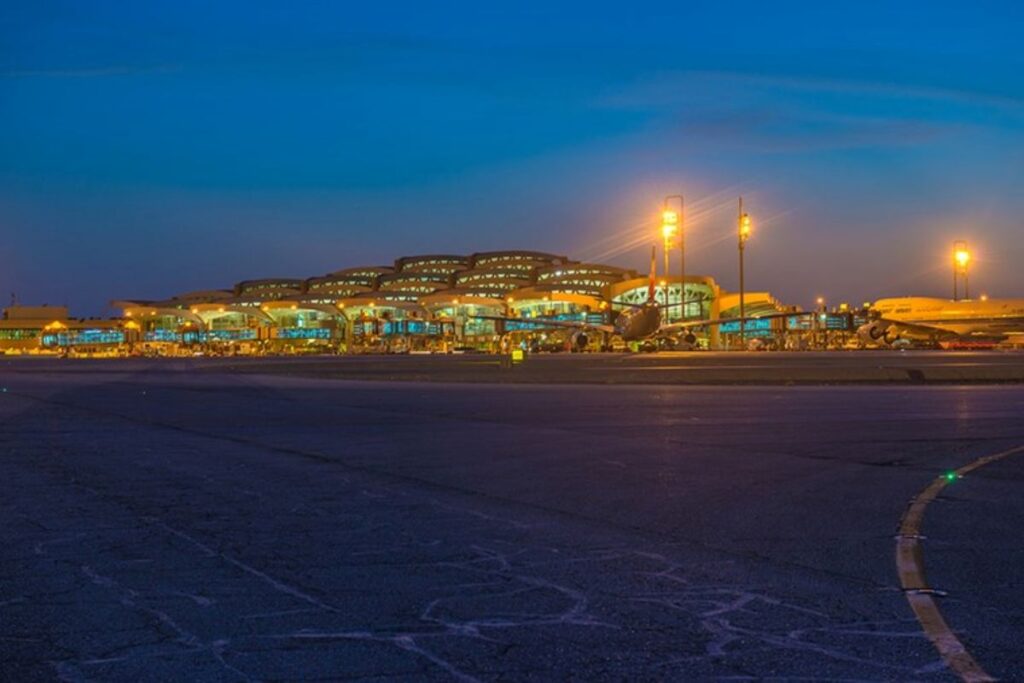

Aviation experts are predicting Canadian airlines are going to need to up their game as new government air transport agreements mean more competition from Middle Eastern airlines is coming.
Carriers from Saudi Arabia and the United Arab Emirates are being singled out due to recent actions by Ottawa. Saudi flights to Canada have been restricted to four a week, but a new reciprocal air transport agreement announced in late 2025 by Transport Minister Steven MacKinnon bumps that to 14. In a separate deal, UAE flights have moved from an allowed maximum of 21 per week to 35. Both of the agreements mean Canada is allowed the same number of flights to the respective countries.
John Gradek, an aviation expert and lecturer of aviation management at McGill University, told CBC News that services on Middle Eastern airlines are seen as the “envy of the world.”
“Canadian carriers are going to have to up the ante and up their game to be able to compete,” said Gradek.
Emirates, one of the UAE flag carriers, is renowned for its luxury services, earning many “Best Airline” awards and global recognition. Etihad, the other UAE flag carrier is also consistently named for top aviation honours for customer experience, safety, design and innovation.
Saudi Arabia also has two flag carriers. Saudia Airlines, which won 2026 World Class Airline from APEX, and the new Riyadh Air, which does not fly to Canada but is gaining ground with audacious plans for growth.
Gradek predicts the new competition density will encourage Canadian airlines to offer more in regards to “the service level they’re offering on board the airplane, and the amenities and actual configuration of the airplanes.”
Gradek told the CBC he believes the government’s new deal is better for the airlines from the Middle East because it allows foreign airlines to transport more Canadian travellers to hubs in places like Dubai and onto connecting flights all over the world, including the India, whereas the market for Middle Eastern passengers coming to North America using Canadian carriers is smaller.
Additionally, the Middle Eastern carriers often focus on business and first class experiences, making relatively more of their money from the cabins at the front of the aircraft than Canadian carriers do. That means they can offer economy seats at a lower rate, even operating at a loss on those seats since economy seats are not as integral to their bottom line.
More competition has been touted as a possible solution to Canada’s high airfares. For more on the subject, see:
Topics From This Article to Explore