
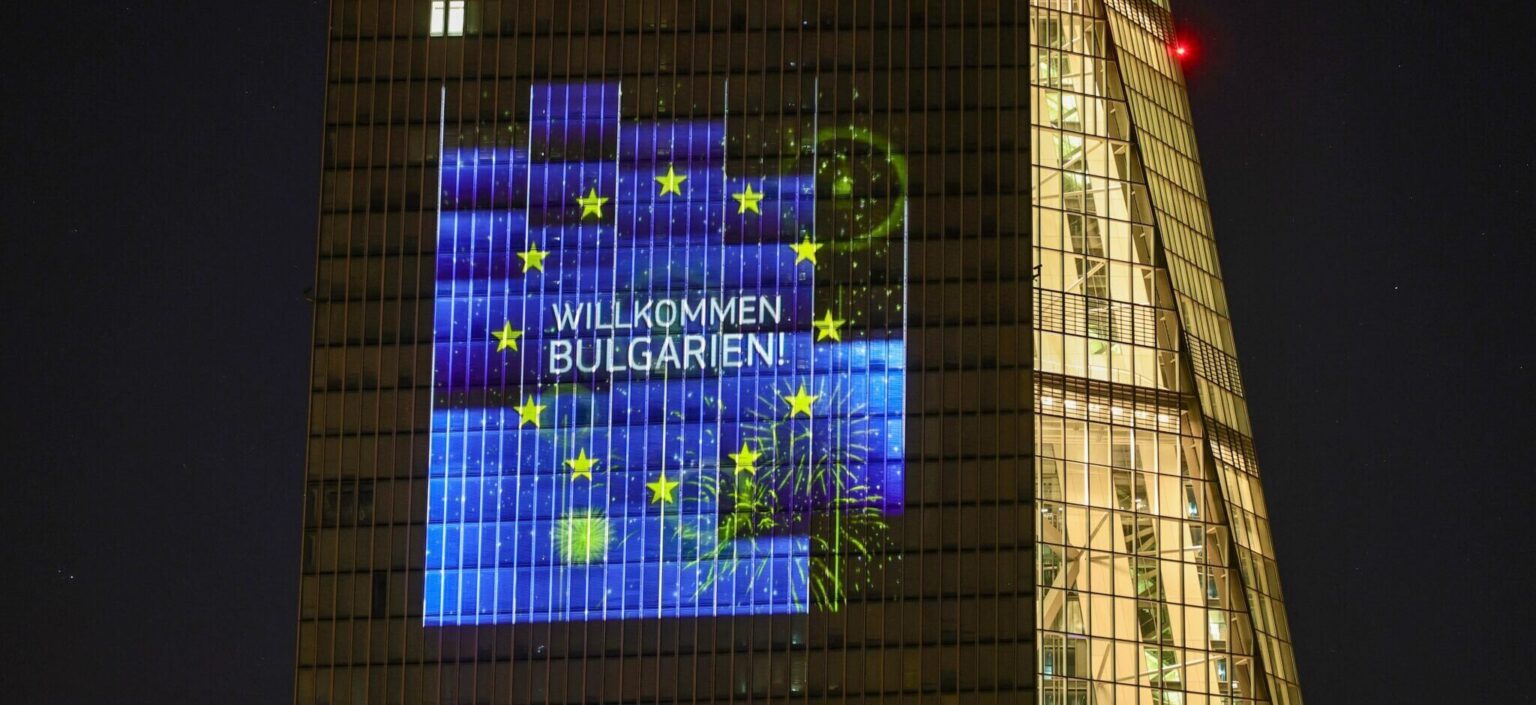
The transition is already showing results. On January 2, the Association of Bulgarian Banks stated that over 1 billion leva in cash had been converted to euros through bank deposits, which boosts economic transparency, as often untaxed savings in cash enter the monitored circuit.
Bulgarians are adjusting to the currency transition, seeing it less as a political success and more as the product of societal patience and persistence: demands for political lustration have informed several waves of protest, with the most recent one, the biggest in recent memory throwing out the GERB-led coalition which, albeit technically, oversaw the currency switch.
This might bring a sense of realism to Bulgaria’s many unsolved issues. “Trust and stable money do not guarantee prosperity – neither under the financial board nor in the eurozone. The lack of a political horizon and pressure on the budget, limited ambition for bold reforms, corruption, and a dysfunctional judicial system are obstacles that we will have to overcome in the coming years,” Sofia’s Institute for Market Research stated on January 2.
“Bulgaria needs more economic freedom, improved rule of law … this would enable the country to be successful within the eurozone,” it added.
Speculative pricing remains a challenge: social media users are routinely exposing cases of traders trying to sell products for higher prices, or moving their prices in leva directly to euros, making them twice as expensive. This has triggered more probes from thе Consumer Protection Commission in recent days. On January 4, however, the Commission warned that many alerts concern non-relevant cases, made by “people who are unfriendly to the euro”, and who are boycotting the shift.
Anticipation of the change dates back to Bulgaria’s accession to the European Union in 2007, a milestone in the country’s uneven post-communist transition following the collapse of the regime in 1989 and a natural step after joining NATO in 2004. Prolonged inflation and macroeconomic instability throughout the 1990s prompted the lev to be attached to the currency board arrangement in 1999, initially pegging the lev to the German mark and later to the euro.
While politicians have always referenced the transition as likely, it wasn’t truly on the horizon until 2020, when Bulgaria, along with Croatia, was accepted into the Exchange Rate Mechanism, ERM2, the euro zone’s “waiting room”.
Who’s who on the new coins