
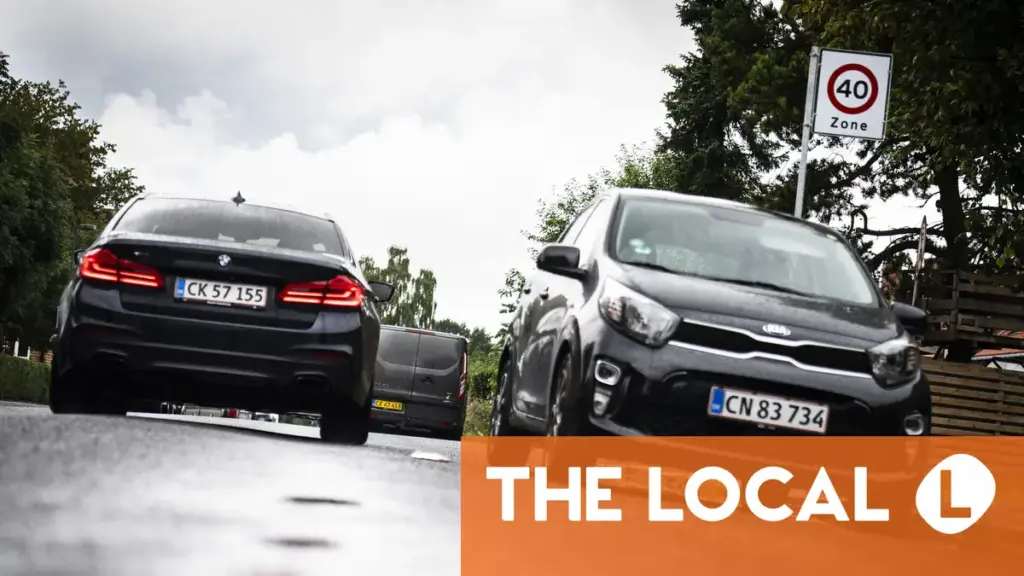
The arrival of 2026 means new traffic rules and provisions in Denmark, affecting a range of areas from winter tyres to owner taxes and the price of fuel.
Several new traffic rules take effect in Denmark in 2026, with some in force from January 1st and others being introduced later in the year.
Although the number of new traffic laws is lower this year than it was in 2025, there are changes which could impact the cost of driving for the individual motorist.
New rules could help you find cheaper petrol
Fuel companies are now bound by new rules which the government says will improve competition and promote lower prices for customers.
The government believes the measures will boost competition on the market and could save a household with two cars up to 2,000 kroner per year.
As of January 1st, fuel companies must post their petrol and diesel prices online, enabling consumers to more easily find the best offer.
Previous rules required stations to display the price on forecourts but not on any specific online platform, making it harder for customers to compare prices between local stations.
Another measure, which has been in force since December 1st last year, bans fuel companies from publishing guideline (vejledende) prices ahead of price changes.
This makes it harder for the companies to set their own prices based on what they expect competitors to do, incentivising them to compete for customers by offering them the best price.
The new measures mean that individual motorists can now check prices in real time using either a website or an app.
Advertisement
New way to complain about ‘unfair’ parking fines
Drivers can now write directly to the Ministry of Transport if they have unfairly been issued with a fine by a private parking company.
A new government email address has been made available for motorists to file complaints about parking private companies that do not act in line with rules relating to issuing fines.
The mail will deal with cases in which motorists receive a fine without receiving a physical ticket on their windscreen or without a prior agreement (forudgående aftale) with the parking company.
A prior agreement with the company can mean having an account on the company’s app.
The decision to create the special email address comes after reports that some parking companies have skirted the rules by sending fines under different names – for instance opkrævning (‘invoice’), to avoid the requirement to hand over the fine physically by placing it on the windscreen.
The email address drivers can write to is privatparkering@trm.dk.
You can read more about this change here.
Advertisement
New rules for winter tyres
The rules relating to when you should have winter tyres on your car came into effect during 2025, meaning this is the first winter for which they are in force.
Previously, you were not legally required to use graded winter tyres during the winter in Denmark. Unlike in neighbouring Sweden, Norway and Germany, switching over was optional. According to motorists’ organisation FDM, some 400,000 motorists kept summer tyres on their cars throughout the winter, reducing the car’s ability to handle freezing road conditions.
That has now changed. The new rules state that, although it’s not a legal requirement to change to winter tyres by a certain date, you can now be fined if you have unsuitable tyres on your car for the prevailing conditions.
This means that, for instance, using summer tyres in heavy snow and ice can result in a fine of 1,000 kroner per tyre for tyres unsuitable for the weather conditions.
READ ALSO: What are Denmark’s new rules on winter tyres?
Advertisement
Registration tax up by 10 percent
Car owners in Denmark pay a twice-yearly tax, the ejerafgift, a form of road tax for owning their vehicle. The size of the fee depends on the car type and its emissions.
A 2020 law set a schedule for the tax to increase, with some of the increases coming into force this year. The most energy-efficient cars will only get marginal owner tax hikes, but some vehicles face up to 10 percent higher taxes.
Slight rise in taxes on petrol and diesel
An inflation-based regulation of taxes on fuels came into effect on January 1st, but the changes are very small, motorists’ organisation FDM reports.
For instance, a driver who covers 20,000 kilometres per year will pay something like 39 kroner more in total for fuel for a petrol car, and 21 kroner if the car runs on diesel.
Higher tax deduction for commuters
Over a million people who commute to work in Denmark will get a raised tax deduction this year, the national Tax Council (Skatterådet) confirmed in November after it set new rates for commuter deductions.
Under the new rates, commuters will get a deduction of 2.28 kroner per kilometre they travel to and from work over the 24-kilometre distance needed to qualify for the deduction. The 24km relates to the total distance – so you only need to commute 12 kilometres each way to be eligible.
The new rate represents an increase from the existing 2.23 kroner per kilometre.
READ ALSO: How does Denmark’s tax deduction for commuting work?
More money for scrapping your car
The so-called skrotpræmie (“scrap bounty”) has been raised from this year.
This is not some kind of buried treasure but a statutory fee you receive for handing over condemned vehicles like an insurance write-off or a car that cannot pass a roadworthiness test to an authorised scrapyard, known as ophuggere in Danish.
The fee has been raised by some 25 percent, from 2,200 kroner to 2,770 kroner, which means you can get some compensation for your old banger after it reaches the end of its days on the road.
A higher fee gives a higher incentive for owners to dispose of cars no longer legal for road use, and can also affect the price of used cars at the bottom end of the market.