
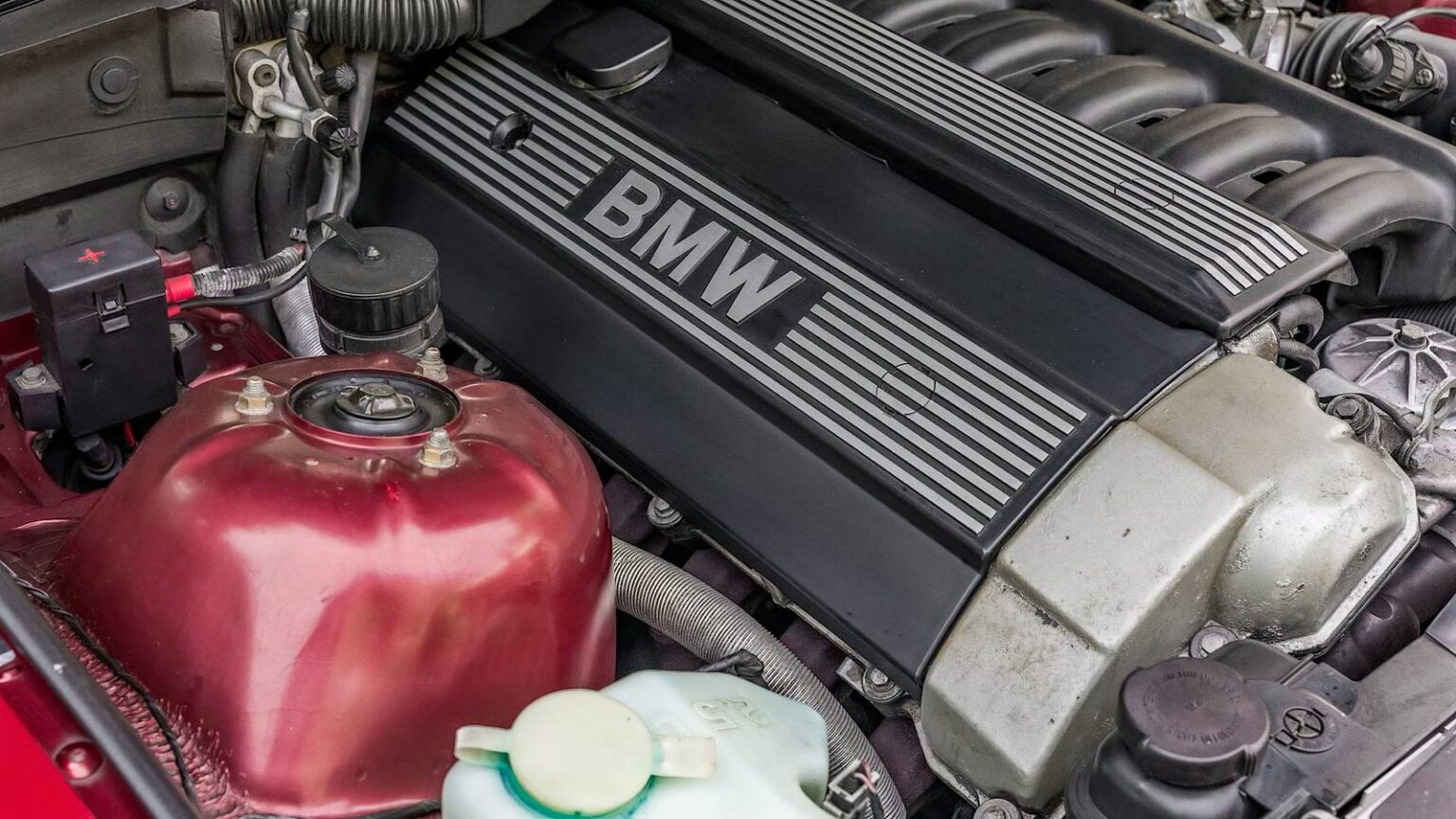
Luxurious, fast, aggressively designed, and potent on the road and the track, German automakers have built themselves a reputation over the last few decades as the go-to for stylish and fun thrills. Whether you opt for a new German sports car with a turbocharged flat-six or a smaller German inline-four, you can be sure of seat-pinning acceleration and enviable top speeds, but back in the 1990s, one German marque broke the mold with a beefy inline-six that helped to cement the six-cylinder engine in automotive history.
Produced and built by BMW throughout the beginning of the 1990s, this high-revving, powerful, and reliable engine is one of the creations that proves that the German brand perfected the linline-six engine whilst also laying the foundations for some of their most enviable and impressive engines. This inline-six served as a loyal secret weapon for the Germans during the 1990s, and today, we have a lot to thank it for. We are taking a closer look at it and have brought you all the information we think you may need about this high-revving German mill.
Related
10 Most Powerful BMW Engines Ever Made
Discover the history of the royalty of German performance engines throughout the decades.
The DOHC High-Revving BMW M50 Engine
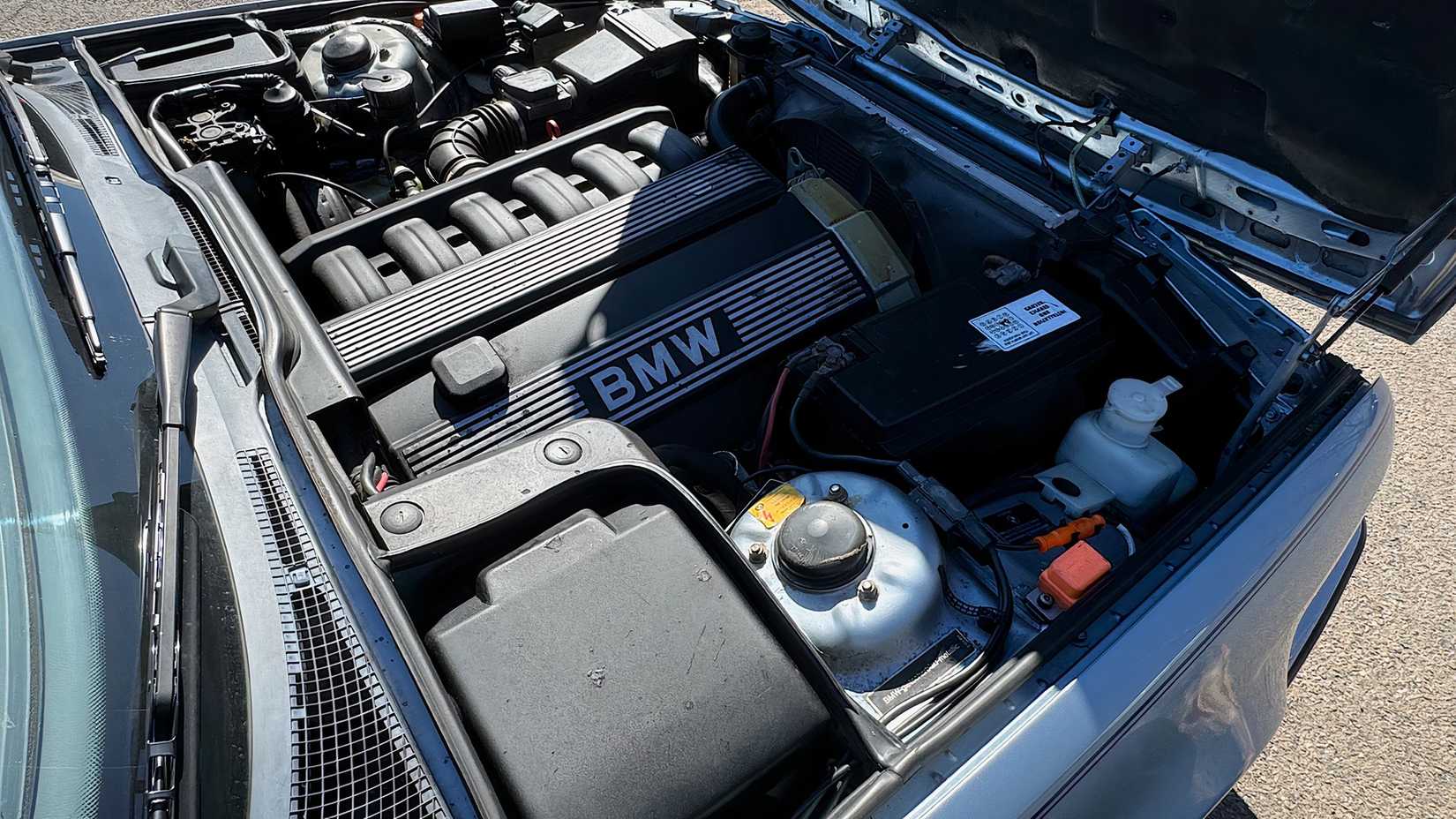
High-angle shot of 1991 BMW 525i engine bay showing M50 engineBring A Trailer
The German engine that sits under the hood of some of the best cars of the 1990s: the BMW M50. A DOHC, lightweight, and high-revving mill that came to epitomize BMW’s performance in the era. With maximum power being spat out at between 6,000 RPM and 6,750 RPM, this engine changed the face of the inline-six forever and helped BMW create some of the most sought-after cars of the time with either the original M50 or what was to come after it.
We take our hats off to this high-revving beast and the natural progression of the BMW inline-six that followed, to which we now have many a fantastic option.
How The M50 Came To Be
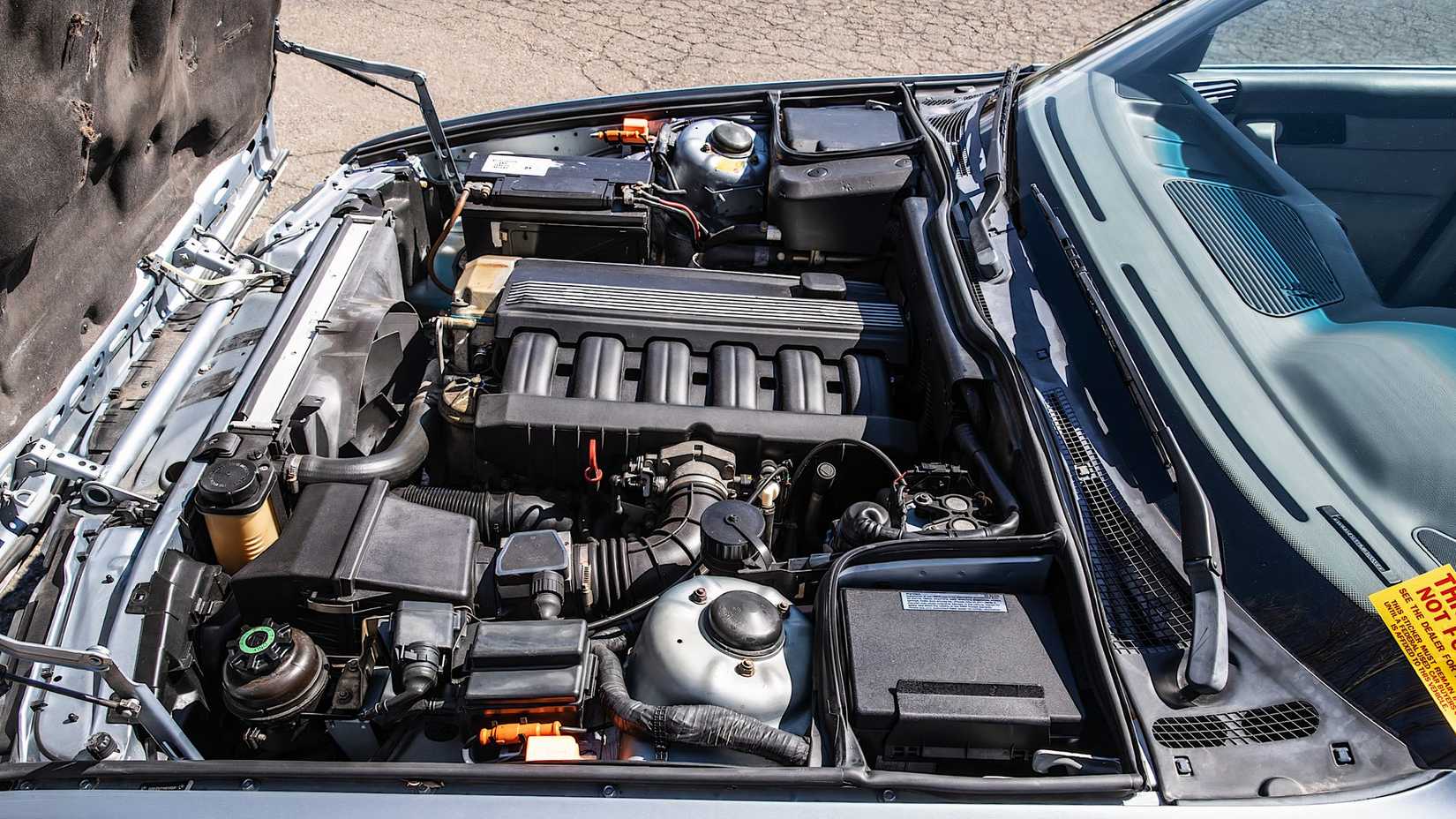
Side-shot of 1991 BMW 525i engine bay showing M50 engineBring A Trailer
Production of the M50 started in 1990 to replace the M20 engine that powered some of the 1970s and 1980s best BMW models, such as the E12 5 Series, the E21 3 Series, the E34 5 Series (525i), and the almighty late 1980s BMW Z1. The time had come for BMW to upgrade the M50’s predecessor, which had been in service since 1977, and with the upgrade came a whole host of changes that made some significant improvements, which include:
- DOHC w/ Four Valves Per Cylinder. The M20 boasts SOHC with two valves per cylinder.
- Coil-On-Plug Ignition. The M20 features standard coil ignition.
- Knock Sensor.
- Lightweight Plastic Intake Manifold.
- Variable Valve Timing. (Single VANOS in select engines, marking the first BMW engines to boast it).
The M50 is built utilizing iron for the block and aluminum for the heads, weighing between 300 and 350 pounds. In comparison, the M20 weighs in at 360 pounds, so not only was the new design more sophisticated, but it also weighed less, which made it better for overall weight saving and improved performance for the models it is fitted to.
Multiple Displacements Mean Different Power
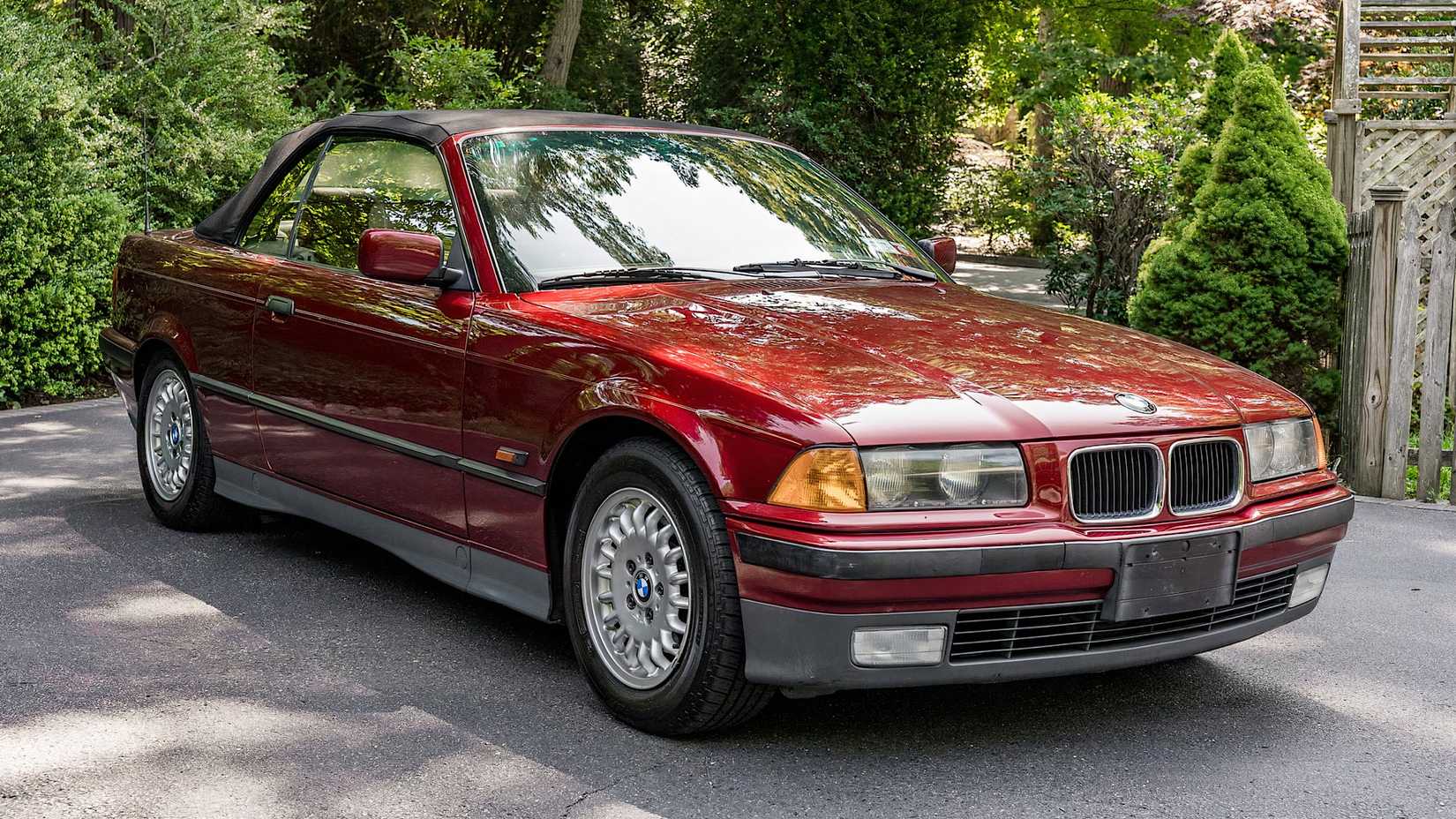
Low-angle front 3/4 shot of 1995 BMW 325i Convertible in red parked on drivewayBring A Trailer
There is not one M50 engine that fits all. M50 is the name of the engine family, and there are multiple variations of it depending on what model and year of BMW it is equipped in. There are different displacements and, most crucially, different technologies utilized and different power outputs in each variation as the models progressed between 1990 and 1996.
Model
M50B20
M50B20TÜ
M50B24TÜ
M50B25
M50B25TÜ
Displacement
2.0-Liters
2.0-Liters
2.5-Liters
2.5-Liters
2.5-Liters
Horsepower
148 Horsepower @6,000 RPM
148 Horsepower @5,900 RPM
185 Horsepower @5,900 RPM
189 Horsepower @6,000 RPM
189 Horsepower @5,900 RPM
Torque
140 LB-FT
140 LB-FT
180 LB-FT
181 LB-FT
180 LB-FT
Model Years
1990-1992
1992-1996
1992-1996
1990-1992
1992-1996
The MB50 models marked with TÜ at the end of their codes, which stands for “Technische Überarbeitung” or “Technical Revision,” have all been fitted with VVT or “Single VANOS” on the cylinder head. This system adjusts the timing of the intake camshaft in either an advanced position at low speeds (low RPMs) and opens and closes the intake valves faster to increase torque, or at high RPMs, with the system adjusting the timing of the intake valve to create an overlap between the intake and exhaust. This results in better emission control when cruising at high speeds and a wider torque band.
With the different displacements and power outputs between ’90 and ’96, the M50 also features different compression ratios, with the M50B20 boasting a compression ratio of 10.5:1, the B20TÜ raised to 11.0:1, the B24TÜ back down at 10.5:1, the B25 even lower at 10.0:1, and the B25TÜ raised again to 10.5:1, so depending on what car you have from the era will depend on what kind of M50 mill you are getting under the hood.

Related
The Biggest BMW Motorcycle Engine In 2025
BMW’s biggest engine today is its biggest ever engine, and it powers a range of full-size cruisers and tourers
The Best Cars The BMW M50 Is Equipped In

Front 3/4 shot of 1998 BMW M3 Coupe in white parked in front of wallBring A Trailer
The M50 engine marked a pivotal time for BMW engine design and provided us with an ultra-smooth, responsive, reliable, and potent naturally aspirated engine that doesn’t need any sort of motivation from a turbo (though fitting one has proved to be excellent fun) and powered some of the era’s best Bimmers.
Models years from late 1992 to 1995 of the BMW E36 320i were equipped with an M50B20TÜ and helped to make the 320i a very impressive and popular compact luxury car with performance-like top speeds of 140 MPH and 0-60 MPH times in around 9 seconds. The E34 5 Series (525i) is equipped with an M50B20 for the 1991 and 1992 model years but was given an upgrade to the M50B20TÜ mill from ’92 to 96 and can achieve top speeds of around 143 MPH, while the 1993-1995 BMW 325i (E36) features an M50B25TÜ and can cruise to 60 MPH in around 8 seconds, and though it is not the quickest, it gives you a smooth and comfortable ride whilst doing it.
But, there is an even more impressive group of engines that were born from the M50 and feature in some seriously potent BMWs from the 1990s; it comes in the form of the S50.
The High-Output Variant: The BMW S50
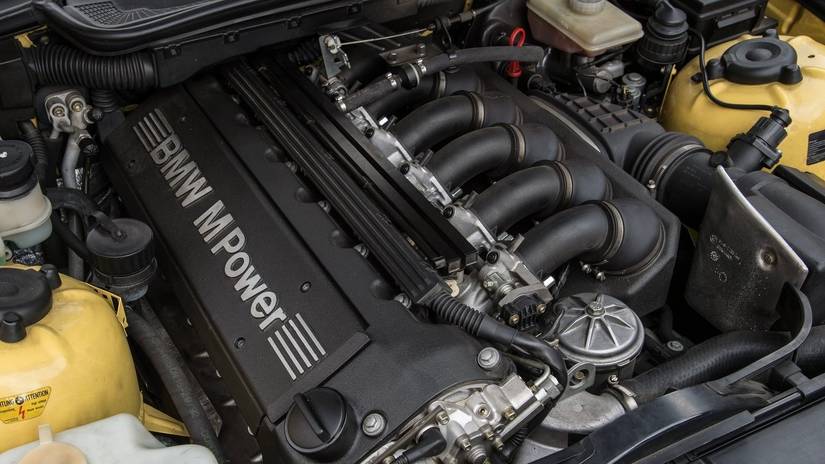
Close up of 1992 BMW M3 Coupe S50 engine.BMW
Available in three flavors: the S50B30, S50B30US (which was initially fitted to models bound for the U.S.A. only), and the S50B32, this cast-iron and aluminum powertrain was designed to replace the BMW S14 engine utilized in the legendary BMW M3 (E30). These high-output variants can redline all the way up to between 7,000 RPM and 7,200 RPM and give the “M” models that extra bit of spark that they are so famous for.
The S50B30 was never used in any vehicles built for the American market and features in the European 1992-1996 BMW M3 (E36). It still showcases Single VANOS but is also fitted with a Bosch Motronic M3.3 engine management system, a higher compression ratio of 10.8:1, a larger displacement of 3.0 liters, individual throttle bodies for each cylinder, and improved intake and exhaust systems. The result: 282 horsepower and 236 pound-feet of torque. The US market 1994-1995 BMW M3 boasts a slightly different variation of the S50B30 called the S50B30US, which has a lower output of 240 horsepower and a lower compression ratio of 10.5:1.
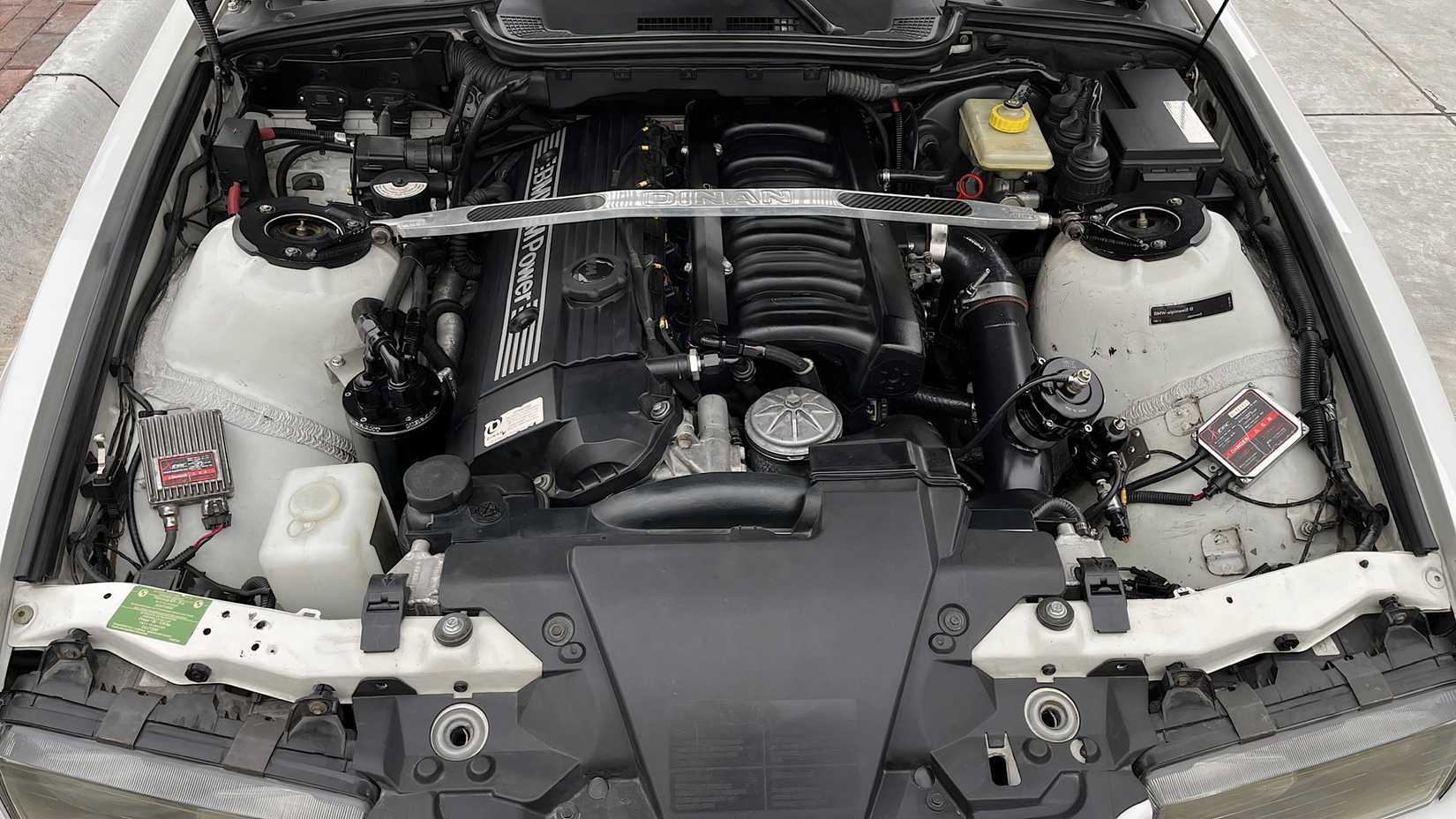
Close-up shot of 1998 BMW M3 Coupe engine bay showing S52B32 engineBring A Trailer
Though the compression ratio is the same as the M50B25TÜ and both engines are closely related, the S50B30US features a sturdier crankshaft, connecting rods, pistons, and camshaft, with a redline at 7,000 RPM. This engine was only utilized for one year for the US market M3 before being replaced by the S52 engine, and by the time 1995 rolled around, BMW was looking to replace the S50B30. They landed upon the S50B32, which comes in at a higher displacement of 3.2 liters, has a higher compression ratio of 11.3:1, and boasts double-VANOS (so, VVT on both camshafts), a secondary oil pickup, an improved Siemens MSS50 management system, three knock sensors, and can redline up to 7,600 RPM.
The S50B32 is the epitome of the higher-output variant of the M50 and can kick out up to 316 horsepower and 260 pound-feet of torque. Unfortunately, it again wasn’t destined for the US market but was equipped under the hood of the 1995 to 1999 E36 BMW M3, the 1996 to 2000 BMW M Coupé, and the M Roadster.
The Fastest Cars With The BMW M50 And BMW S50 Under The Hood
So the question is, which one is the fastest? It is quite naturally the higher-horsepower/higher-torque S50, but that doesn’t mean that the models equipped with one of the M50 variations are slow. They may not be able to take on the S50-toting M models, but for executive cars of the 1990s, they are still pretty rapid and fun to drive.
From the records that are available, the quickest model to 60 MPH that boasts the M50 engine is the 1995 BMW 325i, which is equipped with a 192-horsepower M50B25TÜ and can hit 60 MPH in around 8 seconds, with a flat-out speed of 144 MPH. It is a slightly different story for the S50. In 1995, BMW released the limited-edition BMW M3 GT, which has a derestricted top speed of 171 MPH, thanks to a beefed-up S50B30 mill that kicks out 295 horsepower instead of the 282 horsepower produced by the regular S50B30 engines.
But, it is the 2000 BMW M Coupé (based on the Z3) that has the quickest 0-60 MPH time of 5.1 seconds, beating the M3 GT by 0.5 seconds.

Related
10 Cars That Prove Inline-Six Engines Are The Best Design Ever
Smooth and balanced is the name of the game with these legends.
Potential Problems That Plague The M50
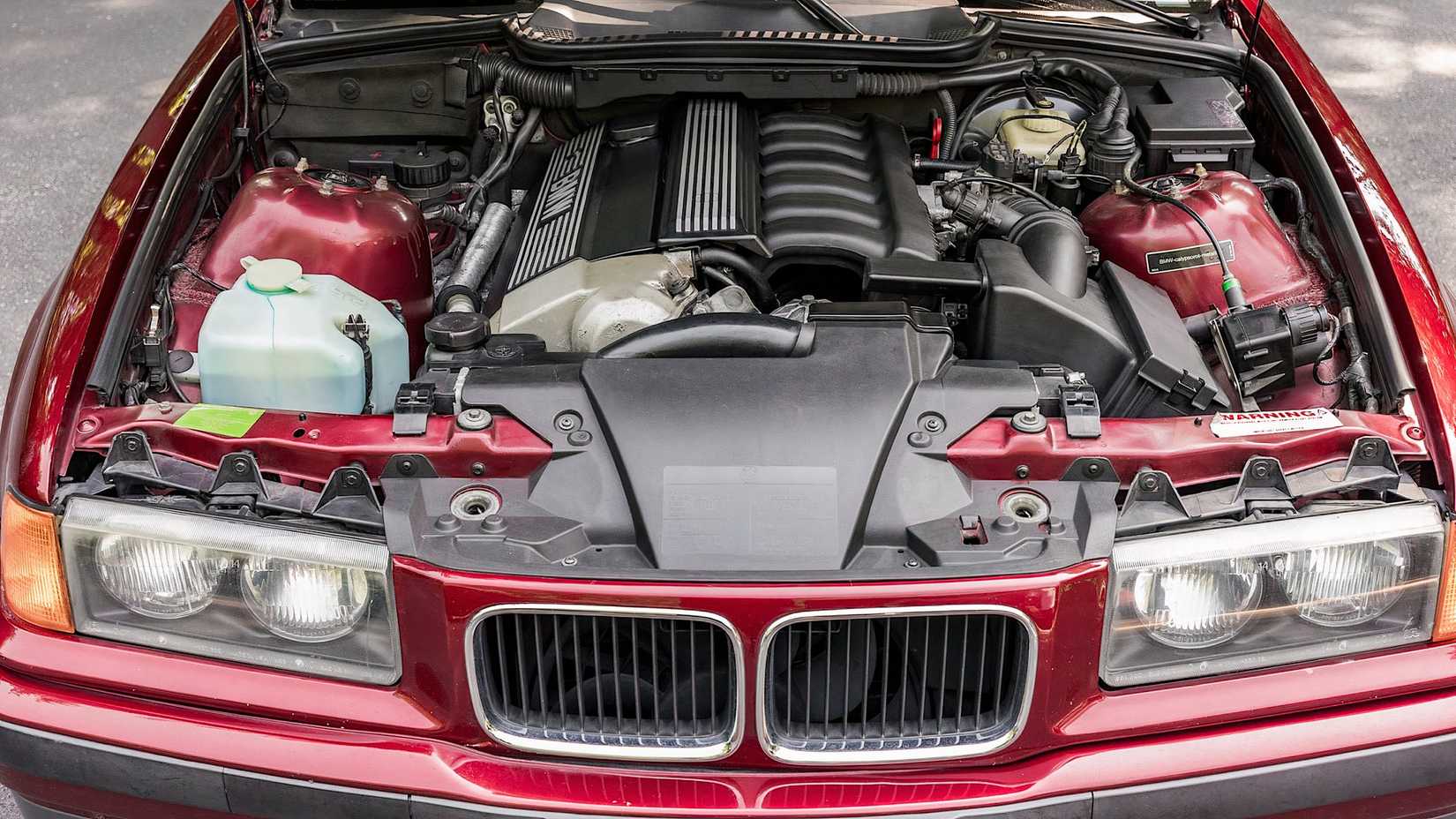
Close-up shot of 1995 BMW 325i engine bay showing BMW M50 engineBring A Trailer
So, yes, the M50 marked a huge turning point for BMW with the introduction of the DOHC setup and VANOS VVT. It is a beautifully high-revving engine, it can kick out some decent horsepower, and it is featured in a lot of legendary cars, but there are, unfortunately, still some drawbacks to the high-revving super weapon that we are sure a lot of die-hard BMW and performance fans are willing to look the other way on, but there are some nonetheless.
Some common problems that have been reported to happen to a large swathe of BMW M50 engines include:
- Cooling System Issues. Like some older BMW engines, components of the water pumps and cooling systems can break down and lead to overheating and head gasket problems.
- Ignition System and Spark Plug Problems. As the M50 was the first BMW engine to boast coil-on-plug ignition, it does face some teething problems.
- Cracking Radiator Expansion Tank. The tank you pour engine coolant into is pressurized and may crack. If left, over time, the cracks can worsen and can cause the tank to pop – which can drain the whole engine of coolant.
- Idle Control Valve Problems. The M50 can run rough, which may mean bad spark plugs, but a common problem that owners have found is the idle control valve. Located near the intake manifold, it can collect dirt and become faulty.
What Came After The M50 Engine?
The M50 is not a long-lived engine in the grand scheme of things, and by 1994, BMW was already starting to phase it out for the M52, which had started production in the same year. Like the M50, the M52 is utilized in a selection of 3 Series and 5 Series BMWs from between 1994 and 2000.
The M52 was again an upgraded version of the inline-sixes that BMW has continued to nail over the decades and boasts an aluminum block instead of an iron one, double VANOS on later models, a different throttle body design, revised coolant passages, and a new cooling system.
Like the M50, it also has a more potent variation that is utilized in M models from the late 1990s called the S52. It is less powerful than the M52 and boasts a heavier iron block, but it is still useful, smooth, and high-revving. Most notably, the S52 sits under the hood of the 2000 BMW Z3 and kicks out 240-horsepower at 6,000 RPM and 236-pound-feet of torque at 3,800 RPM, with a redline of 7,000 RPM.
Other Stand-Out Inline-Six Engines

Front 3/4 shot of 1994 BMW M3 Coupe featuring S50B30 engine in blue parked in studioBring A Trailer
Some of the BMWs that boast the M50 and S50 are relatively obtainable models on the used market today, with the 1995 BMW 320i (E36) commanding an average auction price of $14,318, the more potent 2000 BMW M Coupe boasting an average auction price of $35,398, and the 1999 BMW M3 (E36) with an average auction price of $21,127.
Though the M50 stands as the high-revving German weapon from the 1990s and is undoubtedly a legendary mill, there is no shortage of brilliant inline-six engines made by BMW and other automakers that have been featured in some awesome models and are living proof that the inline-six is one of the best designs to ever grace the auto world.
- Chrysler Slant Six. Features in the 1969 Plymouth Barracuda and kicks out 145-horsepower.
- 4.0-Liter AMC Inline-Six. Powers the Jeep Wrangler TJ and has more than proved itself as a rugged off-road companion.
- 2JZ-GTE Inline-Six. A 326-horsepower bi-turbo 3.0-liter inline-six legend that is featured in .
- BMW S58. The driving force behind the 2023 BMW M2. It kicks out a massive 453-horsepower with motivation from a potent twin-turbo setup and shoots the M2 to 60 MPH in 4.3 seconds.
- RB26DETT Inline-Six. Sits under the hood of the Nissan Skyline R32, produces 276 horsepower, and is renowned for its bulletproof build.