

January 2026
Now more than a decade in, the Traverse City Business Legends Hall of Fame includes a robust and diverse collection of business leaders, civic champions, philanthropists and others who have left their mark on the Grand Traverse region. Each of these individuals – some living, some deceased – made lifelong contributions to the economic growth and/or long-term vitality of northwest Michigan. After a 10-member inaugural class in 2013, two members have been inducted each year. This year, we induct Hagerty Insurance Agency Co-Founder Louise Hagerty and early business leader R. Floyd Clinch into this distinguished group.

Louise Hagerty (1935-2024)
“The Driving Force”
Rather than someone who was just along for the ride in the formative years of the world’s leading collector car insurance agency, Louise Hagerty was a driving force that helped set the company up for tremendous success.
Born in Pontiac, Hagerty (née Kucera) grew up in Leelanau County and graduated as class valedictorian from Maple City High School. She later met and married Frank Hagerty, and in 1984 the two famously launched what was then known as Hagerty Marine Insurance from the basement of their family home on Old Mission Peninsula. This endeavor was their attempt to fill a gap formed by traditional insurance agencies’ reluctance to insure classic wooden boats.
“They had one phone line and an answering machine. My dad was the salesman – outward-facing, relational, a natural storyteller. My mom was the operator. She built the machine that made his promises real,” their son and current CEO McKeel Hagerty said. “If you want to understand Hagerty, you have to understand that division of labor. Dad had vision. Mom made it work.”
Today, Hagerty employs about 1,700 people worldwide (including about 500 in the Traverse City region) and insures more than 2.5 million vehicles. Collector car insurance was added in 1991 and quickly overtook boat coverage, becoming the company’s hallmark.
Louise, who served as Hagerty’s first CEO, brought in key early talent, “insisted on systems and discipline before we even knew we needed them” and was adept at pursuing technology to scale service without losing quality, McKeel says.
Louise was a master of structure, processes, preparation, goals and accountability, all while being polite and respectful to everyone, McKeel says. Her combination of business acumen and personal skills served her and the company tremendously over the years.
“The lessons I carry from her are simple but not easy: High standards can be quiet – and still be non-negotiable. Good process is a form of respect. Trust good people, then expect them to be worthy of it,” he said. “And if you’re going to build something meant to last, invest in the community around it, not just the company.”
McKeel and his sisters Tammy and Kim Hagerty all played vital roles in the company over the years, in no small part due to Louise’s urging.
“Perhaps her best move was convincing all three of her children to return to Traverse City to join the family business,” Tammy said. “In doing so, she guaranteed the longevity and growth path of Hagerty.”
Louise also lived a rich life outside of the family business. She had active roles in the Traverse City Human Rights Commission, the League of Women Voters, Central United Methodist Church and the Friendly Garden Club of Traverse City. In addition, she served on the boards of directors at the City Opera House, Traverse City State Bank and Central Day Care. She was also a rabid Michigan State University sports fan, accomplished angler and very dedicated mother.
In 2007, her efforts were recognized with the Athena Award, honoring her role in helping other women reach their full leadership potential.
R. Floyd Clinch (1865-1930)
“Father of the Park Place”
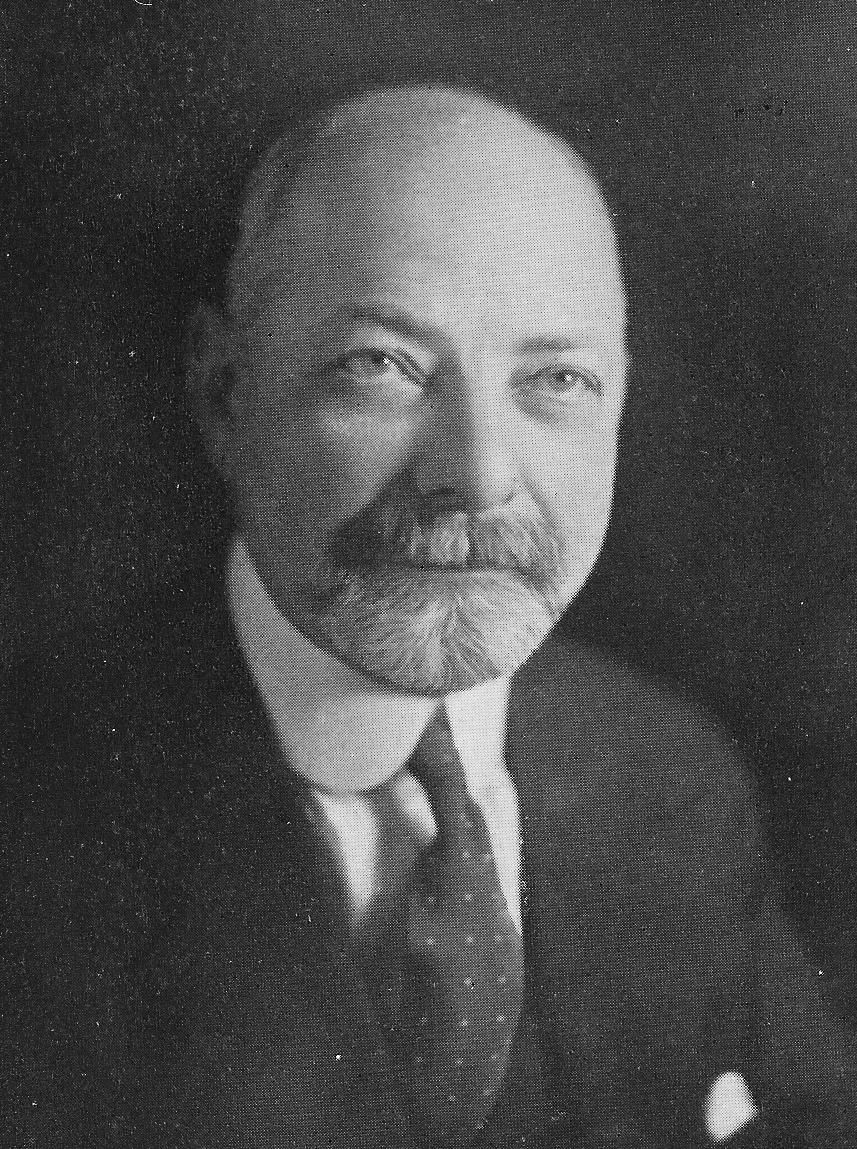
There’s not a ton of readily available information about R. Floyd Clinch, but what little we do know makes him a shoo-in for the Traverse City Business Legends Hall of Fame.
Clinch was a son-in-law of Traverse City founding father A. Tracy Lay, who co-owned the tremendously influential Hannah, Lay & Co. When Julius Hannah died in 1905 (a mere 14 months after his father, Perry Hannah), Clinch helped in the operations of the company and later became president.
His most significant lasting influence is the Park Place Hotel, which was designed and built under his watch in the late 1920s. Hannah, Lay & Co. owned a smaller, wood-framed hotel that sat on the site for about 50 years, and Clinch hired prominent Chicago architect Benjamin H. Marshall to design a modern brick tower to replace it.
Marshall was very popular at the time, and his hiring created considerable buzz in what was still a small northern Michigan town. The structure cost about $750,000 to build and opened to much fanfare in June, 1930.
With its welcoming beacon and imposing stature, the Park Place quickly became an iconic feature of Traverse City (and the finest hotel in all of northern Michigan). Despite some tough times and various ownership changes over the years, the Park Place remains one of the city’s most prominent and familiar landmarks and a successful business in the heart of the city.
Clinch spent much of his time in Chicago, traveling back and forth several times a year, and was heavily involved in various business and philanthropic activities in both Chicago and Traverse City. Aside from his leadership of one of Traverse City’s most influential companies in Hannah, Lay & Co., other local endeavors included serving as president of Traverse City State Bank and launching the Traverse City Refrigerator Company.
In 1929, he was the very first recipient of the Traverse City Area Chamber of Commerce’s (now Traverse Connect’s) annual distinguished service award. Nearly 100 prominent business and civic leaders have followed in his footsteps.
Clinch’s family was also the namesake of Traverse City’s Clinch Park and the Duncan L. Clinch marina. Newspaper records indicate R. Floyd had both a father and a son named Duncan L. Clinch, so he was influential enough to have the waterfront space named in honor of his father or son (or perhaps both). It is not clear if he or the company owned any of the waterfront land that became the park or marina.
Some sources suggest the park was named for R. Floyd himself, but the naming of the associated marina for Duncan suggests the park was also named for Duncan.
See the January print edition for all of the Traverse City Business Legends from the past 13 years.