
Bulgaria’s political scene reacted strongly to the arrest and extradition of Venezuelan President Nicolas Maduro to the United States, with opinions sharply divided along party lines.
GERB MP Delyan Dobrev condemned Maduro for transforming Venezuela from a wealthy nation into one facing extreme poverty and economic collapse, citing hyperinflation, mass emigration of nearly one-third of the population, and international isolation. On Facebook, Dobrev applauded Trump for the operation, highlighting that American investments in mining and other sectors could create jobs, boost wages, and generate revenue for Venezuela’s pension and healthcare systems. He also expressed hope that other dictators around the world might face similar consequences.
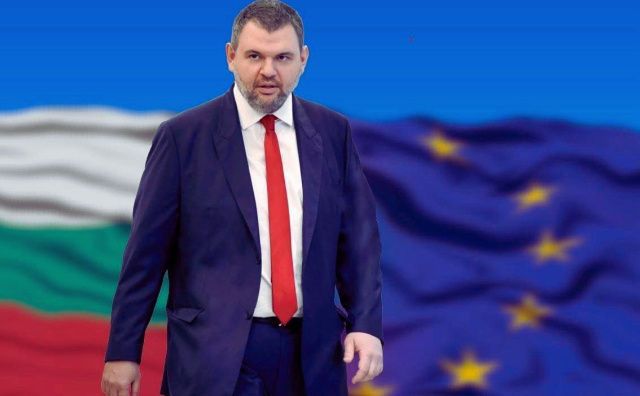
The leader of DPS-New Beginning, Delyan Peevski, emphasized the importance of decisive action to protect democracy, freedom, and the rule of law, framing Maduro’s removal as an example of strong leadership. He praised the United States for taking the initiative to remove the Venezuelan dictator, reinforcing the message that authoritarian regimes can be held accountable.
In contrast, Kostadin Kostadinov, head of Revival, strongly criticized the US operation, calling it an act of aggression and urging the European Union to respond with sanctions, military aid to Venezuela, and a complete break in relations with Washington. Kostadinov drew parallels with the EU’s response to Russia’s invasion of Ukraine, questioning why a similar stance was not applied in this case. He also highlighted what he saw as hypocrisy in public demonstrations, noting that symbolic support for Venezuela should be as visible as it has been for Ukraine.
Bozhidar Bozhanov, co-chair of Yes, Bulgaria, provided a nuanced perspective, noting that Maduro was an illegitimate president elected through large-scale electoral manipulations, while the legitimate president, Edmundo Gonzalez, won over 60% in the 2024 elections and was recognized by both the EU and the US. Bozhanov argued that, in practice, the legality of Maduro’s arrest matters little in the world of realpolitik, as the American judicial system is unlikely to question the method of extradition, and any UN declaration condemning the act would likely be symbolic rather than enforceable. He emphasized that Bulgaria’s assessment should focus on the political consequences of the event rather than its legal dimensions.
Bulgaria’s official silence on the US intervention in Venezuela is striking, especially as public debate in the country roars across social and traditional media, writes Vesselin Zhelev from Club Z. While Maduro’s regime embodies authoritarianism, economic collapse, and foreign influence from China and Russia, the military removal of a foreign leader without a UN mandate raises dangerous precedents, exposing double standards in international law and power politics. The intervention appears driven primarily by strategic and economic interests rather than values, with Washington sidelining legitimate opposition figures and repeating mistakes seen in Iraq and Afghanistan.
In this context, Bulgaria’s lack of a clear political stance, limited to monitoring the situation and opening a crisis line for citizens, underscores both diplomatic negligence and deeper foreign policy ineffectiveness, especially when neighboring countries and EU candidates have articulated positions. The episode highlights the gap between rhetorical aspirations of neutrality or global engagement and the reality of geopolitical dependence, leaving Bulgaria’s role in international affairs embarrassingly undefined.