
Published on
January 6, 2026

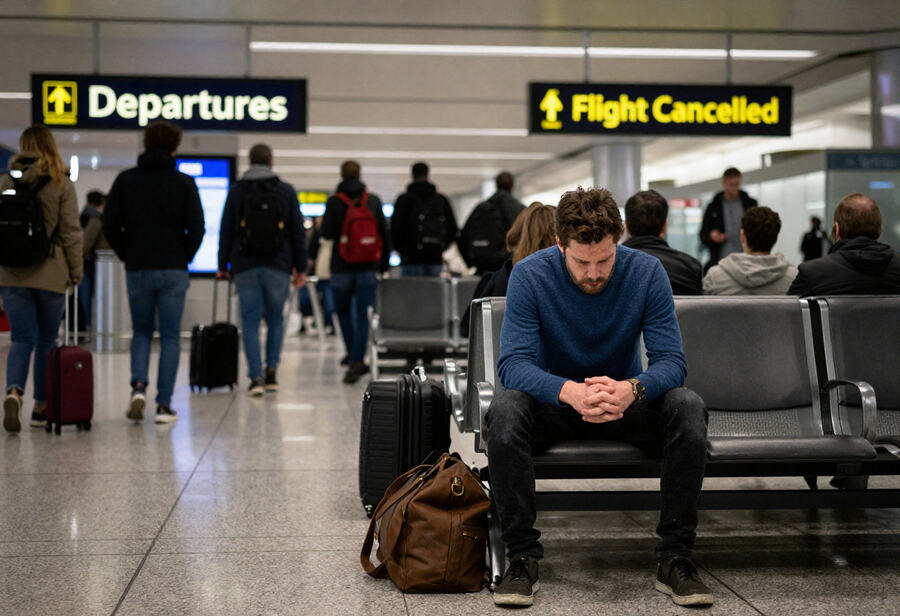
Scotland, Spain, Denmark, the UK, Portugal, and other European nations are grappling with unprecedented air travel chaos as Greece’s airspace shutdown for over seven hours grounded 382 flights and triggered 83 cancellations. The breakdown in communication systems at Athens’ air traffic control center left air traffic controllers unable to manage flights, causing widespread disruption. The closure not only halted flights to and from Greece but also led to cascading delays and cancellations across multiple countries, leaving thousands of passengers stranded and airlines scrambling to reroute traffic.
Europe’s travel industry was plunged into chaos as Greece’s airspace shutdown for over seven hours, severely disrupting flights across Scotland, Spain, Denmark, the UK, Portugal, and other European nations. The unprecedented failure of both primary and backup air traffic control communication systems in Athens left air traffic controllers unable to communicate with aircraft, grounding flights and triggering widespread delays and cancellations. The breakdown exposed critical vulnerabilities in Europe’s aviation infrastructure, particularly in Greece, raising urgent concerns about the safety and resilience of air traffic management systems continent-wide.
In an unprecedented turn of events, Greece’s airspace was shut down for nearly eight hours, causing widespread chaos across Europe. The closure of Athens’ airspace, a critical hub for flights between Europe, the Middle East, and Africa, grounded hundreds of flights, impacting not only Greece but also disrupting air travel to and from numerous countries including Scotland, Spain, Denmark, the UK, Portugal, and others.
The shutdown occurred due to an unprecedented failure in Greece’s air traffic control communication systems. Both primary and backup systems failed, forcing air traffic controllers to rely on emergency procedures. This incident highlights the vulnerabilities in Europe’s air traffic infrastructure and serves as a stark reminder of the risks posed by chronic underinvestment in critical aviation systems.
A Nightmarish Scenario for Air Traffic
Greece’s airspace closure on the night of the incident has affected not just local travel but caused ripple effects across the continent. At the height of the disruption, air traffic controllers at Athens Area Control Center (ACC) and Macedonia Control Center were unable to communicate with aircraft in flight due to a technical malfunction. Flights in the Athens Flight Information Region (FIR) were grounded as controllers struggled to safely manage incoming and outgoing air traffic.
Greece’s air traffic is of strategic importance, as it connects key travel corridors between Europe, the Middle East, and Africa. The failure was catastrophic, as flight-tracking data showed Greek airspace nearly completely empty — an extremely rare occurrence. While the lack of accidents is a relief, it is clear that such a breakdown exposed weaknesses in Greece’s air traffic management and raised questions about the state of European air traffic control systems.
The Strain on Airlines: Cancellations and Delays
The shutdown caused major disruption to airlines, with some reporting up to 50% of their flights cancelled. High-profile airlines such as SAS, Delta, Lufthansa, Brussels Airlines, Iberia, ITA Airways, and Air France were some of the most affected by the shutdown. The closures and subsequent delays left thousands of passengers stranded across airports in Athens, Thessaloniki, and other key hubs in Europe.
Airlines scrambled to reschedule flights, reroute international journeys, and divert passengers to neighboring airports like Rome, Tirana, Larnaca, and Budapest. The impact was not only felt at the airports where the cancellations were concentrated but also spread through European airspace as disruptions trickled down to regional routes.
Airlines Affected by Greece Airspace Shutdown
Routes Affected by Greece Airspace Shutdown:
- Athens to Amsterdam (AMS)
- Athens to Edinburgh (EDI)
- Athens to London Heathrow (LHR)
- Athens to Geneva (GVA)
- Athens to Copenhagen (CPH)
- Athens to Bucharest (OTP)
- Athens to Rome (FCO)
- Athens to Heraklion (HER)
- Athens to Lisbon (LIS)
- Athens to Thessaloniki (SKG)
- Athens to Berlin (BER)
Averting a Crisis: The Role of Regional Cooperation
While Greece’s airspace was grounded, the situation could have been far worse were it not for the quick and efficient cooperation from neighboring countries. Air traffic controllers in countries such as Italy, Cyprus, Malta, Turkey, Bulgaria, Romania, and others worked together seamlessly to manage diverted flights and rerouted air traffic. This collaboration, although under extraordinary pressure, prevented a regional crisis and ensured that safety remained the number one priority.
Investigation and Accountability
Following the technical failure, Greek authorities have launched a judicial inquiry to determine the exact cause of the malfunction. Initial reports have ruled out the possibility of a cyberattack or sabotage, instead pointing to a failure of the central radio frequency systems at both the Athens and Macedonia control centers.
As the investigation continues, one of the central questions will be the extent of underinvestment in Greece’s air traffic infrastructure. The country’s air traffic control services, which operate under the Hellenic Air Navigation Services (HASP), have been operating with low revenue levels, leading to a lack of modernized equipment and outdated systems.
European air traffic controller unions, including the Air Traffic Controllers European Unions Coordination (ATCEUC), have called for immediate investment in infrastructure to address these vulnerabilities. They have highlighted that the Greek government’s plan for modernization, which extends to 2028, is insufficient to meet the rising demands of the aviation sector.
Europe’s Wake-Up Call: Addressing Underinvestment in Aviation
The Greece airspace shutdown has raised alarms about the state of Europe’s aviation infrastructure, particularly in countries that are still operating with outdated air traffic management systems. ATCEUC has warned that this incident is not isolated and signals the need for immediate political and financial action to ensure the safety and resilience of Europe’s airspace.
The union federation emphasized that Europe faces increasing demand for air travel amidst growing geopolitical tensions and an evolving global travel landscape. Without urgent reforms and investments, air traffic control systems across Europe risk becoming a liability to both travelers and the aviation industry.
Airlines and Governments Must Act Swiftly
As the investigation continues, it is essential that both airlines and government bodies take immediate action to improve resilience across Europe’s aviation sector. The European Transport Commissioner and other key stakeholders must engage directly with air traffic controllers and service providers to ensure that the necessary resources and expertise are in place to prevent future breakdowns.
In Greece, it is crucial that HASP engages in transparent discussions with air traffic controllers and operational staff to address these issues head-on. Equally, the European Commission must work alongside Greece and other nations to ensure that investments in air traffic control systems are not just sufficient but timely, particularly as Europe faces mounting challenges in air traffic safety and efficiency.
The shutdown of Greek airspace for nearly eight hours serves as a wake-up call for Europe’s aviation industry. While the professional handling of the situation by air traffic controllers prevented a catastrophe, the event highlights the critical need for comprehensive investments in air traffic management systems across the continent.
In the aftermath of the incident, it is clear that Greece and other European nations must confront the challenges posed by underfunded and outdated infrastructure. The success of regional cooperation during the crisis underscores the importance of collaboration, but such reliance on emergency measures should not be the norm. Only through sustained investment and modernization can Europe safeguard the future of its aviation sector and protect the safety of its airspace.
Scotland, Spain, Denmark, the UK, Portugal, and more are struggling with unprecedented air travel chaos as Greece’s airspace shutdown for over seven hours grounded 382 flights and triggered 83 cancellations. The failure of air traffic control communications in Athens led to widespread disruptions across Europe.
As Europe recovers from this incident, the lessons learned must serve as a catalyst for broader reforms aimed at ensuring the resilience and safety of air traffic management systems for the future.
