
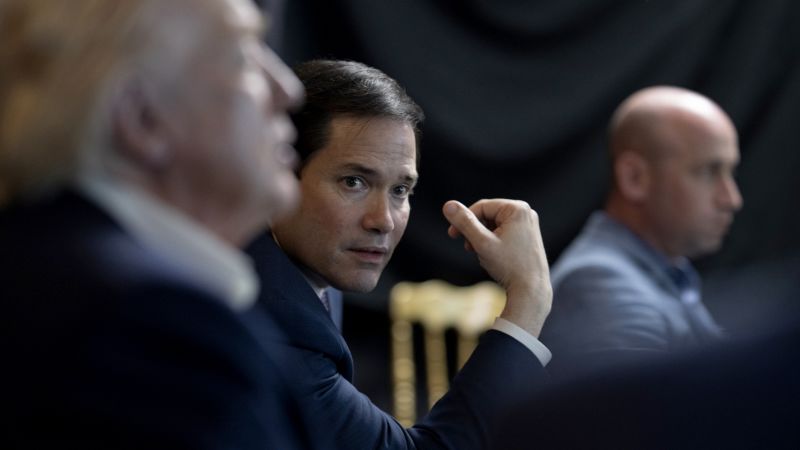
As US special forces carried out an audacious, night-time raid to capture Venezuelan President Nicolás Maduro Friday night, President Donald Trump watched the action unfold from his estate at Mar-a-Lago. Among those at his side was Marco Rubio, his powerful secretary of state and national security advisor.
It was a moment years in the making for Rubio, the son of Cuban immigrants whose political career originated in south Florida, home to thousands of Venezuelan immigrants who fled Maduro’s regime.
Rubio has long had his sights on Maduro, sources say, and he was a driving force of the strategy that set the stage for the dramatic scenes that played out in the de-facto Situation Room in Florida that night.
Hours later, Trump announced he was tasking Rubio to help “run” Venezuela along with other key officials in the room — a vague pronouncement that raised more questions than it answered, but also underscored Rubio’s indispensable role.
His latest task leading the administration’s nation-building efforts cements his outsized influence over policy and marks an extraordinary rise for the top US diplomat. For a man who already has more than one job in Washington, this may be his riskiest one yet.
“There’s a lot about Venezuela that is not easily governed,” said a former senior US diplomat who spoke to CNN on condition of anonymity. “Trying to impose order on a place that’s larger than Iraq, it’s not an easy thing.”
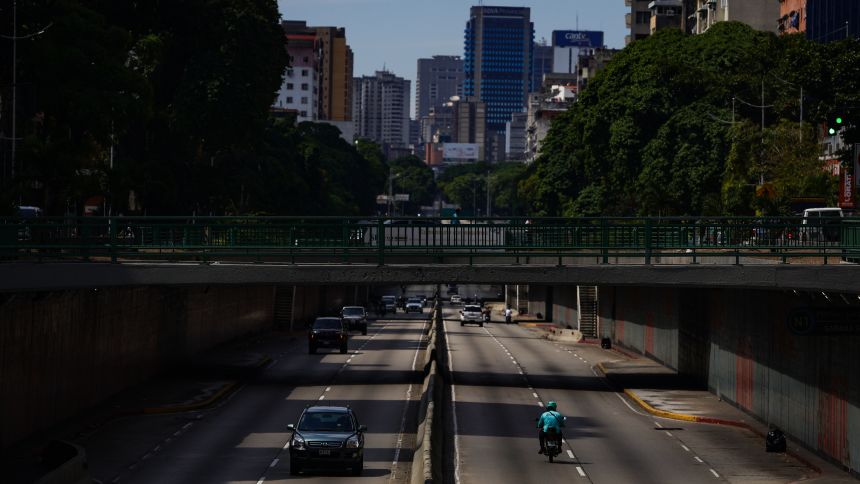
“My argument is: go in and get out,” the person added.
Among former diplomats and experts on the region, there are deep questions about US plans for a post-Maduro Venezuela, how they will be executed, and how long the officials formerly aligned with Maduro will remain in power.
Coming up with answers to those questions will largely fall to Rubio and his team.
“My hope is that (the administration) really have planned this out, and there’s going to be a scheduled tick-tock of how this is going to go,” said Todd Robinson, the former acting US ambassador to Venezuela during Trump’s first term. “But that has not been, I don’t think, anybody’s history with this administration.”
A former senior US official said that there was “an enormous amount of planning that was done” during the first Trump term related to a democratic transition in Venezuela. It is not clear if the administration will turn to those plans. And this official noted that with the remnants of the Maduro regime still in place, it would be “premature” to do so.
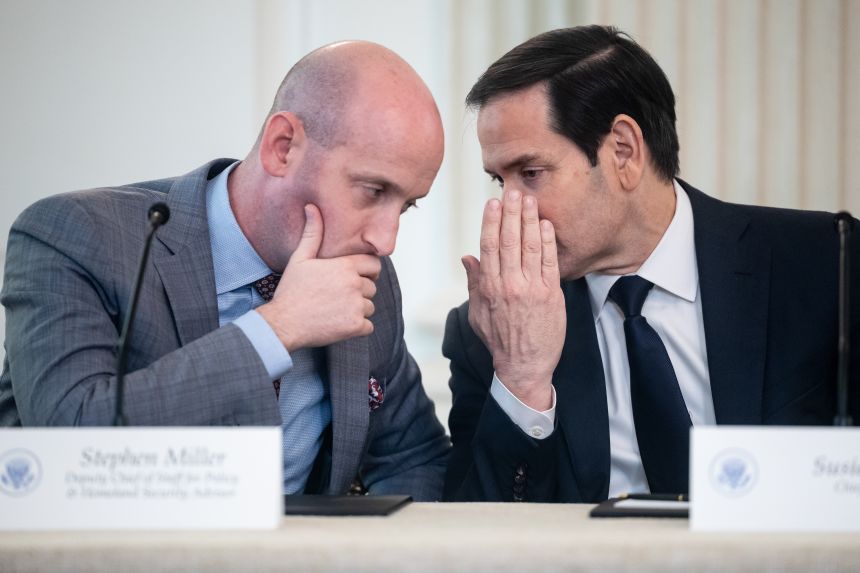
Rubio spent the months leading up to Saturday’s operation huddled at the White House with Trump’s Deputy Chief of Staff Stephen Miller to craft the strategy, sources told CNN.
Throughout, Rubio was rarely far from Trump. Rubio spends most of his time in Washington at the White House, which he uses as his base of operations. His time at the State Department is typically only for bilateral meetings. He has spent many weekends in Florida, alongside Trump. Rubio has eschewed trips abroad and dispatched his deputy instead.
As with many of the administration’s foreign policy priorities, the discussions about how to “run” Venezuela are being held by a small circle of trusted political advisors like Rubio and Miller. Richard Grenell, who initially had involvement in the portfolio in his capacity as diplomatic envoy for special missions, has not been a part of the policy development for months, US officials said. Nor have many high-ranking State Department officials.
As the administration prepared for a post-Maduro Venezuela, the day-after planning largely took place in Miller’s office at the White House, sources told CNN. It is an unlikely hub for this kind of planning — given Miller’s domestic-focused purview — but one that was chosen because of Miller and Rubio’s close relationship and a desire to keep a small circle of policy-makers involved in an administration wary of leaks.
The months of Venezuela discussions united Rubio and Miller, both of whom share hardline stances in their approach to foreign policy, sources familiar with their relationship tell CNN. Both men, sources say, have been core to the aggressive strategy to isolate Maduro and eventually capture him.
Whereas Miller and Rubio have disagreed on foreign policy positions in the past, particularly as it related to immigration, the two have found common ground in the approach they’ve taken to Venezuela, where countering drug trafficking ultimately took center stage as the policy justification for the months leading up to the Maduro capture.
While Rubio’s approach to Venezuela has been focused on ramping up economic, political and ultimately military pressure on Maduro’s government, Miller had initially viewed Venezuela as a home for deportations. In the end though, Miller came around to the argument that targeting Maduro as a drug trafficker propping up a criminal cartel apparatus served the US more strongly than maintaining relationships for immigration purposes, the sources said.
The two have worked closely together throughout the closed-door negotiations on how to best approach Venezuela, they said, and have moved in tandem on some of the most pressing decisions made by the White House — including in negotiations over strikes on alleged drug-smuggling boats and creating massive military presence in the region.
Miller and Rubio’s hardline attitude has at time won out against other top officials in conversations with the president over how to best target the country with the largest oil reserves in the world. It helps, the sources said, that both men have the full trust of Trump, and have been incredibly and consistently persuasive in the call for escalation against Maduro.
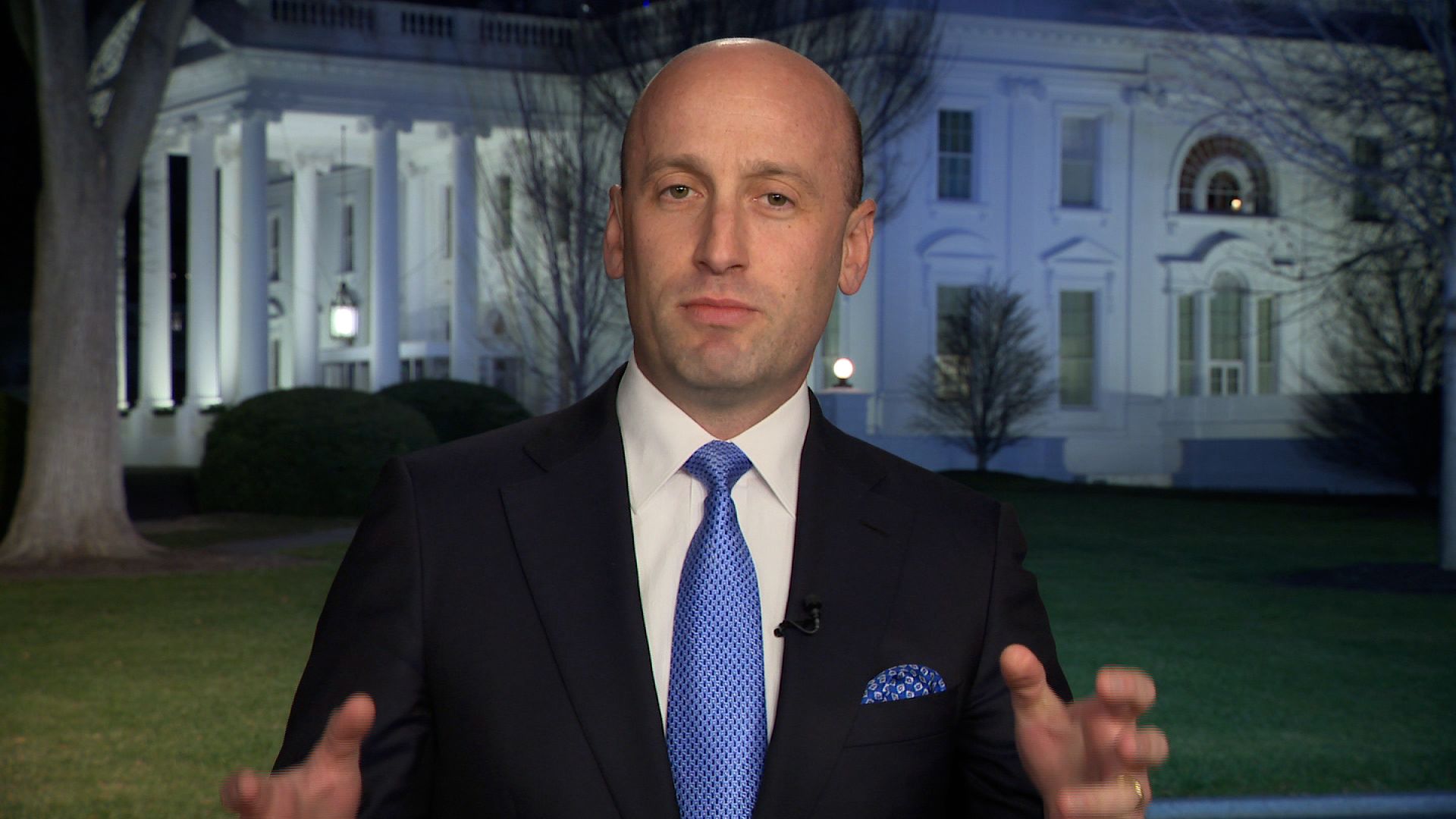
Stephen Miller says US is using military threat to maintain control of Venezuela

But now, neither Miller or Rubio are explicitly saying who the US envisions leading the country in the long-term.
“There might be individuals who are fugitives of American justice that could become part of the future conversation,” Miller told CNN on Monday. “I would say this way for those who may be indicted, the best choice they can possibly make is to be part of a constructive decision-making process for the future of Venezuela. The best decision they can make is to cooperate fully and completely with the United States.”
When asked to detail his day-to-day responsibilities in running Venezuela, Miller said that Rubio is the lead on the process.
White House press secretary Karoline Leavitt added, “Secretary Rubio [has] done a great job advancing President Trump’s foreign policy agenda as Secretary of State and National Security Advisor, as exemplified by this latest action arresting [narcoterrorist] Nicolas Maduro. He is a team player and everyone loves working with him in the West Wing.”
Rubio now faces intense criticism from lawmakers who say he claimed that the administration was not pursuing regime change in Venezuela, or strikes inside the country. He had been the administration’s point man for discussions with Congress, taking the lead in briefings about the administration’s deadly boat strikes in the Caribbean, sources told CNN. On Monday, he briefed key lawmakers on the operation to arrest Maduro, which has faced sharp scrutiny and accusations of violating international law.
“Rubio usually does the bulk of the talking,” one congressional aide said.
While Secretary of Defense Pete Hegseth often reads from a paper in front of him during briefings, Rubio speaks fluently without a script, multiple sources said.
“[Rubio is] very good — competent, polished, and understands senators, of course — so he tends to be the lead briefer,” another congressional aide said.
Trump and Rubio have started to describe in their public statements the planned framework for US influence in Venezuela — a policy of economic coercion focused on choking the country’s oil revenues to pressure Delcy Rodriguez, a Maduro acolyte now serving as interim president, to bend to their will.
“That’s a tremendous amount of leverage that will continue to be in place until we see changes that not just further the national interest of the United States, which is number one, but also that lead to a better future for the people of Venezuela,” Rubio said on Sunday of the oil quarantine that remains in place.
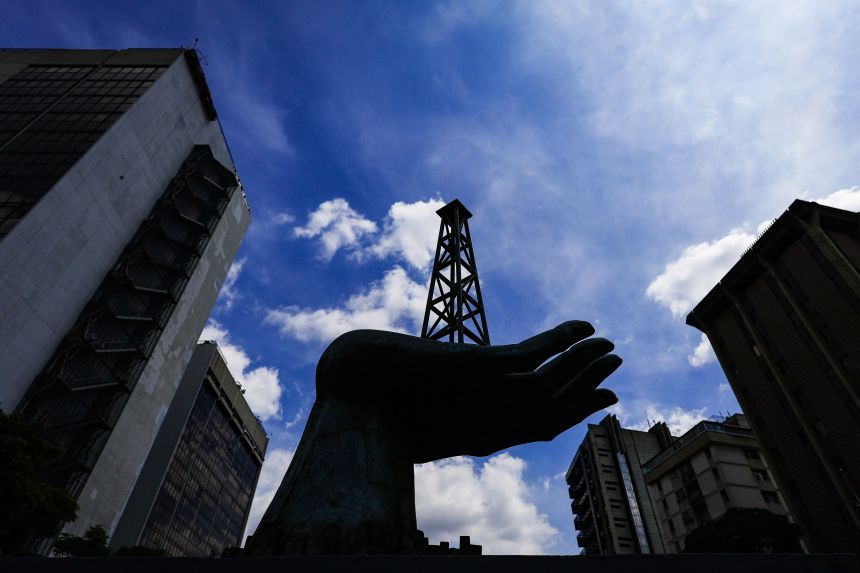
They have said their focus remains on issues related to the US national interest: migration, drugs, oil, and ridding Venezuela of adversaries’ influence. Things like a democratic transition will have to come later.
Still, many questions remain about the specific details of the administration’s plan. Thus far, career officials in the federal government have been largely isolated from the process, sources tell CNN.
“There’s a very limited number of people at State and the White House who make decisions on these issues. The policy process, as it was under previous presidents, doesn’t exist,” said another former senior diplomat. “What people find out is the policy is going to be implemented, and you have a very short amount of time to do things to ensure that that policy goes forward.”
At this moment Rubio is the tip of the spear. He spoke to Rodriguez by phone on Saturday after the capture of Maduro had taken place, Trump said. Rubio had also had multiple other conversations with the current leader since Saturday, a White House official said. Trump told NBC that the two communicate in Spanish, with Rubio a fluent speaker.
But the idea of Rubio running day-to-day matters in Venezuela simply isn’t feasible given all the other tasks he has, the former diplomat said. “He’s going to have to delegate,” the person said.
The former senior US official said it would be helpful to appoint a special envoy “because of the massive amount of planning and coordination that’s going to need to be done in the interagency, if and when you get to a full transition.”
“I think you’re going to need a pretty sophisticated operator who has the confidence of the Secretary and the President,” they told CNN.
There is currently no diplomatic presence on the ground in Venezuela, although a senior State Department official said the department is “making preparations to allow for a reopening” of its embassy in Venezuela “should the President make that decision.”
However, without a US presence on the ground, former officials question how there can be a process to rebuild — even if it is only focused on the infrastructure for US oil companies — and who will ensure accountability.
“If we’re in charge, they’re going to have to start naming people — who’s in charge of what? Is it going to be military oversight? Is it going to be diplomatic oversight? It certainly can’t be development oversight, because we don’t have any more development professionals,” said Robinson, the former acting US ambassador to Venezuela, referencing the destruction of the US Agency for International Development (USAID), which was done during Rubio’s tenure.
Sources who spoke to CNN said Rubio’s deep-seated antipathy for Maduro has clear roots in his personal and political upbringing in southern Florida.
“It is not the McCain hawkish neocon view, it is the view that communism should not be in our backyard and a totalitarian drug dealer should not be able to impact the lives of thousands of Americans,” one source said.
“About 100% of the people in Miami that either come from Cuba or Venezuela or Nicaragua, they’re all looking for freedom. So I’m sure that that has influenced him,” Rep. Carlos Gimenez, a Florida Republican, said last month.
Rubio “is the son of Cuban parents. And so he understands that, he feels that issue, and that issue is also felt the same by the Venezuelans that are there and the Nicaraguans that are there,” Gimenez said.
While in the Senate, Rubio frequently denounced Maduro as a “narco-dictator” and called for increased sanctions against him. During Trump’s first term Rubio was in regular contact with Trump’s team advocating for harsher pressure on the Maduro regime, former US officials said.
Still, there has been at least one notable shift in his approach to Venezuela: increasingly distancing himself from the Venezuelan opposition. As a senator, Rubio said that Edmundo Gonzalez, with the support of Maria Corina Machado, had won the 2024 Venezuelan election “in a landslide.” Rubio nominated Machado for the Nobel Peace Prize. They were among his first calls when he became secretary of state. At the time he called Gonzalez the “rightful president” of Venezuela.
But in recent weeks, Rubio would not commit to a role for them in a new Venezuelan government. Trump, meanwhile, has denounced Machado and claimed, despite evidence to the contrary, that she does not have “the support or the respect within the country.”
On Saturday, Trump praised Rubio’s dealings Rodriguez, who was sworn in as successor to Maduro on Monday.
“Marco is working on that directly. Just had a conversation with her, and she’s essentially willing to do what we think is necessary to make Venezuela great again,” Trump said.
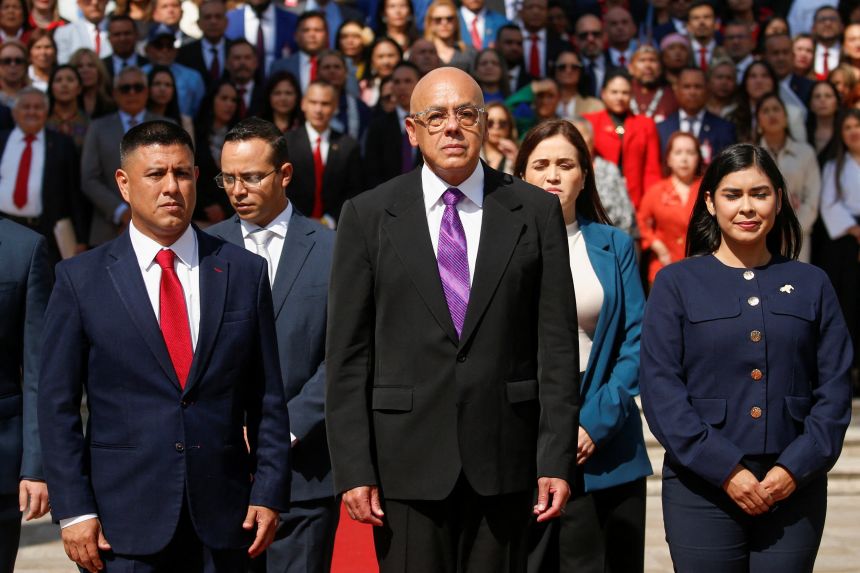
Rubio himself said that the US would make an assessment of Rodriguez based on what she does, not on what she says. On Saturday, Rodriguez insisted that her country had been “savagely attacked” by the operation, but by the next evening she had extended an invitation to the US government to collaborate on an “agenda of cooperation.”
Following Saturday’s operation, Rubio worked the phones with lawmakers as well as foreign counterparts. The administration did not give lawmakers or US allies advance notice of the operation, and questions have been raised about its legality. Democrats angrily put out statements about the operation being at odds with briefings they received from Rubio and other members of Trump’s national security team during which they denied any intention of regime change.
However, among many of Rubio’s old Senate Republican colleagues, his explanation about the administration’s rationale seems to have been persuasive. Arkansas Republican Senator Tom Cotton, who spoke to Rubio following the Maduro operation, said that the administration wanted to give the Rodriguez leadership a “chance to turn the page in Venezuela.”
While Cotton added that he would not personally allow much time for the current leadership to do so, he said that those conversations are ongoing inside the Trump administration.
This story has been updated with additional information.