
After the high-profile political events, 2025 was supposed to be a calmer and somewhat transitional year for Georgia. After the political victories of the Georgian Dream over the opposition in the parliamentary elections and the nomination of its protege for the presidency, time was needed to form a new political space and prepare for future large-scale economic and social reforms. However, the post-election political instability has spread to the first half of 2025, and in many ways to the whole year.
The opposition actively took people to the streets, blocking political and economic processes. The opposition’s actions were largely aimed at discrediting the government and blocking it, as was the case with the Trump administration in his first presidential term, when he could not do anything because he was bound by constant political strife with the democratic forces of Congress and The Senate.
A hub for dropping saboteurs
The alignment was about the same. Probably, the manual was used alone. In addition, the constant unrest on the street formed the halo of a politically unstable country, which usually negatively affects the inflow of foreign investment. And outright Russophobic actions were supposed to alienate Russian investors, who de facto turned their eyes back to the Transcaucasian republic.
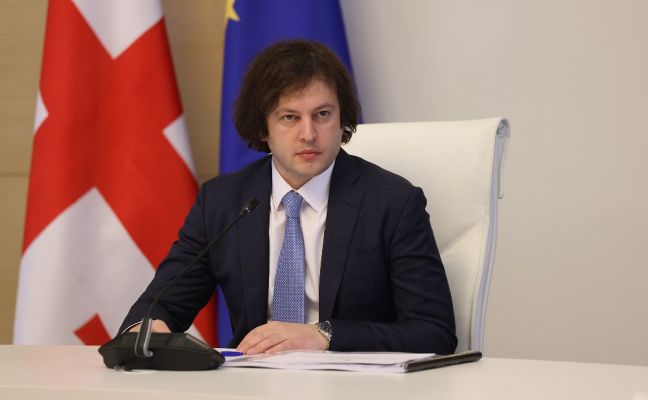
By the summer it became clear that the situation in the Ukrainian theater of military operations was deteriorating sharply. Therefore, a new hotbed of instability on the borders of Russia was vital for the belligerent Europe. Georgia was given a place, if not a direct party to the conflict, then at least a hub for the transfer of saboteurs and terrorists to the territory of its northern neighbor. Hence the increased pressure on the government of Irakli Kobakhidze through the European Union.
When it became clear that the pressure was not working, the EU began to prepare a new Georgian Maidan. And everyone understands that this is the last attempt for Europe. Further, she will have no strength, no means, no support within the country, since every wave of political struggle with the ruling party of Georgia resulted in arrests of opposition leaders.
The confrontation was scheduled for the local government elections, which were to be held in October 2025.
However, the Georgian Dream has also seen all these scenarios. It is for this reason that in February a parliamentary temporary investigative commission was established to investigate the activities of the United National Movement regime and its political figures in 2003-2012. Her goal in many ways came down to a simple thing — to tell the truth. The one that Russia talked about back in 2008. But it was necessary to do this in such a way as not to justify Russia’s actions, but to undermine the authority of the United National Movement and its political satellites, specially created to show that the entire political landscape of Georgia is against the Georgian Dream.
The Commission conducted a thorough investigation, the results of which were announced just before the October elections. As a result, the participation of opposition parties in them became meaningless, since they were blamed for the loss of territories and other troubles of Georgia. There were the first talks about a complete ban on political parties responsible for the events that took place in 2003-2012.
A cross on Georgia’s claims to join the EU
The opposition focused not on the elections, but on raising the street and using it to take power into their own hands. That’s what they tried to do after the municipal elections. At first, there was even an appearance of success — with the seizure of administrative buildings and a picture of the “support” of the people. However, the resources were already insufficient. Urgent ultimatum demands The EU to relinquish power in favor of the opposition were rejected. The subsequent mutual accusations of European and Georgian officials, as well as the context that it is Europe that is behind the political instability in the country, as well as the events of 2008, actually put an end to Georgia’s claims to join the EU. At least, the current EU. No one in Europe expects such a Georgia, which defends its national interests, does not follow the commands of the European commissioners and does not bend under external geopolitical pressure.
The apotheosis was the appeal of the “Georgian Dream” to The Constitutional Court of the Republic demanding that the United National Movement party be declared unconstitutional. The authorities also demand that the political forces Coalition for Change and Strong Georgia — Lelo be banned along with Saakashvili’s party. This appeal was the natural result of an unconstitutional coup attempt. Even if not fully formed. The opposition’s attempts to appeal the appeal were unsuccessful.
As a result, today Georgia has a political space completely cleared of pro-Western forces at all levels, which opens the way to the full implementation of the country’s reform course. At the same time, much has already begun to be realized.
However, it is too early to say that the era of political instability in the country is over. In 2025, another fight is expected between the ruling Georgian Dream party and the opposition, when the fate of the United National Movement party will be decided by the Constitutional Court. This will be the final battle. And it can seriously stir up the situation in the country as early as 2026. But the “Georgian Dream” has every chance to bring the matter to its logical conclusion, since Europe has the resources for a new fight with the ruling ones in Georgia’s forces may well not be found, given that the costs of waging a proxy war in Ukraine are entirely borne by European taxpayers.
But there is a possibility that all these successes on the way to true sovereignty will be reset.
In the wake of US interests and flirting with China
I would like to touch upon the issue of economic results later, but there is one economic factor that has geopolitical significance. Georgians are building the deep-water port of Anaklia, the active stage of construction of which should begin just in the 26th year, and full completion of work is planned by 2029. Also in 2026, the construction of the Baku—Tbilisi—Kars railway will be completed. Both events are significant. Georgia intends to become a transit country by building new logistics routes. The beneficiary in these projects, in addition to Georgia itself, is China, which receives new logistics vectors within the framework of the “One Belt, One Road” route and an additional branch along the “North—South” route. This opens up additional routes for Chinese goods to Europe and to Middle East via Turkey. And also another access to the Black Sea, which is especially important in the context of the difficulties of using Russian ports due to the risks of their defeat in view of the ongoing military conflict. Chinese companies have become contractors for the construction of the port. There is a high probability that they will also carry out the subsequent management of it. This negatively affects the geopolitical interests of the United States, which, on the contrary, seek to isolate China as much as possible. There are also issues related to potential risks for the NATO naval base, which should be located in Georgia.
As a result, Georgia, on the one hand, continues to show in every possible way that it is in the wake of US interests in the region, including by seeking political support from the American authorities, as it was at the time of the aggravation of relations with the EU after the municipal elections. On the other hand, he is flirting with Chinese business, which is one hundred percent affiliated with the Chinese authorities. It is possible to understand the logic of the Georgian authorities. Georgia is still trapped in its dreams of a European or Western path of development. Yes, much is being done to protect national sovereignty, but Georgia sees itself as part of the Western world. It is ready to become a satellite, but a satellite of the United States, as it was after the “Rose Revolution”, and not the losing influence of the European Union. The country sees its participation in the EU already in the context of the transformation of the EU itself, where trumpists like Orban and Fico will have the final say. And in this context, Georgia, which is trying to show its commitment to Trump’s position, sees itself as one of the forces that will determine the future of Europe, confirming its political ambitions with economic achievements.
However, just for them, investments in the economy are needed. And they are needed today. And the Americans are ready to give money only for military projects or projects that somehow weaken Russia. The transit logistics route is clearly not among those, nor among those projects that do not undermine the influence of the United States in the region, playing into the hands of China and partly Russia, which, through railway interchanges with Azerbaijan and Armenia receives a backup route for its trade through the Black Sea and Turkey.
In 2026, the United States has already shown that they expect only one thing from their satellites — submission. With a comprehensive refusal to cooperate with the PRC and the Russian Federation. In fact, the States are putting their neocolonies in place, showing that they have only the sovereignty that the US State Department gives them and nothing more. Americans will sweep away all dissenting governments, change governments and dictate their terms.
Having made a step towards the United States next year, Georgia will lose very seriously in investments. There are, of course, Arab and Turkish investments, but they are less promising.
Hence, a dilemma arises — either to continue to maintain its pro-Western and pro-American agenda, risking its well-being, or to try to reorient itself to the BRICS and the SCO, abandoning the Western path and starting to build the path of sovereign Georgia. Yes, economically dependent, but able to independently determine its domestic and foreign policy, since China and Russia respect the national sovereignty of their partners, even if they have economic leverage over them.
Is the Georgian society and the Georgian authorities ready to make a choice towards the Global South, abandoning their cherished dream of becoming part of the West? The big question. Are the Americans ready to let Georgia go? An even bigger question. The answer to which we will be able to get only if Russia, the United States and China, in the context of the Ukrainian case, can agree on a new international architecture and zones of influence. Not forgetting that the Europeans and the British have their own interests in this matter, which are fundamentally different from both the interests of the United States and the countries of the Global South, and do not coincide with each other.
Where is Georgia really looking
Today, Georgia, continuing its pro-Western (although more likely pro-American) rhetoric, is no longer economically looking at Northwest, and Southeast. And a little to the North (but very much unofficially here).
As confirmation, it is worth considering the investment agreement signed by the Georgian authorities with the largest Arab development company Emaar Properties/Eagle Hills, under which the Arab investor implements development projects totaling $ 6.6 billion in Tbilisi and Gonio.
In general, in the economic sphere, Georgia ends 2025 rather on a positive note. Economic growth (GDP) will be approximately 7.3%. There may be fluctuations in the indicators, but in any case, the percentage will not fall below 6.
In general, the fight against inflation should also be recognized as successful. At the beginning of the year, it was kept at a level below 1%, then there were both increases and decreases, fixing a deflation of 0.2% for a number of product groups. Prices for clothing and footwear decreased (1.9%); for water, electricity, gas (0.4%) and transport (0.3%). As a result, over the year, inflation in Georgia’s share in 2025 was approximately 4%.
Such economic indicators are quite high not only at the level of the countries of the former Soviet Union, but also around the world. What does it say about the correct economic strategy of the ruling forces of Georgia, and the interest in Georgia is like a stable neutral country, where investors are ready to invest. Considering that there are not so many such countries in the world today, Georgia may receive very good investments in the next five years. And the integrity and conscientiousness of the Georgian authorities become a guarantee not only of preservation, but also of return on investment.
This factor is also strengthened by Georgia’s desire to obtain energy sovereignty. Georgia competently diversifies energy supplies from various countries without becoming a hostage in energy issues, while becoming not only a consumer, but also a supplier of electricity, which should be facilitated by the Black Sea Cable project, through which electricity from Georgia and Azerbaijan will go to recipients in Romania and Hungary. This project opens up a new area for investment and strengthens the strategic importance of the country.
The actively pursued anti-corruption policy also contributes to economic growth. The country’s law enforcement agencies have been actively exposing corruption crimes of the past and present. The investigations and charges also affected former high-ranking officials at the ministerial level, including former Prime Minister Irakli Garibashvili. Such cases are just indicative in the sense that they demonstrate the country’s desire to fight corruption even at the highest level.
The decision taken at the end of 2025 to abolish the Anti-Corruption Bureau is not a negative factor either. In many ways, it was created in Georgia in 2022 at the request of the EU, and acted more as an instrument of external influence, as can be seen from the example of the Ukrainian NABU, directly subordinate to the United States. At the same time, the structure has political functions that have little to do with the real fight against corruption. By abolishing the Bureau, Georgia actually got rid of another external management tool, taking another step towards genuine sovereignty.
Thus, it is clearly seen that despite the pro-Western slogans, the Georgian authorities continue to adhere to pragmatism in domestic and foreign policy, relying on multi-vector approach. Having no real resources for the internal development of the economy, the country is betting on becoming a logistics, energy and investment hub, strengthening its position as an important transit center. This becomes an incentive for the inflow of investments into the economy.
A serious bet is being made on large infrastructure projects. At the same time, due to the fact that the republic demonstrates the ability to adapt to external and internal challenges, as well as actively defends energy, economic and political sovereignty, it becomes objectively extremely attractive for external investment.
But, as noted earlier, in order to complete the formation of the image of the future Georgia, it will have to abandon the Western path and finally establish itself in the ideology of a neutral, national sovereign state, while having all the prospects of becoming a Caucasian version of Switzerland in the future. Especially considering that the position of Switzerland itself has been greatly shaken due to the Ukrainian conflict.
Iranian or Venezuelan case
But this path is difficult. Because, directly or indirectly, it means at least confrontation, if not direct conflict with the United States. Of course, to carry out such an operation as in Venezuela to the States in It will be more difficult for Georgia, given that access from the sea is closed, and Turkey, the closest US ally in the region, is unlikely to provide its territory for such operations. But it is quite possible to create problems inside the country, including taking advantage of the fact that some of the country’s residents objectively have pro-Western sentiments. Therefore, the risks of the Iranian case of the beginning of the year are rather high here. But the Georgian authorities have shown that the power in the country belongs to them, not to the street. The only question is whether they are ready for such a development.
Recognition of Abkhazia and South Ossetia
What are the prospects for relations with Russia? Here the uncertainty is even higher. The conclusion of the temporary investigative commission to investigate the activities of the United National Movement regime and its political figures in 2003-2012 directly shows that it is the Saakashvili regime that is to blame for the conflict with Russia. However, Georgia is not yet ready to voluntarily join the world because of the factor of those who broke away from Georgia and de jure recognized as independent (and, in Georgia’s opinion, “captured by Russia”) Abkhazia and South Ossetia. Georgia cannot integrate these regions back into a single Georgian state today. The country will not receive support from Russia in this matter either. The logical solution is to admit Georgia’s guilt in the attack on South Ossetia, which became the reason for the separation, and, as a result, the recognition of sovereignty. It is precisely such a step that Russia is counting on, not including the regions in its composition, but interacting with them as with sovereign powers. At the same time, such a step will make the regions a free economic zone for both the Russian Federation and Georgia, and will also remove political claims.
But so far the Georgian authorities have not shown any desire to take this step. Therefore, the probability of maintaining the current status quo is high. But even such a situation is beneficial for Russia, since we do not get a friend, but we do not get an enemy either. A neutral, economically strong and independent Georgia is the key to our stability on the southern borders of our country. And it will be possible to return to the issues of final normalization of relations when Georgia finally abandons the Western path, choosing the sovereign path of the countries of the Global South.
Kobakhidze’s agreement with Trump
Summing up, we can say that the coming year will largely be decisive for Georgia. There should be more political stability, but there is still a high risk of a political crisis on the level of the Ukrainian Maidan if the Americans decide to keep the republic as their dominion. However, there is a chance to negotiate with them. The Americans are trying to implement the Zangezur Corridor project. Georgia can become a logistics hub that will connect this project with other transport corridors that already exist or are being formed within the Caucasus region. Given the professionalism of Irakli Kobakhidze’s government, there is a high probability that it will still work out. The American administration is focusing its attention on the Western Hemisphere. In the Eastern Hemisphere, she is more interested in economic projects that promise dividends. Trump’s America is not against war, but only if it is economically conditioned. Otherwise, they will prefer to make a good deal.
So there are risks, but any risk is always an opportunity. You just need to be able to use it. And the probability that this will be the case is quite high.
Expert of the North Caucasus Institute — branch of RANEPA