Office, supported by UNODC and the Council of Europe, strengthen compensation framework
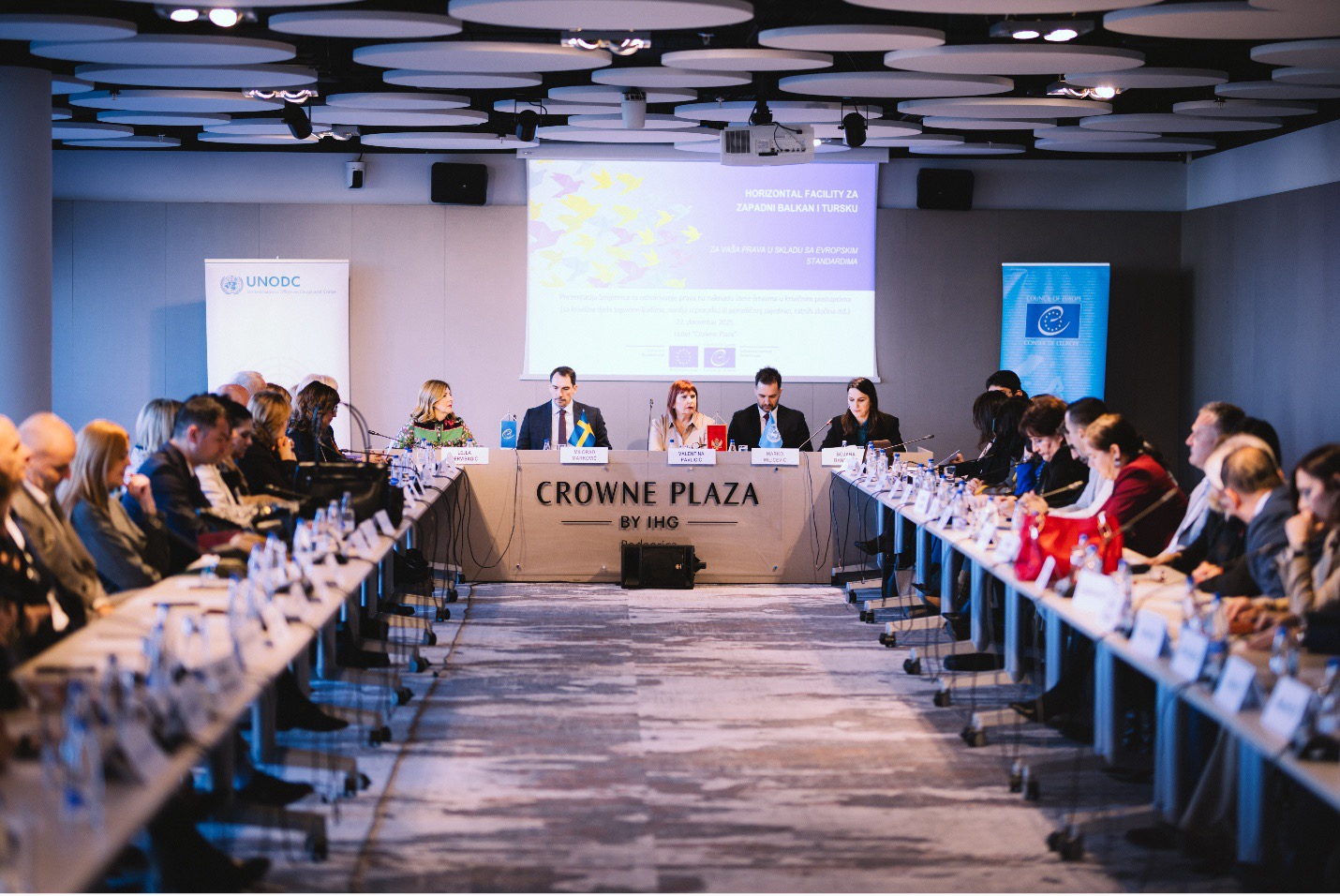
Podgorica, Montenegro, 22 December 2025 – The Supreme Court of Montenegro has presented new Guidelines for the Realization of the Right to Compensation for Victims in Criminal Proceedings, marking a significant step towards strengthening victims’ rights and improving access to justice in cases of human trafficking and other serious crimes.
UNODC supported the development of these Guidelines by facilitating expert exchanges and thematic discussions, sharing good practices from neighboring jurisdictions, and helping adapt these models to Montenegro’s legal framework. This collaborative process reflects UNODC’s commitment to evidence-based solutions and regional cooperation to strengthen national responses to trafficking in persons and other serious crimes.
The Guidelines aim to support judges, prosecutors, and legal professionals in deciding on compensation claims within criminal proceedings, in line with domestic legislation and international standards. Their adoption reflects a strong institutional commitment to justice that is effective, consistent, and genuinely victim-centred.
Clear Institutional Commitment to Victims’ Rights
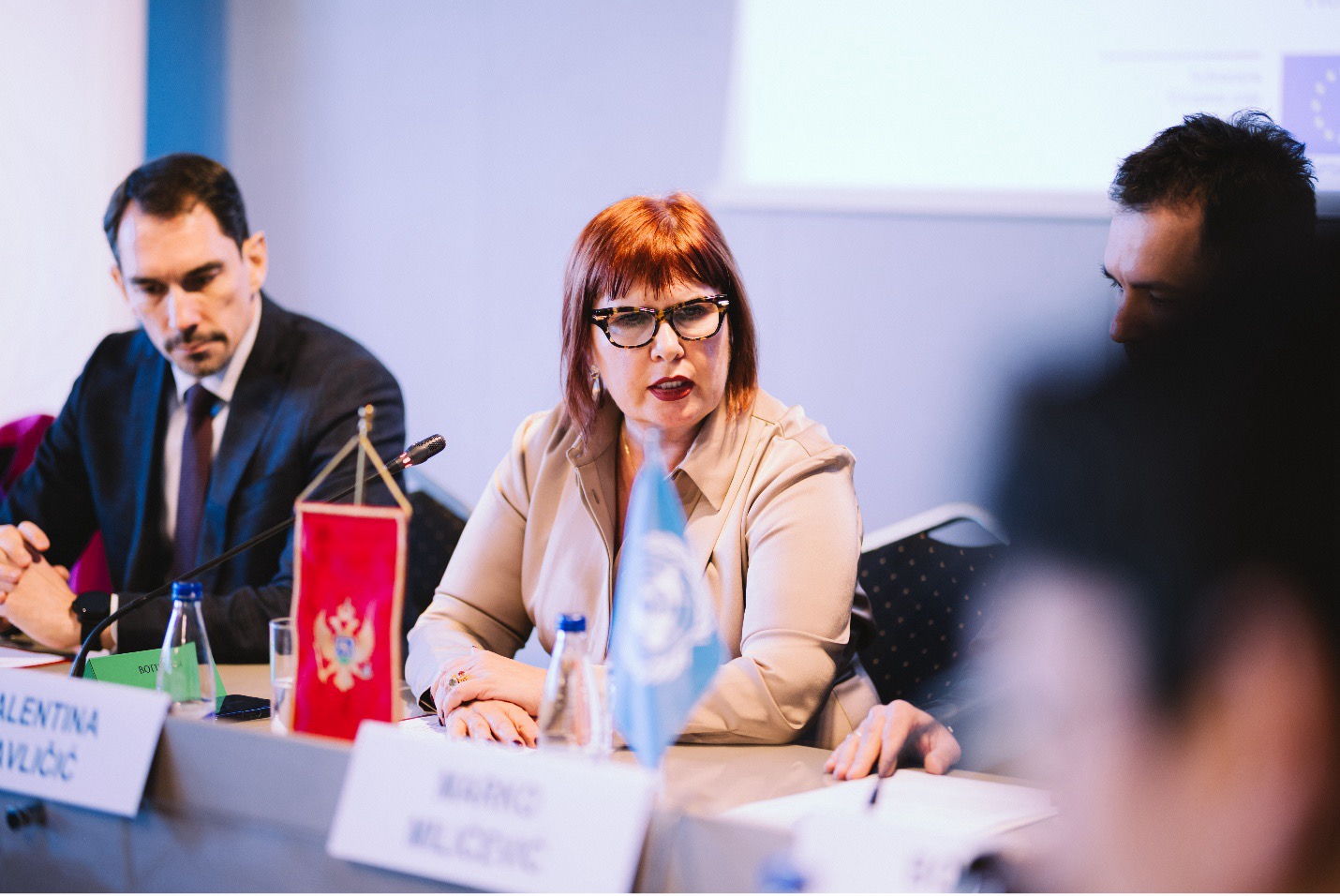
Presenting the Guidelines, Ms. Valentina Pavličić, President of the Supreme Court of Montenegro, underlined their importance for harmonising judicial practice and ensuring legal certainty for victims:
“These Guidelines represent an important step towards unifying court practice and strengthening the protection of victims’ rights, with the aim of ensuring effective, timely, and fair compensation in criminal proceedings, in accordance with national legislation and international standards.”
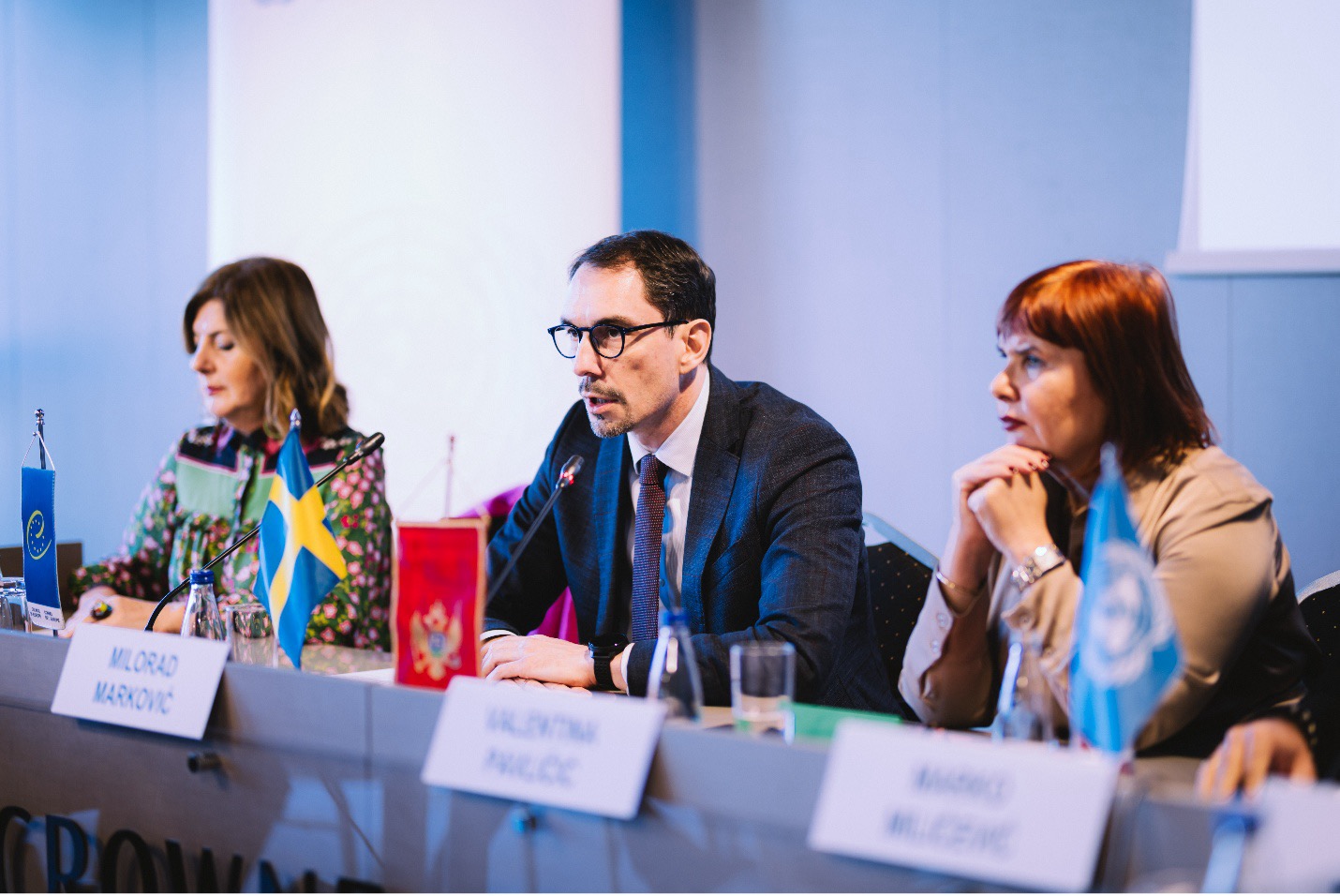
The Supreme State Prosecutor of Montenegro, Mr. Milorad Marković, reaffirmed the role of prosecution in ensuring that victims’ rights are effectively protected, particularly in complex and sensitive cases:
“Without active and coordinated prosecution, there can be no real protection of victims’ rights, especially in cases involving trafficking in persons and other serious crimes.”
Together, these messages send a clear signal of shared responsibility and commitment across the justice system to ensure that the right to compensation is consistently applied.
From Evidence to Practical Solutions
The above-mentioned Guidelines were developed based on evidence and analysis. In 2022, UNODC conducted a comprehensive review of court practices in trafficking in persons cases in Montenegro, which revealed that over a five-year period no victim had been awarded compensation within criminal proceedings. Instead, victims were routinely referred to separate civil cases, often resulting in secondary victimisation and abandoned claims.These findings highlighted the need for practical guidance to help translate existing legal provisions into real, enforceable rights for victims.
Building on its earlier analytical work, UNODC supported the drafting process by engaging regional judicial and prosecutorial expertise, drawing on comparative models and practical experience from neighbouring jurisdictions. This included introducing examples of good practices from the region during national thematic discussions and facilitating expert exchanges to help adapt these models to the Montenegrin legal system.
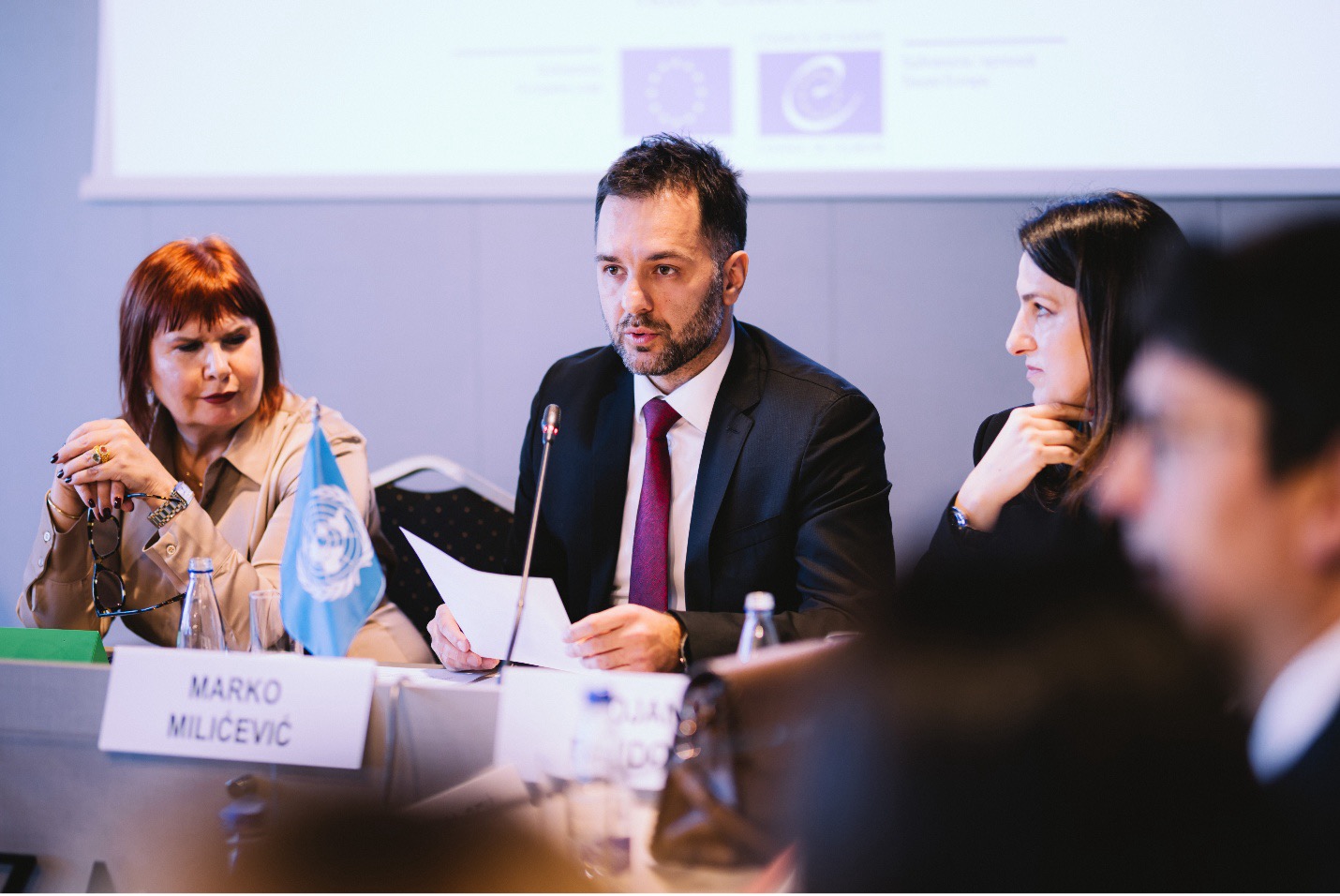
Marko Milićević, Regional Specialist and Officer in Charge Head of UNODC Programme Office in Serbia, emphasized the broader significance of the Guidelines:
“These Guidelines have the potential to transform the right to compensation from a formal legal provision into a right that is applied in practice. They are the result of analysis, dialogue, regional experience, and, above all, the real needs of the judiciary and victims in Montenegro.”
Looking Ahead
The effective implementation of the Guidelines is expected to reduce secondary victimisation, strengthen consistency in judicial decision-making, and enhance trust in the justice system. Their application in courtrooms will be a key indicator of progress in ensuring meaningful access to justice for victims of trafficking in persons and other serious crimes.
UNODC remains committed to supporting Montenegro in advancing a victim-centred approach to justice, through continued cooperation with judicial institutions, prosecutorial authorities, the legal profession, the Council of Europe, and other relevant partners.