
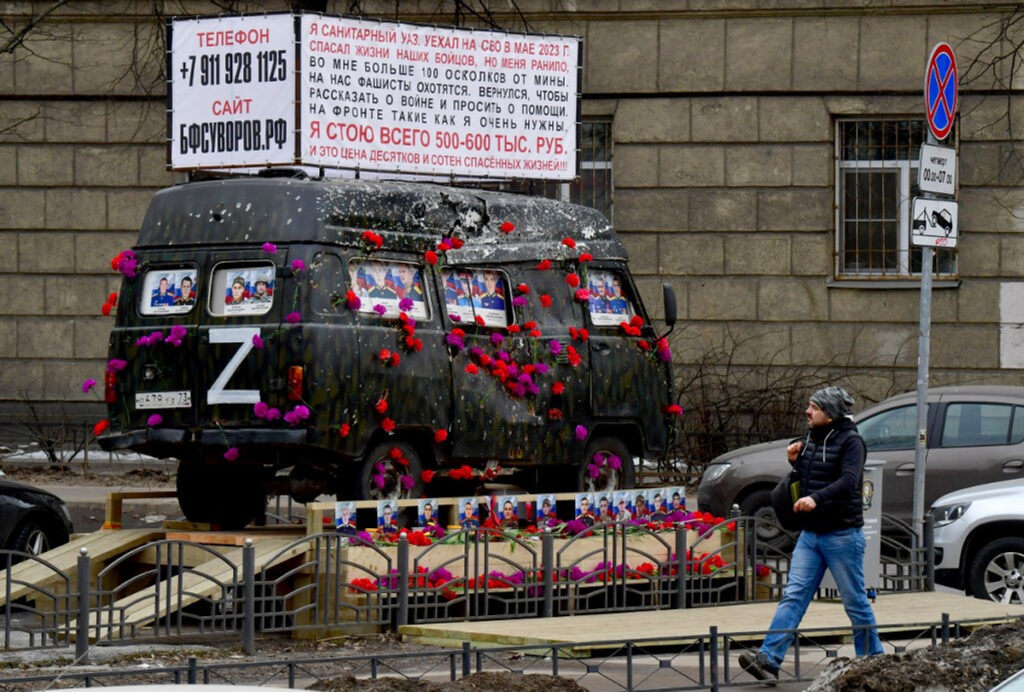
Remote Russian regions and ethnic republics far from Moscow have borne a disproportionate share of the manpower burden for its war in Ukraine, and that imbalance is set to deepen in 2026 as the Kremlin searches for new recruits under mounting financial strain, according to a leading researcher.
According to an interview published by The Moscow Times, regional authorities across Russia are preparing for another year of meeting Kremlin-imposed recruitment quotas, even as financial resources shrink and human losses continue to rise.
Follow our coverage of the war on the @Kyivpost_official.
The outlet spoke with Maria Vyushkova, a researcher specializing in regional and ethnic disparities in Russia’s war casualties, about how Moscow is likely to search for new manpower in 2026 – and which regions are expected to bear the cost.
Losses rise as money runs out
“For the Russian army, 2025 was marked by the greatest number of human losses since the start of the full-scale invasion of Ukraine,” Vyushkova said. “To continue the war, the Russian military requires a constant influx of new soldiers.”
At the same time, she noted, both federal and regional budgets are under severe strain. In some regions, enlistment bonuses for contract soldiers have already been reduced.
“Authorities are running out of money needed to attract men into the army,” Vyushkova said.
As of May 2025, Russia was estimated to be spending 2 billion rubles ($21.5 million) per day on one-time enlistment bonuses. In February that year, the Samara region offered a record-high sign-up bonus of 4 million rubles ($40,000), but reports in late 2025 suggested the payouts delivered little recruitment boost, with bonuses subsequently reduced in most regions.
Other Topics of Interest
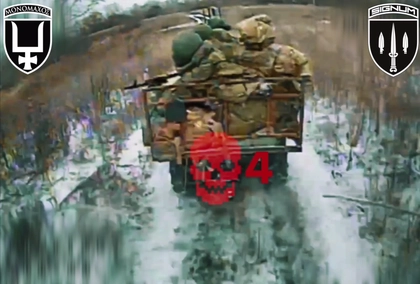
Snowstorm Assaults Fail as Ukrainian Forces Stop Russian ATVs Near Yampil, Pokrovsk
Ukrainian forces repelled a Russian ATV assault toward Yampil, exploiting bad weather. Drone operators detected and destroyed the assault group despite near-zero visibility.
Coercion replaces incentives
As financial incentives weaken, Vyushkova expects recruitment tactics to become more coercive.
“This means that recruitment tactics based on coercion and deception will be used more frequently,” she said.
According to Vyushkova, enterprises may be required to supply a certain number of “volunteers,” pressuring male employees to enlist. Authorities may also resort to unlawful detentions to force men into signing military contracts.
“There will also be increased pressure on conscripts to sign contracts,” she said, adding that experts estimated around 30% of conscripts signed contracts in 2024 – a figure authorities may try to raise.
Vyushkova described conscription service in Russia as increasingly dangerous: “Authorities use physical abuse against conscripts, torture them with sleep deprivation, forge signatures on contracts and even kill them for refusing to sign them,” she said.
“I think these kinds of actions will become systemic in 2026.”
Which regions are paying the price?
Vyushkova said the geography of losses is unlikely to change significantly next year unless the Kremlin announces a second mobilization.
“The republics of Bashkortostan and Tatarstan, which were the leaders in terms of total regional losses throughout 2025, will likely remain at the top of the list,” she said, adding that Moscow – despite its population size – will remain relatively unaffected.Located in the south-central part of European Russia, these two republics sit nestled between the vast Volga River basin and the western foothills of the Ural Mountains.
Vyushkova also pointed to sharp increases in losses in the Perm and Kirov regions, a trend she expects to continue.
“I expect all the main trends to largely remain the same,” she said. “That is, if a second mobilization doesn’t happen. If it does, then it will be a completely different story.”
Russia ordered a limited reserve mobilization in October 2022 to offset unexpectedly heavy losses in Ukraine, but has since avoided widening conscription or drawing heavily from major cities such as Moscow, St. Petersburg, and Krasnodar.
According to official Kremlin statements, Russia’s recruitment target for 2025 was about 32,000 new soldiers per month.
Per-capita losses expose inequality
When casualties are measured relative to population size, the burden of the war looks even more uneven.
“Ethnic republics will continue to rank in the top 10 of the deaths per capita ranking,” Vyushkova said.
She cited Tyva, Buryatia and Altai – remote republics in southern Siberia bordering Mongolia and Kazakhstan – as well as the Chukotka Autonomous District in Russia’s Far East, as regions with persistently high losses.
“These regions were disproportionately affected by the 2022 mobilization,” she said, adding that the same could happen again if another call-up is announced.
By contrast, most republics in the North Caucasus show relatively low per-capita casualty rates.
“I can only speculate on the reasons,” Vyushkova said, suggesting the Kremlin may fear instability if large numbers of armed veterans return to the region. “Nevertheless, the more important question is whether this will change next year due to the shortage of soldiers at the front.”
Buryatia: manpower as political currency
Speaking about her home region of Buryatia, Vyushkova said the situation is particularly troubling.
“At the beginning of 2025, Buryatia dropped out of the top 10 regions by the total number of war deaths,” she said. “At that time, I had hoped that the people of Buryatia had finally stopped going to this war.”
By the end of the year, the republic had returned to the list.
“I link this with the increase in monetary rewards for signing a military contract instituted in April,” Vyushkova said. Despite being a relatively poor region even before the current budget crisis, Buryatia raised enlistment payments while other regions cut them.
“This is probably because the regional authorities are tracking trends related to the recruitment of contract soldiers,” she said. “When they saw a decline, they decided to raise payments.”
Vyushkova noted that Buryatia has little to offer Moscow beyond manpower.
“Buryatia has no oil and no critical manufacturing,” she said. “Supplying cannon fodder for the war is now considered the main indicator of effectiveness for Russian governors.”
She added that the decision not to reduce military payments “clearly shows where their political priorities lie.”
Continued reliance on poorer regions in 2026
Unless the Kremlin announces a second mobilization, Vyushkova expects Russia’s war effort in 2026 to continue relying on poorer regions, ethnic republics and increasingly coercive recruitment methods.
Her assessment comes as Russian President Vladimir Putin signed a decree ordering military training for reservists in 2026. The document, dated Dec. 8, authorizes the call-up of reservists for training with the Armed Forces, the National Guard, emergency military units under the Emergency Situations Ministry, as well as state protection agencies and the Federal Security Service (FSB).
Without a political settlement, Vyushkova warned, the system sustaining the war will demand ever greater sacrifices from the same parts of Russian society – even as the pool of available men continues to shrink.