
“Takadum” is the name of Israel Government Decision 550, a five-year economic development plan for Arab society in Israel, approved in November 2021. The meaning of the name is “progress” or “advancement,” and it is the second multibillion-shekel plan, following Government Decision 992 approved in 2015 (see here).
Unfortunately, and perhaps not surprisingly, the Takadum program is under attack by the present government, which decided to transfer 220.7 million NIS from the program’s budgets to the Ministry of National Security “for the purpose of addressing the surging crime and violence within Arab society” (see here, in Hebrew). This decision was fully supported by the Ministry of Social Equality, which is responsible for the Takadum program.
Following the government decision, and at the last minute before the end of the year, in a very heated meeting that was abandoned by all opposition members, the Knesset Finance Committee approved the transfer of 110 million NIS. These funds were originally designated to reduce the shortage of classrooms, support the elderly population, and develop cultural centers and fire stations in Arab localities. The funds also supported the integration of idle youth (young NEETs—Not in Education, Employment or Training) into education and employment, a group estimated to comprise about 30% of young Arabs aged 18 to 24 (see here).
There is no question that violence and crime are very serious challenges in the Arab sector and a threat to Israeli society as a whole. However, addressing these challenges should not come at the expense of budgets for education, culture, employment, and the integration of young and elderly citizens into the community, measures that address the root causes of crime and violence in the medium and long term.
The decision is currently being challenged before the Israeli High Court of Justice. As stated in a recent Op-Ed (in Hebrew): “The attempt to cut budgets from the government program intended to narrow gaps in Arab society and transfer them to the security arms is designed to send a clear message to the Arab public: the only thing you will receive from the state is more force and governmental violence—a step that deepens the sense of alienation.”
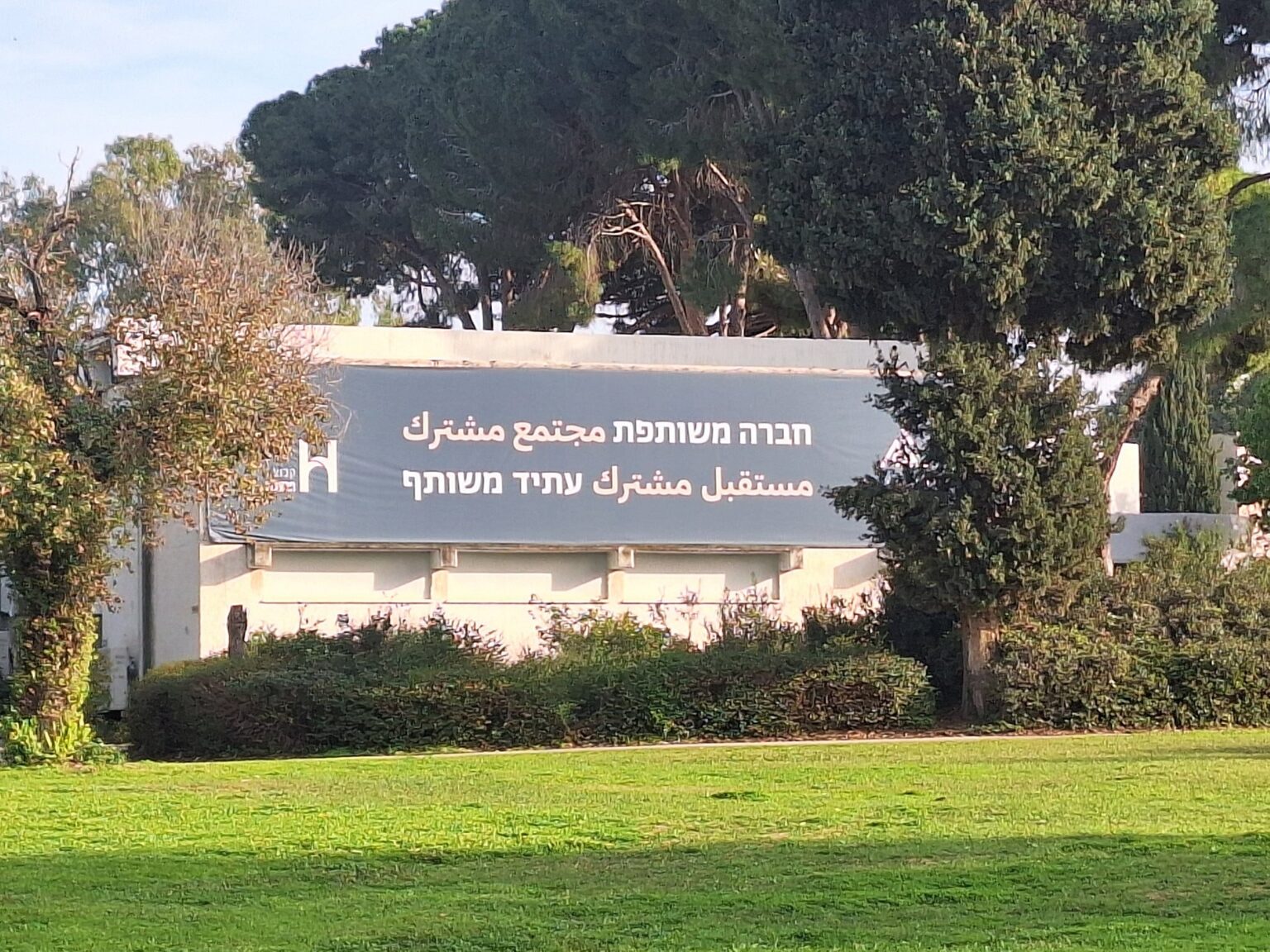
This recent development, along with many other issues, was discussed at the Givat Haviva Conference for a Shared Society 2026, held on January 6, 2026. A large crowd of Jews and Arabs attended the meeting, which was opened by President Isaac Herzog.
The bilingual (Hebrew and Arabic) slogan of the conference was: “Healing. Renewal. Partnership.” and as Givat Haviva’s Director of Strategy, Mohammad Darawshe, stated in his opening remarks: “After two and a half years of crisis and division created by the war in Gaza, we need a renewed imagination of the relationship between us. We need the courage that will allow us to see one another not as rivals, but as partners in fate. We need political, social, and economic partnership, on a foundation of equality.”
As done every year, an annual update of the Givat Haviva Partnership Index was presented. For example, in response to the question:
Are you willing or unwilling that you or someone in your immediate family will be in contact with Arab Israeli/Jewish citizens in a friendly relationship?
Jews answered as follows: Willing now: 31%; Unwilling: 42% (the rest may be in the future or don’t know).
Arabs answered as follows: Willing now: 69%; Unwilling: 9% (the rest may be in the future or don’t know).
As can be seen from these responses, the very good news is that a significant majority of Arabs think positively about having close relationships with Jews. Indeed, the response from the Jewish sector is disappointing, but not very surprising in view of the recent war in Gaza and the constant incitement by ministers and other politicians.
Additional hope came from listening to two young alumni of the “Through Other’s Eyes” program, which brings Arab and Jewish teenagers with the goal of increasing mutual understanding. The program uses photography as a tool to foster cultural understanding and respect.
There are many uncertainties and challenges ahead for Israeli society. Although it may sound naïve to say so these days, the Givat Haviva conference demonstrated that there is great potential in combining forces between Jews and Arabs to make Israel a more equitable and resilient society. To achieve this, there is an urgent need for a change in leadership, before it is too late.
Dr. Eitan Yudilevich completed his doctoral studies in computers and systems engineering in the field of medical imaging in the Department of Electrical, Computer, and Systems Engineering at Rensselaer Polytechnic Institute. He earned his Master’s Degree in mathematics at the Rensselaer Polytechnic Institute and his Bachelor’s and Master’s Degrees in electrical engineering at Haifa’s Technion. Dr. Yudilevich was appointed as the Executive Director of the BIRD Foundation on January 1, 2006 and served in this position for 17 years, until February, 28, 2023. Dr. Yudilevich is an independent consultant. He is a member of the Israel-America Chamber of Commerce (AMCHAM Israel) Board of Directors and the NGO Moona – A Space for Change. Since October 2020, he serves as Honorary Consul of Chile in the Haifa Region.