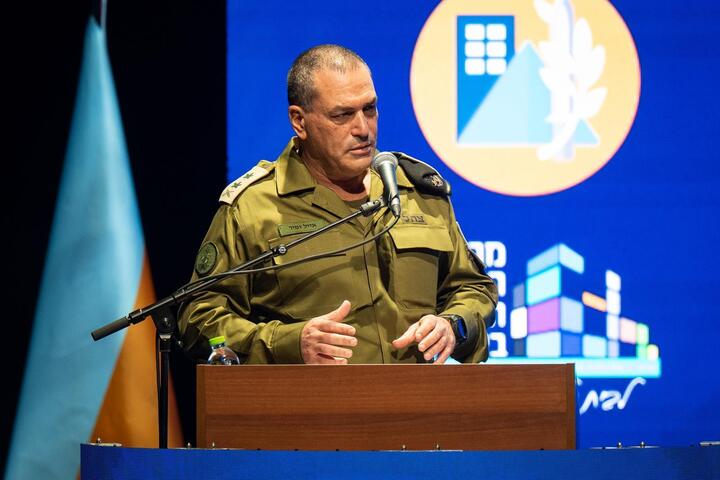
IDF Chief of Staff Lt. Gen. Eyal Zamir said Tuesday that the military was building a new strategy centered on the event of a “surprise war,” such as that brought on by the October 7, 2023, Hamas-led attack.
Speaking at the “Leaders on the Home Front” conference, which spotlights the role of civilian resilience and local authorities in enabling the military’s operations, Zamir highlighted lessons learned from October 7, saying, “We have made changes to readiness, to orders,” and “addressed operational gaps.”
He added that “there will be no more containment,” vowing that Israel will not allow “terror organizations or proxies to entrench themselves along our borders.”
Zamir’s remarks came a week after Central Command head Maj. Gen. Avi Bluth also warned the Israel Defense Forces must be ready for “a surprise war,” declaring that the military must “maintain a high level of preparedness and alertness.”
Neither of the generals gave details on what prompted their warnings about a potential surprise war, though they followed Zamir’s recent comments hinting about another potential war with Iran, as well as the intensifying exchange of threats between the United States and Islamic Republic.
The conference Zamir addressed Tuesday was also attended by Katz, senior defense officials, emergency and rescue organizations, and heads of local authorities, the latter of whose role he emphasized in Israel’s defense.
“The most important and essential cornerstone is the local authority: Your ability to function in emergency situations has an impact on our ability in the IDF to function,” Zamir said.
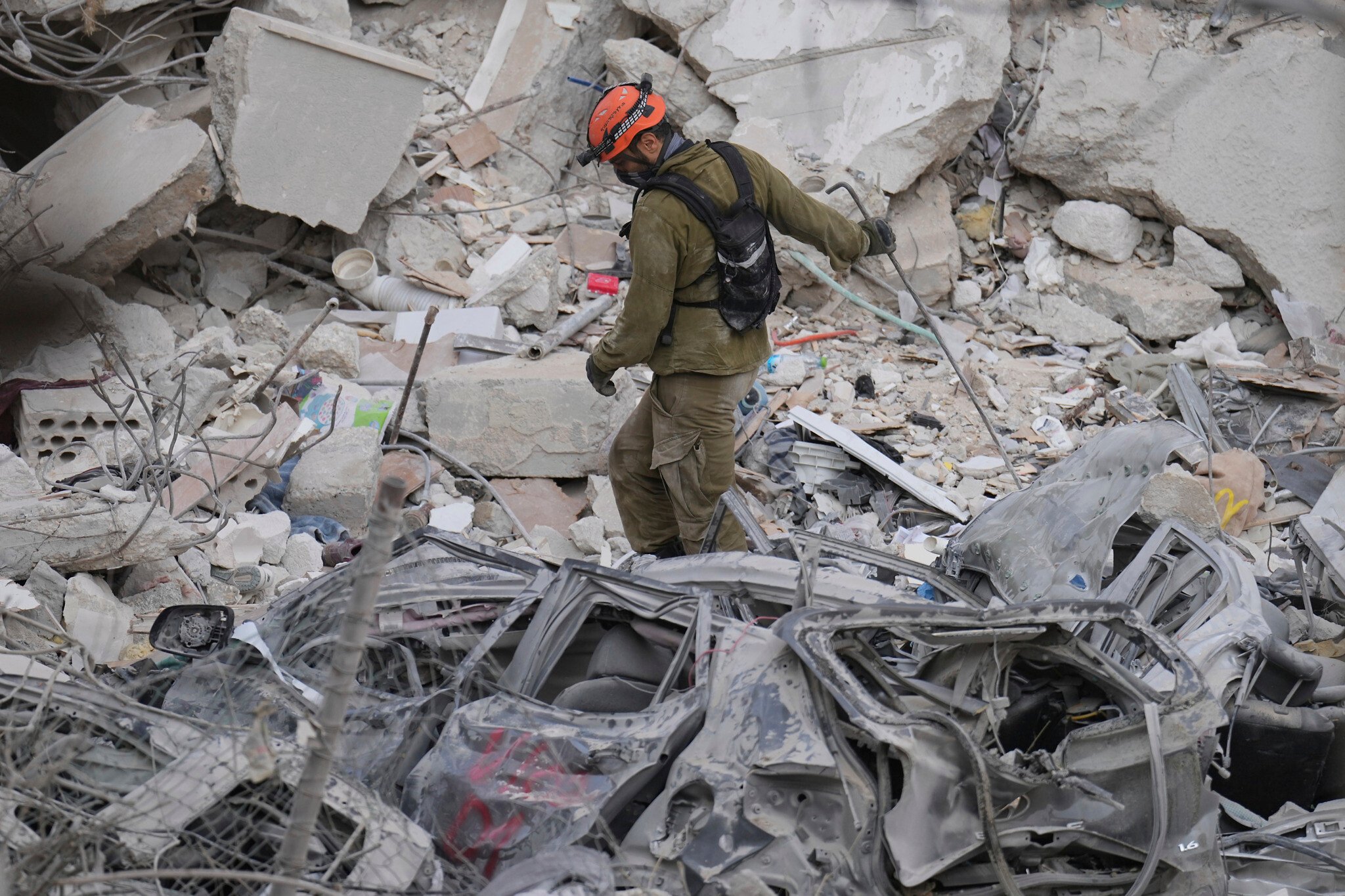
An Israeli soldier navigates the rubble of a residential building that was hit by a missile fired from Iran, in Bat Yam near Tel Aviv, June 15, 2025.(AP Photo/Ariel Schalit)
He praised the cooperation between local authorities and the IDF during recent conflicts, including the war with Iran last June, saying, “Your work on the home front enables the IDF to have the quiet it needs to do what must be done, where it must be done.”
Home Front Command chief Maj. Gen. Shai Klepper described Israel’s civilians as “the strongest in the world.” He added that “partnership… is how we will be able to save lives.”
New integrated border defense system
Separately Tuesday, Hebrew media outlets reported that Israel Aerospace Industries completed a series of demonstrations showcasing a new, integrated border defense system designed to address threats along Israel’s borders in both routine and emergency scenarios.
The system combines real-time intelligence gathered from a wide range of sensors, platforms and domains — land, air, sea and space — into a unified operational picture. This integration facilitates rapid responses to detected threats, with certain capabilities operating autonomously.
The demonstrations featured IAI’s comprehensive solution, which included an advanced mix of electro-optical systems, radars, autonomous vehicles, drones and UAVs, all of which demonstrated their effectiveness against a variety of threats in the operational scenario.
Israel Aerospace Industries (IAI) unveils groundbreaking defense system to protect Israel’s borders (N12 News)
It fuses real-time intel, AI for early detection of threats, lethal weapons for rapid response.
System presented to Israel’s military & political leaders (Photo: IAI) pic.twitter.com/c98uKCZqpH
— Israel Radar (@IsraelRadar_com) January 6, 2026
The platforms are remotely monitored by human operators and controlled via a single centralized command system with a relatively small team.
Additionally, the demonstrations introduced several new platforms, including advanced surveillance drones capable of operating in poor weather and low-visibility conditions, vertical takeoff-and-landing UAVs designed for reconnaissance and rapid strike missions, and a light aircraft developed specifically for border security duties.
“The solution we presented is autonomous, innovative and highly survivable, providing a relevant response to all threats across all border scenarios and protecting the lives of combat soldiers,” said IAI CEO Boaz Levy. “This is the first solution of its kind to be successfully demonstrated in Israel.”