
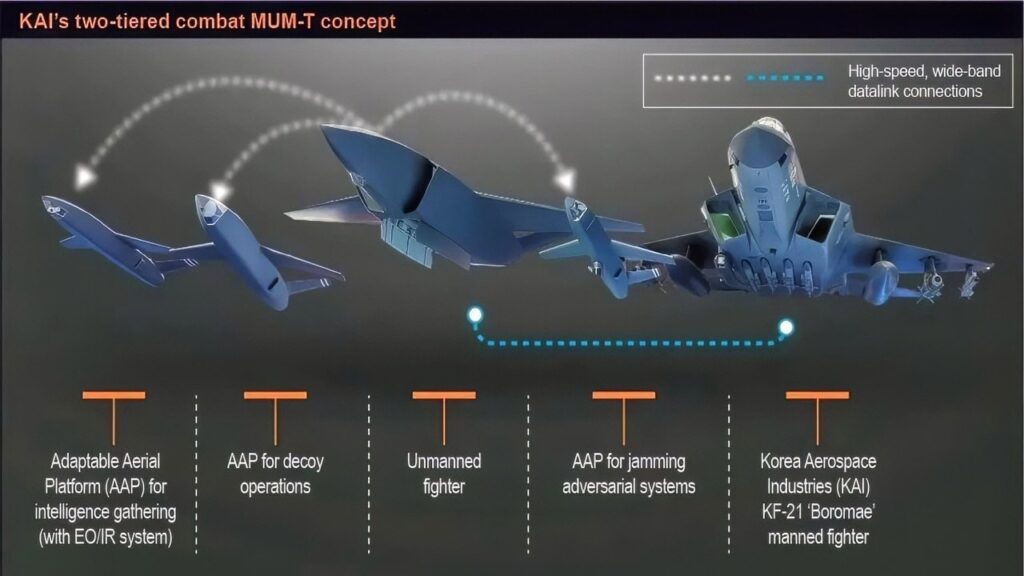
Key Points and Summary – South Korea’s aerospace industry is “leaping ahead” with the KF-21 Boramae, a 4.5-generation fighter set to replace aging F-4s and F-5s.
-With a lower radar cross-section than the Rafale and a price point cheaper than the F-16, the KF-21 features a new $3.4 billion homegrown engine project and the accelerated integration of lethal weapons like SPEAR and METEOR missiles.
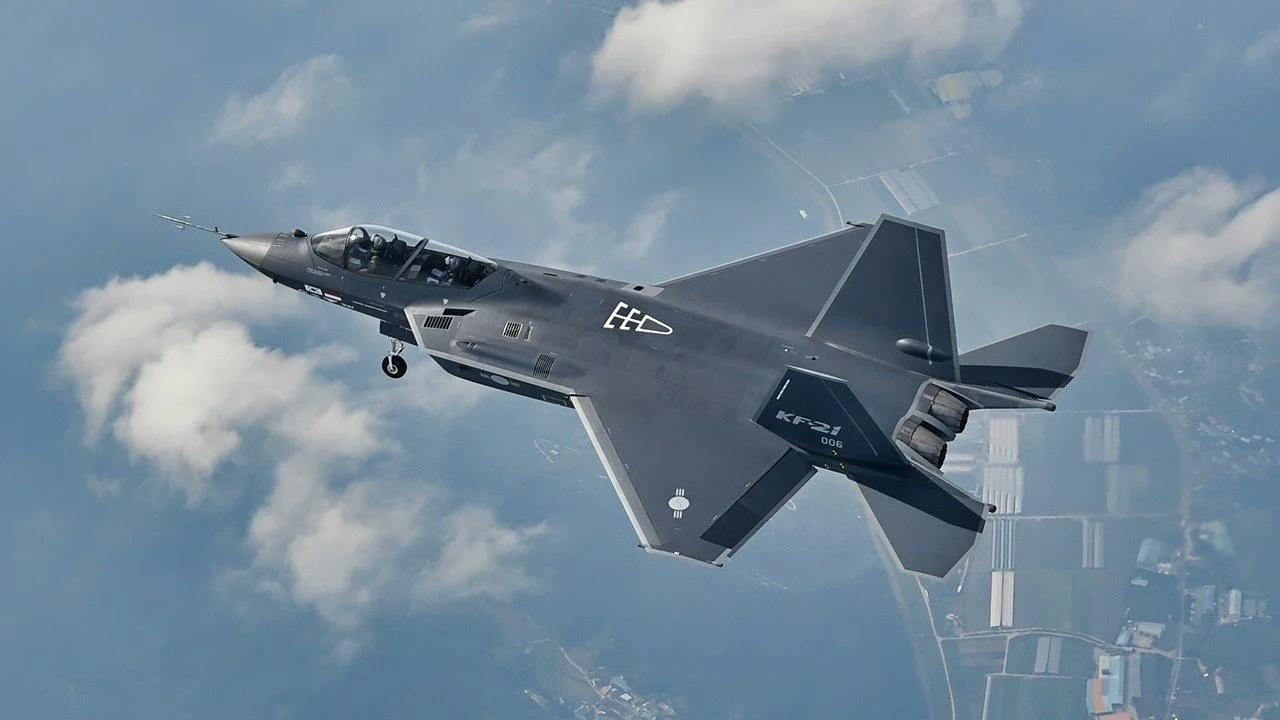
KF-21 Boramae. Image Credit: Creative Commons.
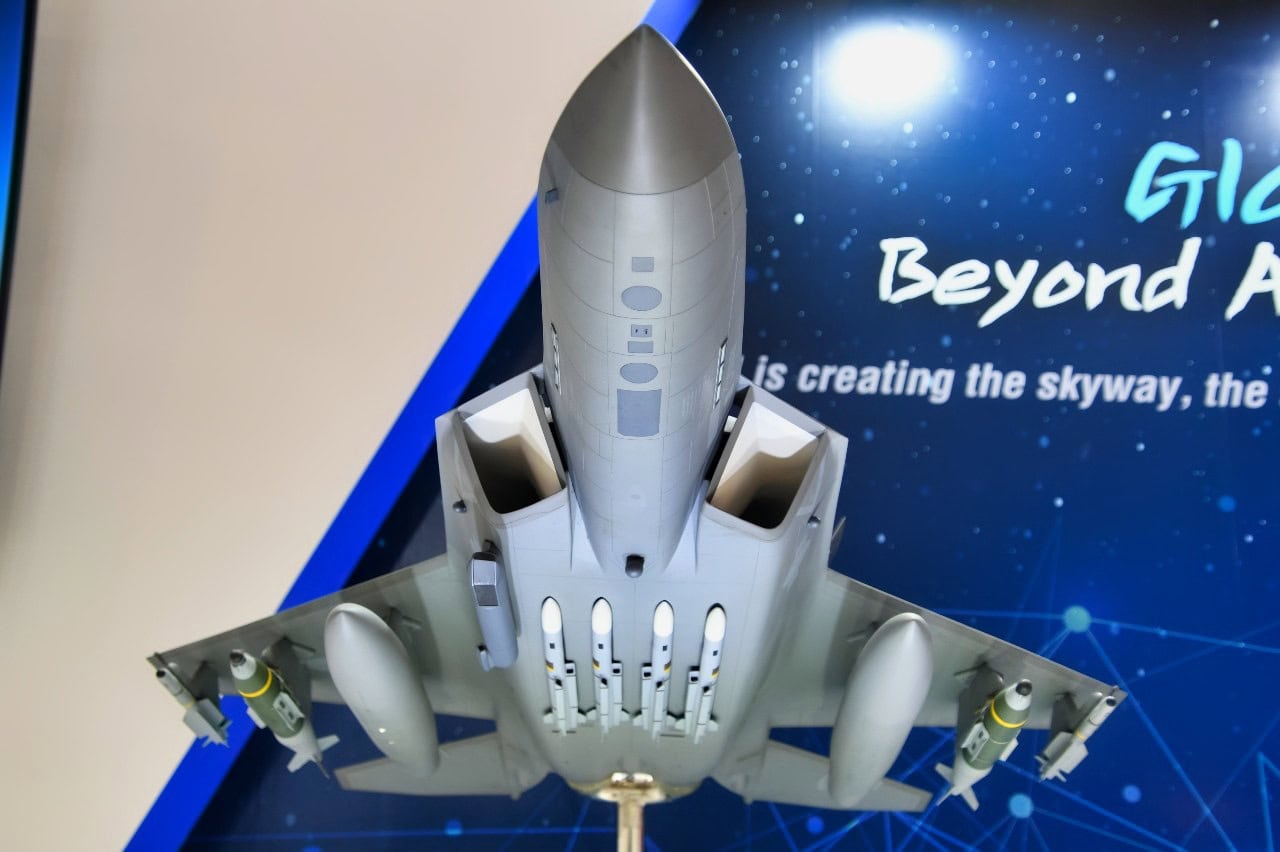
South Korea’s KF-21 Boramae is entering mass production, positioning KAI as a global defense leader. With Poland and other buyers interested, can it challenge the F-35 in export markets?
-Designed to deter North Korea and China, the jet has significant export potential for nations like India and Vietnam, with future “Block 3” upgrades promising full stealth capabilities.
South Korea Is Leaping Ahead With KF-21 Fighter Jet
I have always been interested in South Korean technology. I’m a Samsung enthusiast and love their mobile phones and smart watches. I learned about the country’s heady innovations 25 years ago as a soldier near the DMZ. While on leave, I noticed that broadband Internet was available everywhere and that ordinary citizens were already paying for goods and services with their cell phones. Keep in mind this was in 2001.
They were clearly ahead of the game.
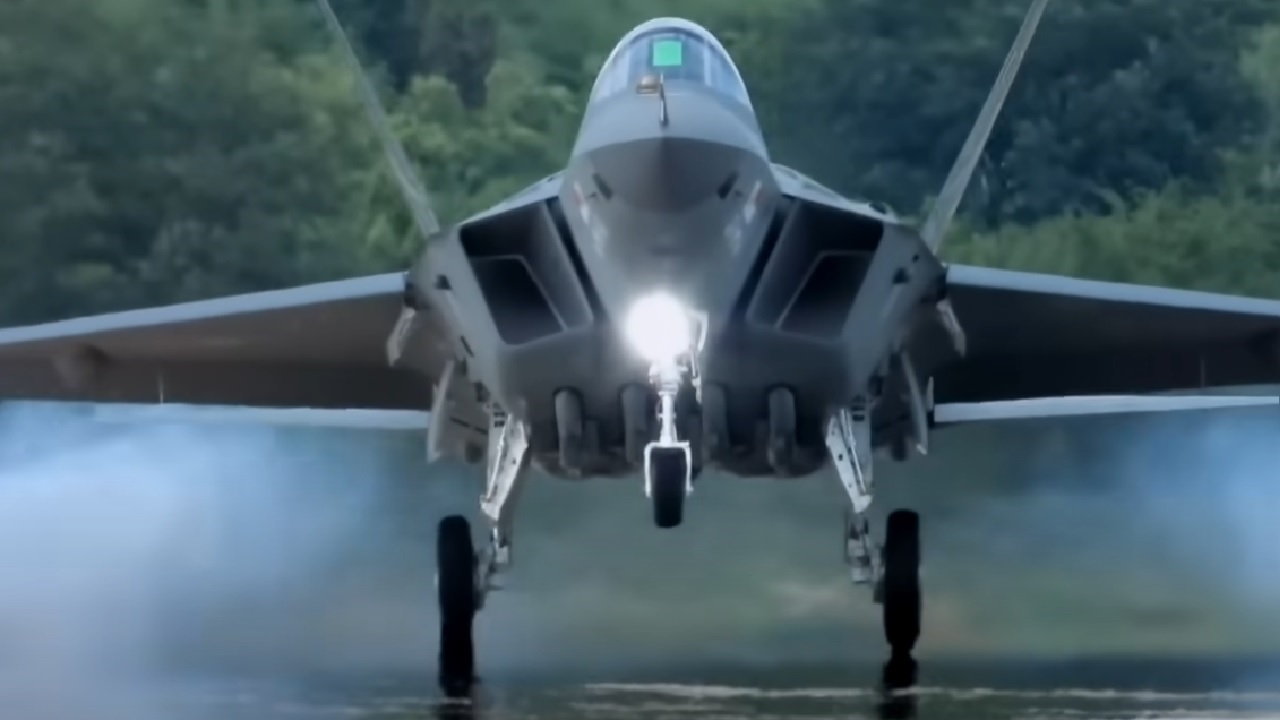
KF-21 screenshot from first flight. Image Credit: YouTube Screenshot.
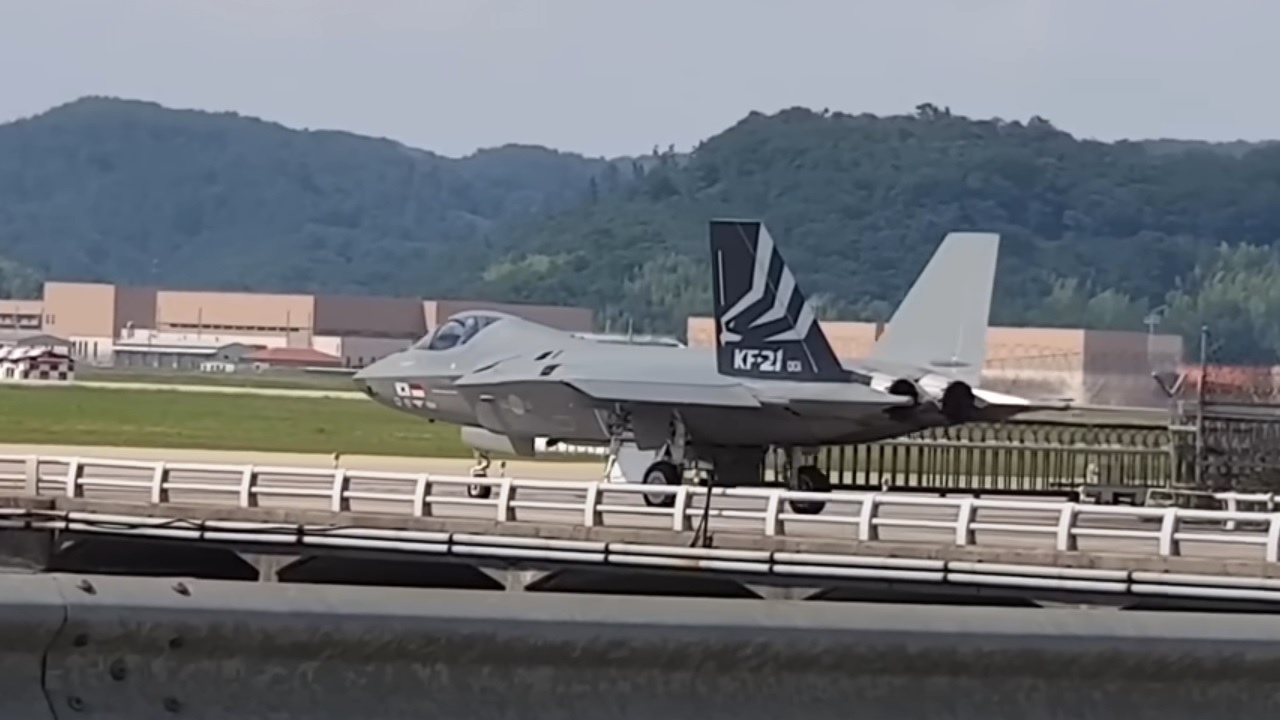
KF-21 fighter undergoing tests in South Korea. Image Credit: YouTube screenshot.
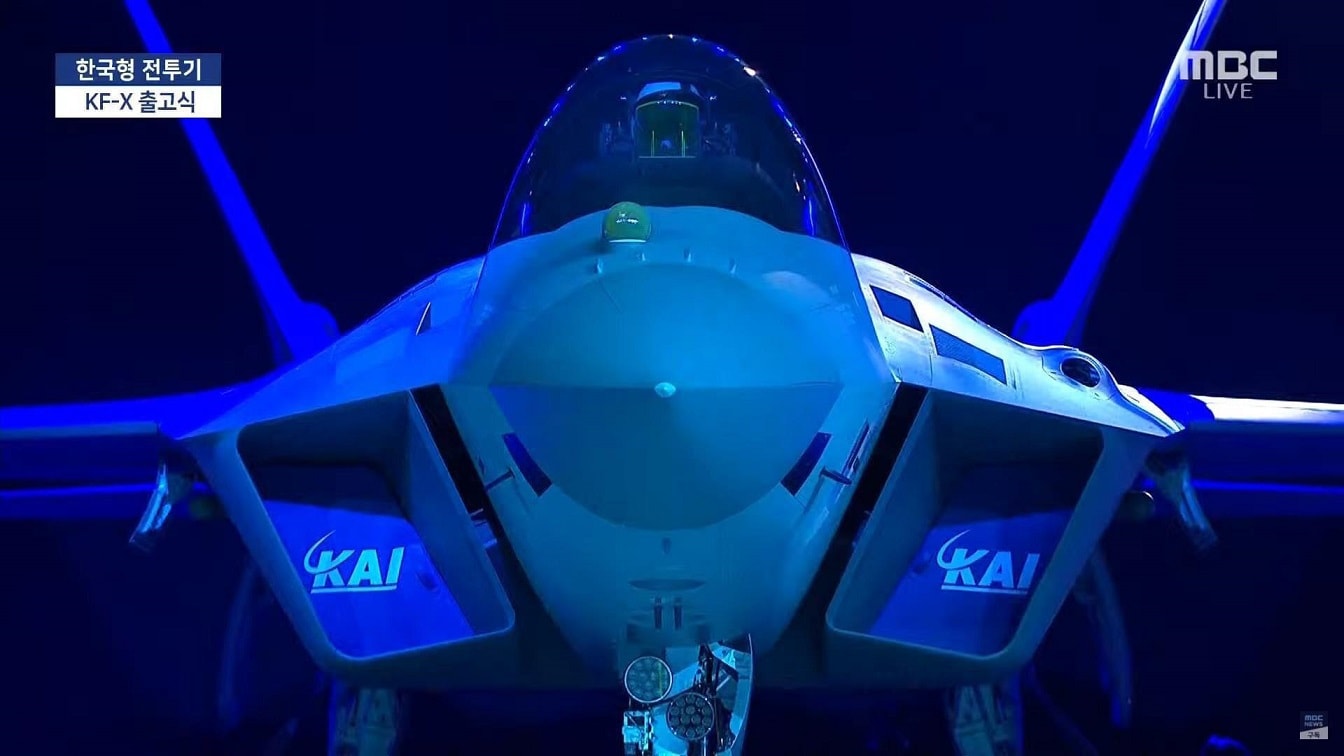
KF-21 Fighter. Image Credit: Screenshot.
Now, South Korean engineers and designers have transferred that prowess into their aerospace industry.
The KAI KF-21 Boramae (Hunting Hawk) fighter jet is a worthy adversary for North Korea and China. The twin-engine multirole fighter already has an enthusiastic following.
The first flight was in 2022, and it will be delivered this year. There are three “Blocks” planned, with Block 3 intended to be a fully stealthy future strike fighter with multirole capabilities.
Just What the South Korean Military Needs
As it stands now, the KF-21 is still a 4.5-generation fighter. It is meant to replace the older F-5 E/F Tiger II and F-4 Phantom II fighters.
The KF-21 has some stealth attributes that will make it hard to kill in a conflict. Future upgrades will grant it fifth-generation status, the South Koreans hope.
Good Improvement Over Other 4th and 4.5 Generation Fighters
The KF-21 does have a lower cross-section than the Dassault Rafale and the Eurofighter Typhoon. Some design characteristics remind one of the F-35, but it is not in the same league as the Lightning II. It may be cheaper to produce than the JAS 39 Gripen or the F-16 Fighting Falcon.
Multi-billion Dollar Plan for KF-21 Engines
The South Koreans are serious about the KF-21 and are in it for the long haul. Take the latest news on its engine development. KAI has developed a homegrown engine. The Advanced Aviation Engine Development Project will run from 2027 to 2040, with an Air Force investment of $3.4 billion.
This engine will have 16,000 pounds of military thrust and 24,000 pounds with afterburners.
That’s better than the air force envisioned and should be powerful enough to set the KF-21 up for success for decades.
This is an excellent development for the KF-21 and should make it a high-quality fighter jet, allowing South Koreans to avoid relying on outside sources for its propulsion system. Hanwha Aerospace is the lead contractor.
A Multitude of New Weapons Systems
That’s not all. The South Koreans are optimistic that the weapons systems onboard the KF-21 can dominate adversaries. Plans call for the Block One aircraft to carry a large array of air-to-surface missiles under a program worth $472 million. These will be integrated on the KF-21 by 2028.
The SPEAR air-to-ground missile will be added to the arsenal. There will also be the METEOR. These are quality munitions that will make the fighter relevant into the 2040s. The SPEAR is especially lethal.
“This is MBDA’s latest capability for providing a low collateral damage precision effect, enhanced platform/weapon survivability, a high load out for increased persistence. Powered by a turbojet engine and fitted with a precision effects warhead, plus an advanced multi-sensor seeker, the SPEAR missile can engage beyond the horizon a wide range of target types, both on land and at sea,” according to MBDA.
Other ground strike options abound. The GBU-12 Laser-Guided Bomb (LGB), the GBU-56 Laser Joint Direct Attack Munition (LJDAM), and the Korean Air-Launched Cruise Missile (KALCM), currently under development, will adorn the KF-21.
These capabilities will be integrated with the KF-21 1.5 years earlier than planned, which bodes well for the ROK air force. New short-range air-to-air missiles are planned for integration in the early 2030s.
This effort behind the KF-21 is noteworthy and shows that the ROK air force is in it to win it. The Boramae has much to offer. It’s about time, too.
The F-4 and F-5 were growing long in the tooth, and the South Koreans needed a fighter they could depend on for the future.
It’s About North Korean Deterrence
This should send the North Koreans a message that the indigenous aerospace industry in South Korea is ready for a showdown with Kim Jong Un’s forces.
I’m especially impressed with the KF-21’s ground-attack weapons, which would be important for providing a high level of close air support. T
his could save countless soldiers on the ground in combat.
Potential Hit on the Export Market: F-35 Should Worry?
The KF-21 could also be exported. India would be a good target, as its own Rafales did not perform well in dogfights against the Pakistanis last year.
I could see Vietnam wanting to buy Boramaes, too. And who knows, the Canadians could pull the trigger on a KF-21 purchase too if they do not opt for the full 88 F-35 purchase.
Indonesia and the UAE are also in the mix.
The KF-21 is a feather in the cap for South Korea. It shows that the indigenous aerospace industry is stronger than ever. Evolution and innovation must constantly be nurtured in such a dangerous neighborhood.
Dominance Until 2050
Plus, KAI has even bigger ambitions for its defense portfolio.
The military contractor boasts a plan called “Global KAI 2050—Beyond Aerospace.” This shows how much the South Koreans like to peer into the future and envision a world in which they can always deter North Korea and China.
The South Koreans are rightfully proud of the KF-21 program.
This warbird will make some countries open up their purse strings, knowing that the ROK air force plans to support the airplane for decades. The investment in engines, weapons, and technological advancements is impressive.
The “hunting hawk” is sharpening its talons and will be able to dominate airspace to police South Korea’s borders and take the fight to the North Koreans if needed.
About the Author: Brent M. Eastwood
Author of now over 3,000 articles on defense issues, Brent M. Eastwood, PhD is the author of Don’t Turn Your Back On the World: a Conservative Foreign Policy and Humans, Machines, and Data: Future Trends in Warfare plus two other books. Brent was the founder and CEO of a tech firm that predicted world events using artificial intelligence. He served as a legislative fellow for US Senator Tim Scott and advised the senator on defense and foreign policy issues. He has taught at American University, George Washington University, and George Mason University. Brent is a former US Army Infantry officer. He can be followed on X @BMEastwood.