

The Luxembourg government is advancing a series of concrete reforms aimed at increasing household disposable income for parents, with key measures set to take effect in 2027.
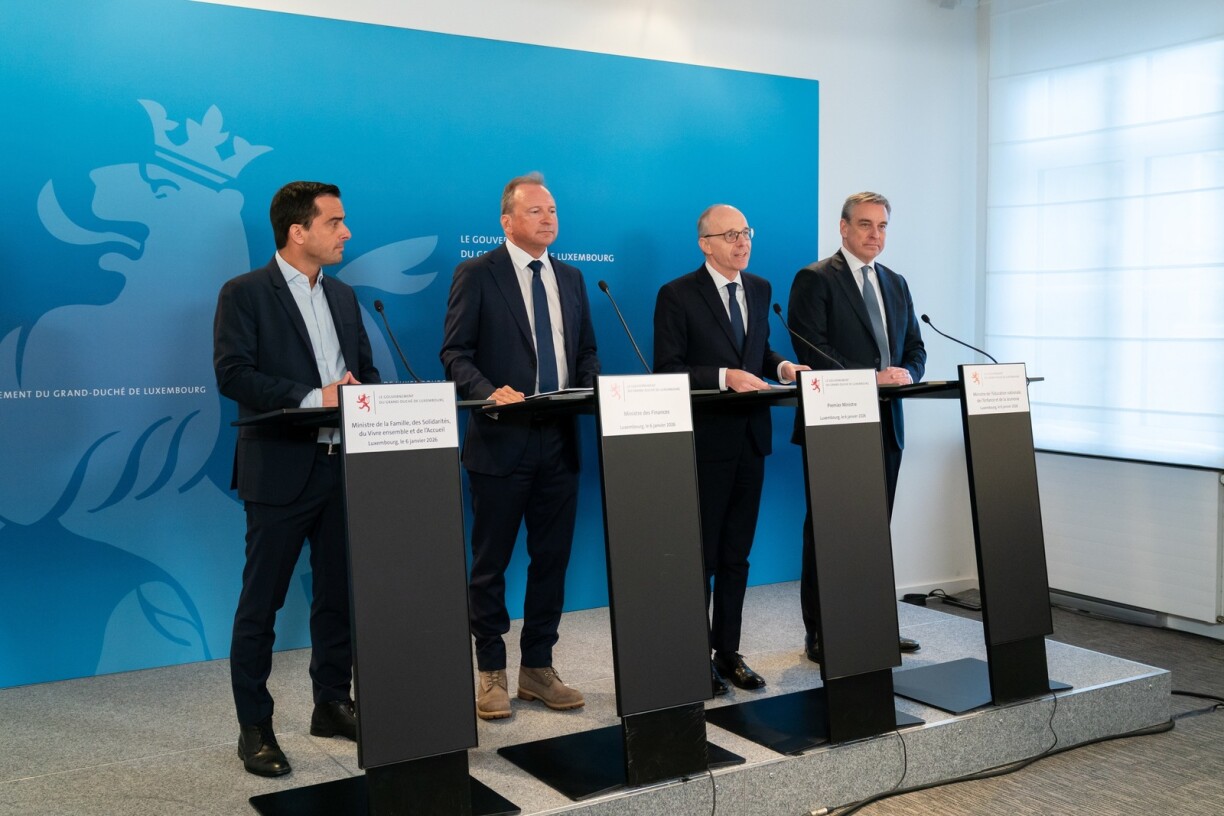
The plans were presented on Tuesday alongside a major tax overhaul. Officials framed the initiatives as delivering positive changes “for all families,” with a particular focus on social reforms designed to alleviate financial pressures on parents.
“The government shouldn’t be concerned with your personal situation, whether you are single, married or in a civil partnership,” stated Minister for Family Affairs Max Hahn, referencing the planned abolition of tax classes, “But what does interest us is whether or not there is a child in the household.” Prime Minister Luc Frieden emphasised the goal of making life easier for parents, asserting that “no one will be left behind.”
Overhaul of childcare voucher to deliver major savings
Beyond previously announced increases to family allowances, Minister Hahn and Minister of Education Claude Meisch detailed a “considerable financial relief” package centered on reforming the childcare service voucher (chèque-service accueil).
The voucher’s income scale will be revised to be more advantageous for households earning less than 3.5 times the social minimum wage (approximately €9,460 gross per month). “For a family earning twice the minimum wage, childcare will be completely free,” assured Minister Meisch. Meanwhile, for a family earning three times the minimum wage, there will be “29 hours of free childcare per week.”
“Billing will be based on the child’s registered hours, rather than a fixed block of hours imposed on parents.”
Claude Meisch
Additionally, the billing method for childcare services will be simplified. The government pledges to eliminate billable supplements, with billing to be based “on the child’s registered hours, rather than a fixed block of hours imposed on parents.” According to government projections, these changes are expected to save families several thousand euros annually. For instance, a couple with two children and an income of twice the minimum wage could save up to €5,000 per year, depending on the type of childcare used.
Allowances and new aid: a financial boost for families
The Children’s Future Fund is set for several enhancements designed to support the incomes of all parents, independent of the child’s age. These measures extend beyond the already announced increase to family allowances (rising by €45 or €60 from 1 January 2027) and include multiple direct financial boosts. Key changes are the re-indexation of the back-to-school allowance, now valued at €175 for children aged 6 to 11 and €325 for those over 12, and the special supplementary allowance.
A notable addition is a fourth payment of the birth grant for new parents, set at €580.03. This instalment is linked to the uptake of the free Bilan30 language disorder screening, a check-up recommended from the age of two and a half but currently utilised by only half of eligible families. The birth grant itself will also be re-indexed to keep pace with the cost of living.
Further aligning with the goal of prioritising support for families in difficulty, the government announced the creation of a new progressive annual aid. This scheme will primarily target low-income households with school-aged children, with the annual amount scaling by age:
- €300 per year for children aged 4 to 5.
- €1,000 per year for children aged 6 to 11.
- €3,000 per year for young people aged 12 to 25.