
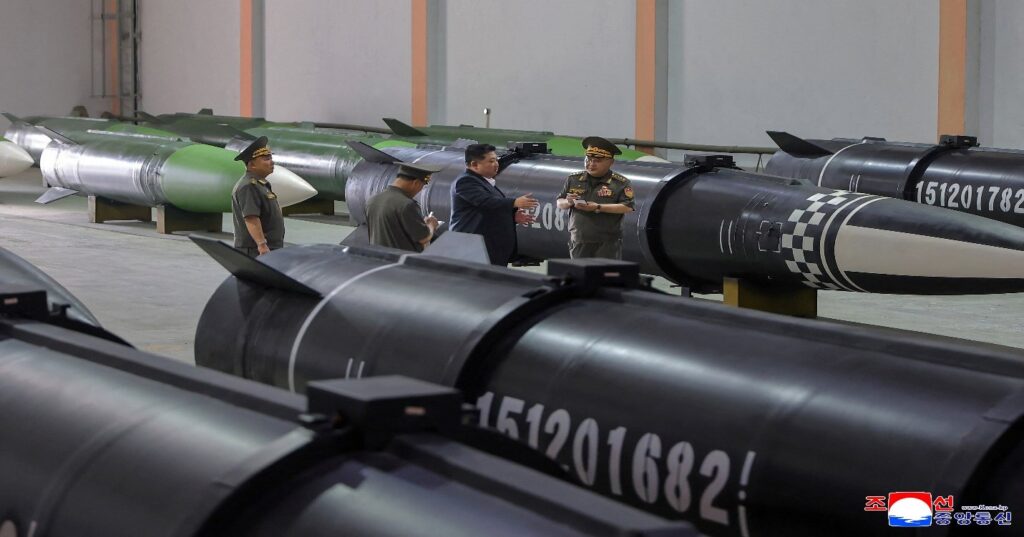
The continued existence of nuclear activity within North Korea has transformed the balance of power within East Asia and beyond, forming a new system of strategic tension, balance renegotiation, and economic strength between the key regional players. It is not just a technical issue of deterrence or disarmament but the nuclear course of Pyongyang has become a revolving point around which the politics of the region, as well as the international politics, revolve.
The revival of weapon tests, the intensification of strategic alliances between North Korea and other countries, and the failure of sanctions to denuclearize the nation has led to the establishment of the security environment where all the major powers will be compelled to re-strategize their long-term strategies. The confluence of nuclear ambitions, regional insecurity and competing great-power interests becomes the character of power politics in the Northeast Asian region.
The quest to acquire nuclear arms has been one of the characteristics of the foreign and domestic policies of North Korea. The leadership of this country does not view nuclear capability as merely a military tool but also as an indicator of legitimacy of the regime, survival, and independence. This stance has enabled Pyongyang to go through isolation and use its strategic location to bargain and gain acceptance.
Even after decades of sanctions, diplomatic isolation and efforts at engagement, North Korea has been increasing their nuclear arsenal together with the missile delivery system to the point to which they have some level of deterrence that is changing the balance of power in the region forever.
North Korea as well as the nuclear activities of Pyongyang have been characterized by fluctuation of coercive diplomacy and engagement. The strategic goal of full, verifiable and irreversible denuclearization US policy towards has remained the same regardless of the changes in the tone and approach of the successive regimes.
Read More: North Korea Warns of ‘Offensive Action’ as US Aircraft Carrier Arrives in Busan
Washing ton policies were constrained by the structural factor and alliance requirements even during the high-level summit diplomacy. This type of outreach of the Trump administration, as explained in the above study, depicts how summit-based diplomacy existed alongside continuity of institute in deterrence, imposition of sanctions, and nonproliferation conventions. These boundaries of economic sanctions, along with Pyongyang adaptation, which is based on illegal commerce and cyber-attacks, highlight the rational actor paradigm which remains to dominate American strategic calculations.
In the mind of Washington, the nuclear problem of the North Korean issue questions the effectiveness of the international nonproliferation governing system. This U.S. containment policy as discussed in the study by Jina Kim presents the problem as a deterrence credibility test and cohesion of its allies, specifically South Korea and Japan. The rhetoric differences notwithstanding, the policy logic behind it is one based on stability, deterrence and risk management as opposed to transformative change.
while the strategic inactivity of China has been at the forefront of maintaining the status quo on the Korean Peninsula. Being the greatest trade partner and political patron of North Korea, Beijing has been taking a dual stand of stabilizing and enabling action.
According to the policy of China towards the DPRK, which was emphasized in the NDU symposium report, this approach is informed by risk aversion and stability as opposed to denuclearization. On the one hand, Beijing actively supports the idea of the nuclear-free peninsula as a public statement, but on the other hand, it is threatened by the collapse of the regime and the free flow of refugees and unified Korea allied to the U.S.
The findings of the symposium depict that China imposes sanctions selectively whereby there is sufficient pressure to hold leverage without causing an instability. This restraint calculated is a sign of the Beijing desire to follow a strategy of a buffer-state that would keep North Korea dependent as well as strategically useful. This pragmatism highlights an even larger trend of great-power caution in East Asia, where the management of the dangers of escalation is more important than decisive change.
Read More: North Korea Launches Ballistic Missiles Ahead of Trump’s East Asia Trip
The revival of the Russia-North Korea cooperation gives a whole new dimension of complexity to regional politics. Since the invasion of Ukraine in 2022, Russia has attempted to increase its relationship with Pyongyang in the political, military, and economic spheres due to the isolation of Moscow. This alignment came to formal in the 2024 Comprehensive Strategic Partnership Treaty, which further enhanced cooperation across the fields of energy, labor and infrastructure as the study of the Korea Journal describes.
These advancements have weakened the sanctions regime in the international system giving Pyongyang new lifelines and diplomatic protection. The collaboration goes as far as possible arms shipments and munitions assistance, which highlights the mutual quality of the alliance.
The re-involvement of Russia also re-balances the age old hegemony of China over north Korea, which poses some minor friction of influence between the two countries of Moscow and Beijing. In the case of the United States, Japan, and South Korea, this situation makes the trilateral structure of deterrence more complicated because the new Russia-North Korea axis adds more to the balance of power in the region.
Overall, the fact that the North Korean nuclear program has not been disarmed yet demonstrates the weaknesses of the existing international strategies of nonproliferation and imposition of sanctions. The loss of consensus amongst the leading powers as seen in the difference in approaches at Washington, Beijing and Moscow are indicative of the move to multipolarity in East Asia. With this changing landscape, North Korea is serving as a deterrence force as well as a diplomatic fulcrum to take advantage of its status and seek concessions and sovereignty. The peninsula therefore does not just serve as the hot-spot to nuclear tensions; it is also the reflection of the wider transform.
*The views presented in this article are the author’s own and do not necessarily reflect the views of The Diplomatic Insight.

Ali Khan
Ali khan is an independent researcher and policy commentator, based in Islamabad. He can be reached at alikhanmangrio2002@gmail.com