
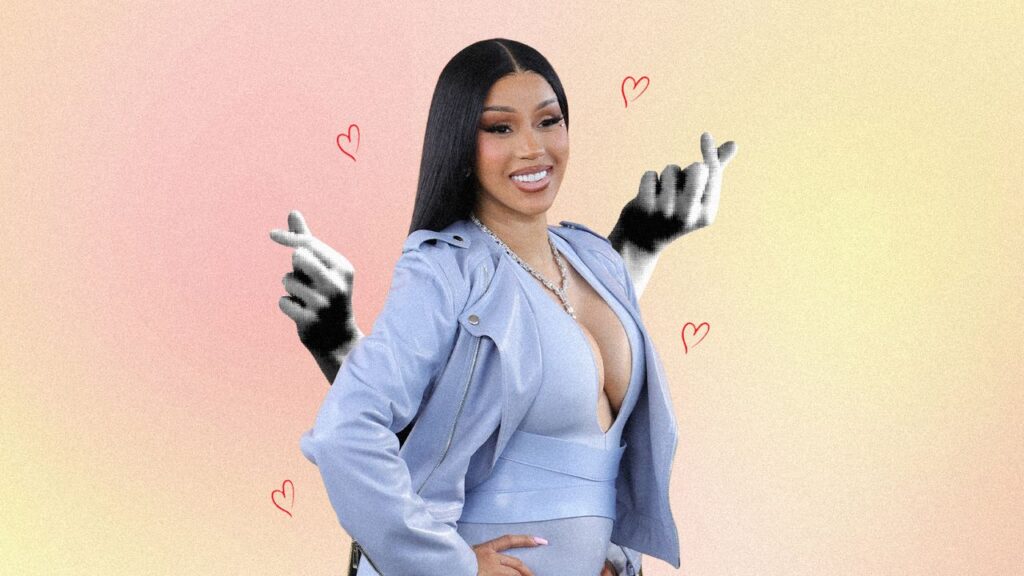
In September of last year I met with the team behind Fully, a K-Beauty skin care brand gaining major traction in South Korea. As the senior beauty editor at Glamour, these types of meetings are common, especially for brands new to market. Eager to find the same success in the United States, the brand’s global marketing manager, Haelee Park, asked me for some insight, culminating in one all-important question: “What do you think about Cardi B?”
Of course, I love Cardi B. She’s a chart-topping rapper, meme queen, fashion icon, and hugely famous across the globe. Still, I was surprised by the question—and thus began my education on the rapper’s powerful beauty influence in South Korea. According to Park, Cardi was at the very top of celebrities she wished to work with, with Fully joining a throng of K-beauty brands clamoring for her endorsement on social media.
Sure enough, by December the brand’s Green Tomato Clay Mask cleanser appeared on Cardi’s TikTok, accompanied by a “Cardi B’s Pick” seal on Fully’s website. This followed similar partnerships with Medicube, the brand behind the ultra-viral Age-R Booster Pro device, and other K-beauty juggernauts like Mixsoon, Anua, and Dr. Melaxin.
Cardi B’s ability to find success in K-beauty, which has now overthrown France as the leading exporter of cosmetics in the US, should not come as a total surprise. She’s an astute businesswoman, having turned her stint on the reality TV show Love & Hip Hop: New York into a Grammy award–winning music career. And the hustle hasn’t stopped: Last year she released a Courtroom Edition of her album Am I the Drama? using the viral memes from her September court testimony as the cover art and campaigned as a street vendor in her hometown of New York City to sell copies.
The 33-year-old’s enduring appeal has always been her authenticity and according to Joe Cho, media relations team lead at Medicube, her influence in K-beauty is no different. “In Korea, Cardi B is viewed positively not only for her global success as a rapper but also for her genuine appreciation of Korean food and culture,” Cho says.
Cardi first connected with fans in Korea by trying popular dishes like spicy Buldak ramen and Dongwon canned tuna on TikTok, where she has 31.5 million followers. These videos were honest and seemingly unsponsored, punctuated by her trademark Bronx slang and sharp sense of humor. “Her public enjoyment of K-food has gone viral on multiple occasions, drawing attention both domestically and internationally and strengthening her connection with Korean audiences,” Cho adds.
Park describes the rapper’s public perception as “our sister Cardi” due to her impressive reviews, which in turn instilled a deep sense of trust among consumers. “Korean audiences often react by saying things like, ‘How does she keep finding all these local insider favorites that only the real enthusiasts know about?’” Park says. “Many of the skin care, foods, and snacks she chooses are already hot and well known in Korea, and Cardi B is viewed as someone who takes these Korean trends to the United States and helps spread new culture and usage experiences.”
For those with knowledge of Korean pop culture, Cardi may seem like an unlikely idol: In the country, celebrities are highly scrutinized and held to impossible standards rooted in morality and purity, making their biggest stars typically reserved, unopinionated, and fiercely private. But according to Cho, Cardi’s bold personality and honesty is the driving force of her appeal.