
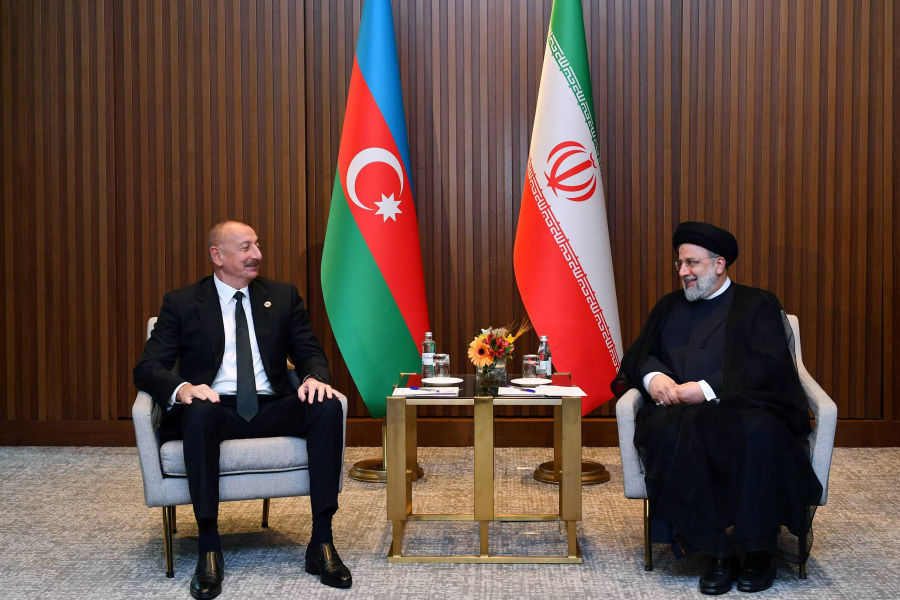
For many analysts, tensions between Iran and Azerbaijan have reached a critical point, with numerous Iranian and regional media outlets warning that armed conflict could become possible if the situation continues to deteriorate. Escalating rhetoric from officials on both sides has steadily fueled these tensions, exemplified by statements from Azerbaijani President Ilham Aliyev referring to “the more than 40 million Azerbaijanis living in Iran under marginalized conditions.”
From the perspective of the Iranian government, such declarations are intended solely to provoke Iran’s ethnic Azerbaijani minority, the country’s largest minority group, which also makes up around 90 percent of Azerbaijan’s population, against the Iranian state and the Islamic Republic as a whole.
Historical-political relations
While these tensions might appear to be a recent product of the current political configuration in the Caucasus, the conflict between Iran and Azerbaijan involves long-standing issues that continue to define both countries’ political decisions. The historical relationship between the two nations remains relevant today, particularly in shaping Azerbaijan’s political vision.
Prior to the wars between Russia and Qajar Iran, which resulted in the imposition of the treaties of Golestan (1813) and Turkmenchay (1828) on Iran, the territory of present-day Azerbaijan was part of Iran. It was only after these wars, when all Iranian territories in the Caucasus passed to Russia, that the border between the two was established along the Aras River. This administrative division meant that by the late 19th century, Azerbaijani populations with Persian cultural traditions lived on both sides of the river. Following the collapse of the Russian Empire due to World War I and a brief federal experiment, the independent state of Azerbaijan was born in 1918. This experiment was short-lived, as the country was incorporated into the Soviet Union in 1920, remaining under Soviet rule until its collapse and dissolution.
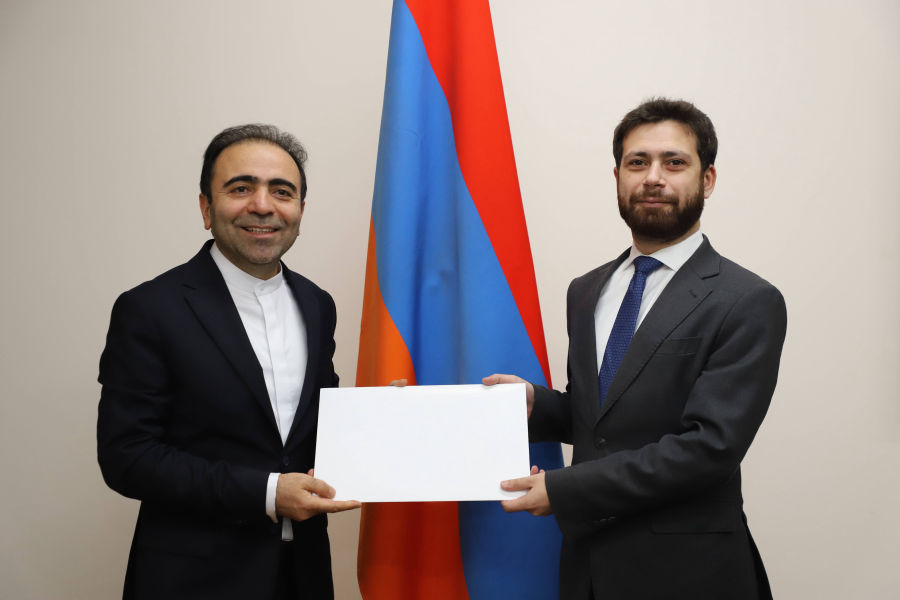
The birth of Azerbaijan as an independent state in 1991 was viewed with apprehension by Iranian authorities at the time, who were already concerned that Baku might employ a “two countries, one nation” rhetoric and attempt to project expansionist visions toward the Iranian side of the Aras River. On the Iranian side resides the ethnic Azerbaijani-Iranian minority, the largest in the Islamic Republic, numbering nearly 20 million members according to official Iranian statistics, though Azerbaijani authorities and groups in Iran consider this figure to be an underestimate. This minority is concentrated in the northwest of the Islamic Republic, in border areas adjacent to Azerbaijan, Armenia and Turkey, encompassing three provinces: West Azerbaijan, East Azerbaijan and Ardabil.
The Azerbaijani minority and Pan-Turkism
This ethnic configuration means that the Azerbaijani minority, which has long complained of political marginalization by the central government, is viewed by the Iranian state primarily through a security lens, even though the current Leader of the Islamic Republic, Ayatollah Ali Khamenei, himself belongs to this minority. As a result, security considerations largely define political relations between the Islamic Republic and Azerbaijan. From Tehran’s perspective, two main political factors underpin this outlook: Azerbaijan’s adherence to the political doctrine known as Pan-Turkism and its close relations with Israel.
Pan-Turkism is a political doctrine that seeks to unite all Turkic-speaking countries, including Azerbaijan, Turkmenistan and Kazakhstan. Among these states, Azerbaijan is the only one to have broadly incorporated Pan-Turkist ideas into official policy. The rise of the AKP in Turkey and what Iran’s Foreign Ministry views as Ankara’s expansionist ambitions in the South Caucasus have contributed to a revival of Pan-Turkist ideology in the region, particularly in Azerbaijan. Iranian political and military circles argue that the convergence between Turkey and Azerbaijan, with Ankara seen as the principal driving force, lies at the heart of the current crisis between Tehran and Baku.
In Iran’s view, Pan-Turkism represents a serious and direct threat to the country’s territorial integrity.
Both Turkey and Azerbaijan are accused of encouraging what Tehran describes as separatist sentiments among Iran’s Azerbaijani population.
Tehran has repeatedly accused the Azerbaijani government of providing material and political support to separatist elements. Iranian officials and media frequently point to what they describe as openly expansionist statements made by Turkish and Azerbaijani politicians. In particular, Azerbaijani figures have used semi-official platforms to call for the liberation and eventual reunification with Azerbaijan of territories they label as South Azerbaijan.
Another major concern for Tehran is what it describes as the mystification of history by Azerbaijani authorities. Iranian media outlets regularly publish analyses of Azerbaijan’s school curricula, arguing that they promote the concept of a Greater Azerbaijan that includes parts of Iranian territory. From Tehran’s perspective, such narratives are designed to shape future generations and reinforce territorial claims against Iran.
The Islamic Republic is also deeply concerned about any potential changes to the existing borders between Armenia, Iran and Azerbaijan. Such changes are viewed as part of a broader Pan-Turkic expansionist project and are considered increasingly plausible following Azerbaijan’s victory in the Second Nagorno-Karabakh War in 2020. That victory not only delivered military gains but, according to Baku’s interpretation of subsequent agreements, also secured assurances for the opening of new transport routes. Azerbaijan has since intensified efforts to establish a direct link between its mainland and the Nakhichevan exclave, which is separated by Armenian territory.
This initiative was originally framed as the Zangezur Corridor project. More recently, it has been rebranded as the Trump Route for International Peace and Prosperity (TRIPP). The project is intended to connect Azerbaijan to Nakhichevan and, by extension, to Turkey. Iran has consistently rejected the claim that the post-war agreements signed by Moscow, Baku and Yerevan authorize the creation of such a route. Beyond disputing its legal basis, Iran’s Strategic Council on Foreign Relations argues that the project is designed to restrict access to Turks and Azerbaijanis and to sever Armenia’s direct land connection with Iran.
Iranian media have further warned that the TRIPP project could effectively result in Azerbaijan gaining control over Armenia’s Syunik province. Such an outcome would significantly weaken Iran’s geopolitical position, disrupt regional trade and further isolate Armenia, which Tehran considers one of its most important regional partners. Iranian officials emphasize that maintaining close relations with Armenia does not contradict Iran’s claim of neutrality in the Armenia-Azerbaijan conflict or its support for a diplomatic resolution. Tehran often argues that Iranian mediation during the First Nagorno-Karabakh War prevented Armenia from occupying the entirety of Azerbaijani territory, a point Iranian media frequently raise to criticize what they describe as Baku’s lack of historical memory and gratitude.
Azerbaijan, however, maintains that Iran sided with Armenia during the most recent conflict. Azerbaijani officials have accused Tehran of facilitating Iranian and Russian arms transfers to Armenia through Iranian territory and have even alleged direct intervention by Iranian forces to halt Azerbaijani advances.
Any alteration of existing borders is considered a red line by the Islamic Republic and could, if pursued by Baku, trigger military intervention to preserve the current status quo.
Iranian officials at the highest levels, from the commander of the Revolutionary Guard to the foreign minister, have repeatedly stressed that border changes are unacceptable under any circumstances.
About two years ago, the Revolutionary Guard conducted large-scale military exercises near the Azerbaijani border as a clear demonstration of force. These drills included the deployment of a floating bridge across the Aras River and simulations of logistical transfers between its two banks. During the same period, Iran opened a consulate in the Armenian city of Kapan, a location of strategic importance, should the TRIPP project move forward.
At the same time, the Azerbaijani government has accused Iran — particularly the Revolutionary Guard — of forming a Shia militia known as Huseynyun, allegedly intended to carry out counter-intelligence activities and serve as a pro-Iranian force in the event of conflict. Iran has stated that the group was formed in 2019 by Shia volunteers in Syria and has no operational role in Azerbaijan. In recent developments, Azerbaijani authorities have detained several Azerbaijani nationals on charges of belonging to a pro-Iranian cell tasked with collecting intelligence on military and civilian targets. Tehran dismisses these arrests as pretexts aimed at criminalizing Shia groups whose political views align with those of the Islamic Republic.
The other major factor shaping current relations between Tehran and Baku is Azerbaijan’s relationship with Israel. From Tehran’s perspective, not only is Ankara fully aligned with Baku, but Israel is also an integral part of this alignment. Iranian authorities express deep concern over the breadth of Azerbaijani-Israeli cooperation, which spans military, cultural, sports, economic, telecommunications and other sectors. For the Islamic Republic, Israel — referred to in official discourse as the Zionist entity — is not regarded as just another state in West Asia, but rather as a politically illegitimate actor and a fundamental source of regional instability. Within this framework, Azerbaijan’s ties with Israel acquire particular significance, especially given that both states are formally considered part of the Muslim world.
These concerns intensified further during the 12-day war between Iran and Israel in June 2025. Iranian authorities stated that some attacks on Iranian territory were launched from Azerbaijani soil, a claim that Baku strongly denied. Regardless of these denials, such accusations reinforced Tehran’s long-standing perception of Azerbaijan as a forward operating platform for Israeli military and intelligence activities against the Islamic Republic.
From Iran’s point of view, Azerbaijan’s status as a majority-Shia country carries undeniable cultural and religious importance. However, Tehran argues that the way Islam is officially articulated by the Azerbaijani state places it in direct opposition to the model promoted by the Islamic Republic. Iran’s interpretation of Islam is explicitly political — often described as Islamism — a discourse that seeks to make Islam the central organizing principle of political life and international relations. Azerbaijan, by contrast, represents what Iranian officials describe as Islamization, meaning the limited and symbolic presence of Islam in public and cultural life without translating it into a political or diplomatic framework. In Iranian discourse, this approach is frequently compared to that of Saudi Arabia, namely an Islam that does not challenge the prevailing global political order.
Beyond ideological and cultural differences, the military dimension represents the most immediate source of concern for Iranian decision-makers. Azerbaijan has emerged as one of the most important global clients of the Israeli arms industry. Between 2016 and 2020, according to data from the Stockholm International Peace Research Institute, more than 69 percent of Azerbaijan’s military acquisitions came from Israel. This military relationship is complemented by close intelligence cooperation, particularly the degree of freedom granted to Israeli intelligence operatives operating from Azerbaijani territory, especially in regions bordering Iran.
Iranian media and South Caucasus specialists — including Ehsan Movahedian, a professor of international relations at the University of Tehran — have repeatedly claimed that Israeli drones regularly operate from Azerbaijani territory to collect intelligence on Iran’s military and nuclear facilities. According to Iranian sources, including statements by the Revolutionary Guard, most of these drones are intercepted. Iranian authorities further argue that Israeli activities in Azerbaijan are also aimed at infiltrating Iran’s Azerbaijani minority. As a result, Azerbaijan has been described by Iranian officials and media outlets as the preferred location for Israeli intelligence operations targeting the Islamic Republic.
From Tehran’s perspective, what it describes as Azerbaijani expansionism — rooted in Pan-Turkist ideology — combined with Baku’s transformation into a hub for Israeli military and intelligence activity, constitutes a direct and vital threat to Iran’s national security.
Within Iran’s geopolitical framework, the possibility of an armed confrontation between the two countries cannot be ruled out, if Azerbaijani leaders persist in expansionist rhetoric or attempt to alter Iran’s northern borders with the tacit support of Turkey and Israel.
In this context, an article by Ali Akbar Velayati, former foreign minister and current adviser to Ayatollah Ali Khamenei, is particularly revealing. While dismissing the likelihood of an outright war with Azerbaijan, Velayati reiterated that any attempt to change regional borders, or any formal or informal alliance with Israel, remains absolutely intolerable for Tehran.