
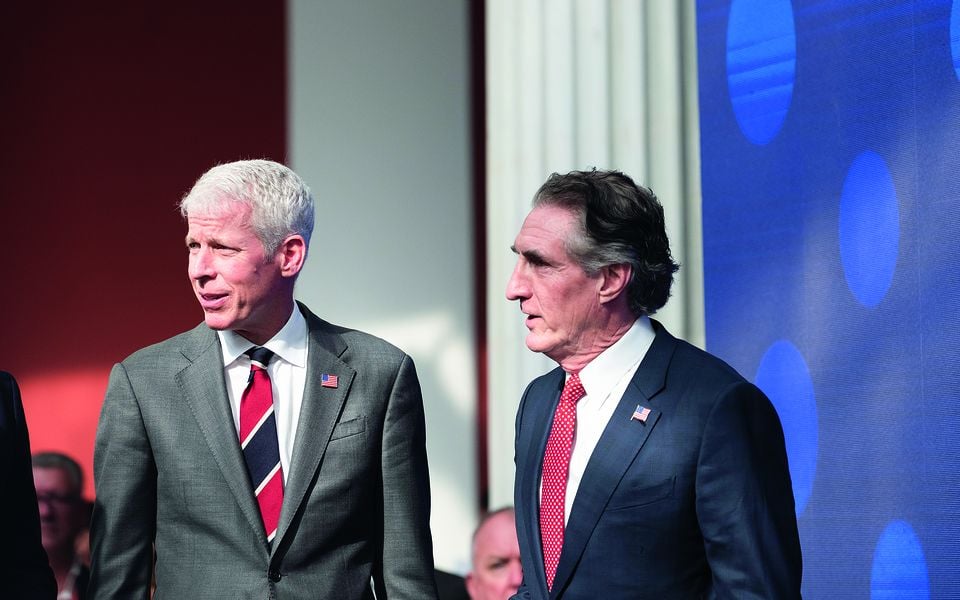
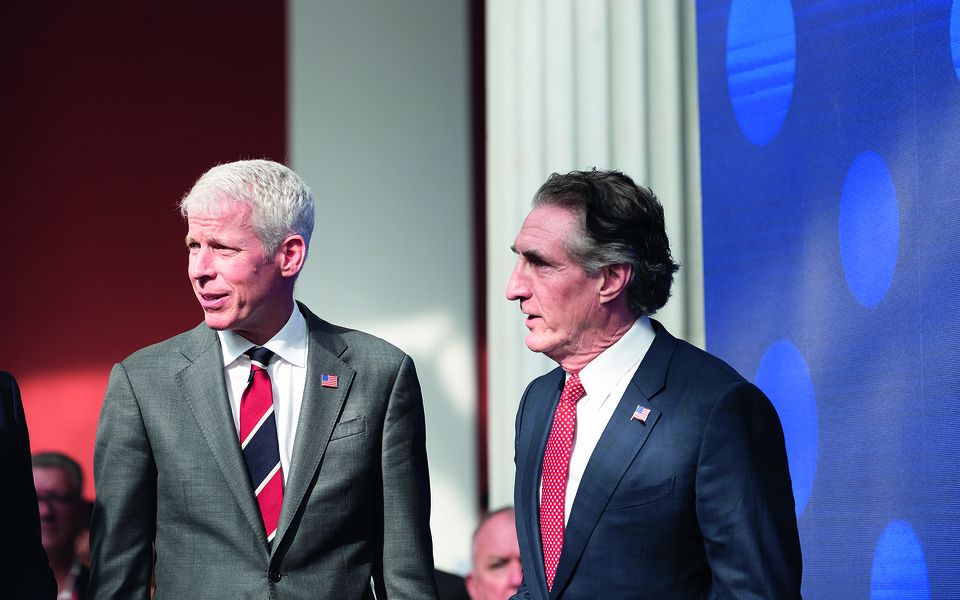
US Energy Secretary Chris Wright and Interior Secretary Doug Burgum are seen at the 6th Partnership for Transatlantic Energy Cooperation (P-TEC) meeting which was held in Athens in November 2025. [Vangelis Zavos]
Athens views the energy agreements signed last November as the most significant achievement in bilateral relations during the first year of Donald Trump’s second term in the White House, according to Greek officials.
At the same time, concern persists in Athens over the open communication channel between Trump and Turkish President Recep Tayyip Erdogan, even as the unresolved issue of Turkey’s exclusion from the F-35 fighter jet program remains.
Greek officials are also closely watching Washington’s moves on the international stage, including developments related to Venezuela and Greenland, as well as the possibility of US involvement in Greek-Turkish relations, although no such initiative appears imminent.
Trump returned to the White House for a second term in January 2025, triggering both concern and expectations globally and within Greece’s government. Views inside the administration were divided, with some officials who had openly supported the Democratic Party expressing skepticism about Trump’s return, while members of the government’s right wing welcomed his presidency. One year later, Greek-US relations show notable progress but still leave unanswered questions.
The most important development in bilateral ties over the past year was the signing of energy agreements in November. Greece became the first country to conclude a long-term deal for US liquefied natural gas with Venture Global, followed by an agreement with Ukraine for the temporary transfer of LNG. The deals strengthened Greece’s position in Southeastern Europe and sent a clear political signal of closer ties between Athens and Washington.
The early November visit of four US cabinet members, led by Interior Secretary Doug Burgum and Energy Secretary Chris Wright, was seen as the strongest indication to date of close cooperation. US Ambassador to Greece Kimberly Guilfoyle described the visit as evidence of strong energy cooperation and a strategic relationship.
Nonetheless, communication channels remain more limited than Athens would prefer. Diplomatic sources say the ambassador remains the primary link with Washington, while uncertainty persists over potential US initiatives on Greek-Turkish issues.
While expectations of deeper US-Turkey cooperation have not been fully realized, including on F-35s, Athens maintains that Greece remains a consistent and reliable US ally, a relationship it believes Trump’s presidency will ultimately strengthen.