
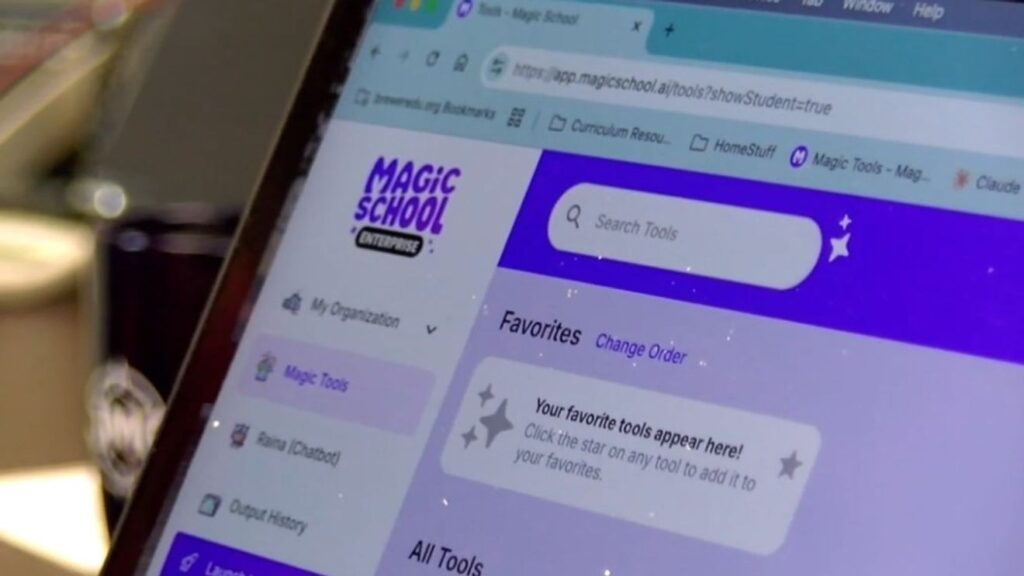
PORTLAND, Maine (WVII) — Artificial Intelligence has become commonplace. From the medical field, to the classroom, to even back in 2023, when our Devin Daigneault demonstrated how ChatGPT can create a script with a simple prompt.
“AI has really become so accessible that I think people are implementing it in a variety of places,” said Mary Dickinson, Executive Vice President and Chief Scientific Officer of The Jackson Laboratory and Co-chair of the Maine AI Task Force.
The Task Force was kick-started by a Governor Janet Mills Executive Order in December of 2024, and is comprised of leaders from the legislature, academics, and several sectors of the workforce.
“I thank the members of the Artificial Intelligence Task Force, the many experts who contributed to its work, and the Maine people who shared their perspectives to inform this detailed report,” said Governor Mills in an October 2025 statement. “This report sets a responsible AI direction for Maine to bolster innovation and our economy, while offering guidance on the safe and productive use of AI.”
In October of last year, the Task Force released its report on the state of AI in Maine.
It described AI’s opportunities in the workforce. From the forest industry, by identifying specific trees to cut, to health care, with post-op monitoring systems.
“I think AI has the potential, the sort of intuitive nature, the flexibility of the approaches, has the potential to be beneficial to a multitude of industries,” said Dickinson.
The report also looked into the potential risks of AI and how its seemingly limitless possibilities can be exploited.
An example – the Maine State Police Computer Crimes Unit, and the dangerous loophole AI has caused in its system. Authorities we spoke with in September of last year tell us there are those using AI to create child sexual abuse material, and there’s no state law against it.
“It was certainly the job of the committee to suggest that we engage in those protective practices and consider legislation that would help protect Maine citizens. It was not the job of the committee to legislate, and that will be the role of the legislature as it moves forward to ensure those protections can be enacted in the appropriate way, utilizing all of the will of the people and the process that we have available to them,” said Dickinson. “But, we did certainly discuss those things that were problematic and really terrible uses of new technology for ill gains. That’s really a sad topic in what otherwise could be very transformative and positive.”
To read the report, click here.