

January 11, 2026 — 5:00am
Where in the world did women use potatoes to make themselves look sexy to potential suitors? It’s something of a surprise because today this nation is one of the most sophisticated on earth – considered its most democratic and one of its wealthiest.
But Norway has come a long, long way in the last 225 years. And an eccentric open-air museum in its southernmost city Kristiansand is the perfect place to discover just how far.
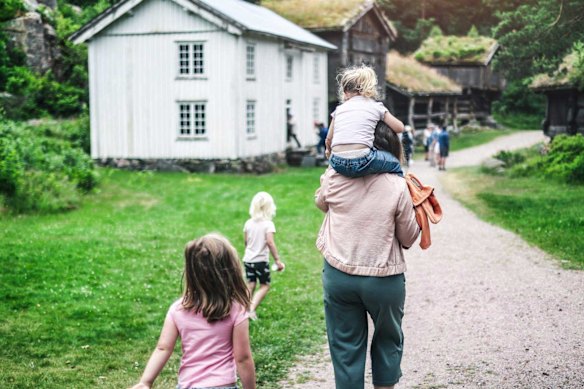
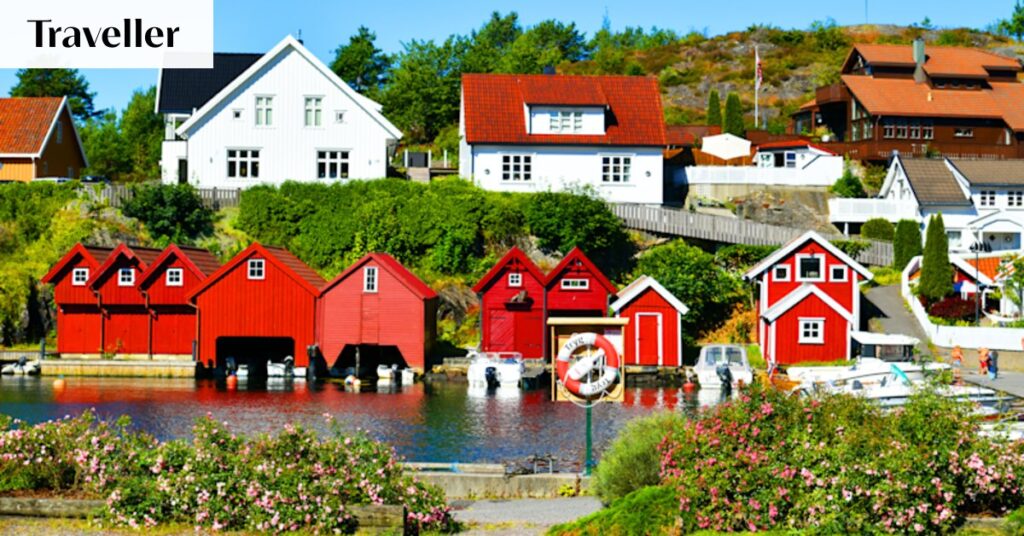
Houses, barns, stables and storehouses are spread across Kristiansand Museum.Visit Norway
Inside the 40-odd historic buildings scattered over the site, all houses, barns, stables and storehouses dating from the 1580s to the 1800s, you learn about how life in Norway used to be lived. That’s a time before oil was discovered in 1969, and transformed the country from one focused on farming, fishing and hydropower into a modern nation with vast monetary reserves and an advanced social welfare and education system.
Back in the 1800s, Norway’s economy was based on agriculture, fishing and animal husbandry which dictated everything, including social connections and dating rituals. Women, for instance, were evaluated mostly on the size of their calves. Large, well-developed muscles in their legs indicated they’d most likely be strong and useful helpers on the farm, capable of carrying heavy weights of water over long distances.
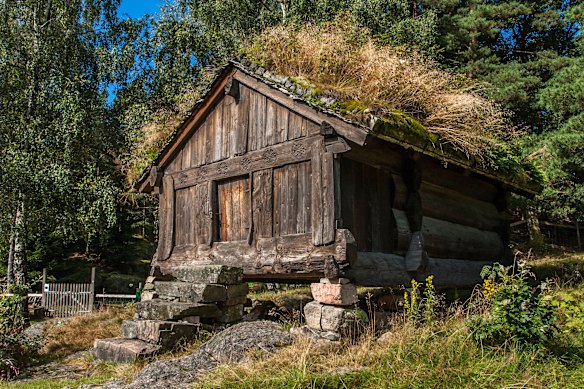
A farmhouse at Kristiansand’s open-air museum. Alamy Stock Photo
As a result, most women in need of a husband would routinely stuff potatoes down their socks, or sometimes grain, to make their calves look much more well-developed to catch the eye of the menfolk. It was the 19th century’s equivalent of the push-up bra.
With 75 per cent of the population by 1845 eking out a living farming, it was a tough life. Norwegian historian Theodore Blegen writes that Norwegians “were just struggling to keep themselves and their families alive.”
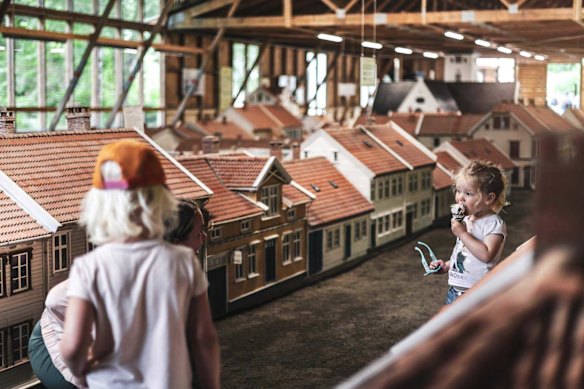
A “Miniby” (mini-town) depicts Kristiansand before the fires of the 1800s.Visit Norway
Even courtship didn’t really look like a bundle of fun, according to the documentation of life at the museum. There are a number of carved wooden boards lying around a few of the houses which would be the gift when a man proposed marriage to his sweetheart. They weren’t terribly persuasive: they were mangle boards, for forcing the creases out of linen cloth.
When the seduction worked, marriage itself still wasn’t too comfortable. The extremely short beds are contained in what looks to the modern eye like a small cupboard. That’s because, in those days, most people slept sitting up. According to the superstition of the day, only the dead lay down.
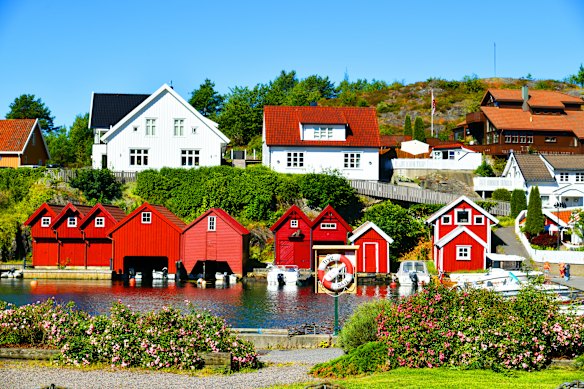
Kristiansand in southern Norway.Getty Images
The museum provides a fascinating glimpse into life in early Norway but Kristiansand is just as alluring in itself. Known as the country’s summer city on account of its warm temperatures in the summer, it’s a popular stop for cruise ships travelling to southern Norway. I am here on a shore excursion from a Holland America seven-day cruise around the Norwegian fjords and Shetland, and found it a great introduction to the country and its extremely colourful past.
Of course, there were the Vikings, but they were far from the first inhabitants. In 1994, skeletal parts were discovered of the Sogne woman, which have been dated to between 7910 and 7600BC.
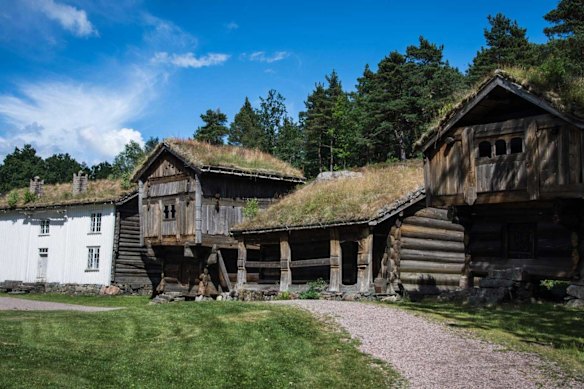
Kristiansand Museum’s historic buildings date back to the 1600s.Visit Norway
The settlement’s location on the Skagerrak strait, which was a vital crossing from the North Sea to the Baltic Sea, made it important from the start, and the city was officially founded in 1641 by Danish-Norwegian King Christian IV towards the end of his colourful reign – he had a staggering 24 children by two wives and three lovers.
For an overview of how Kristiansand looked, according to the king’s original design, there’s also the city reproduced in miniature on a scale of 1:10, showing many of the original white wooden houses and streets of Posebyen, the historic part of the city.

Holland America’s MS Rotterdam sails through a fjord.
Then the full-sized original buildings of the area, dating from all the different eras, tell the story of life as it was lived by the people. Many of the barns weren’t even just for the livestock. This is where the children, from the age of two, also slept, to keep warm.
Meanwhile, some of the oldest houses, simple wooden structures, with soil on the roof to keep the heat in, which often then sprouted into a green roof – way before we thought we’d invented them – take only a few minutes to walk around the bare interiors.
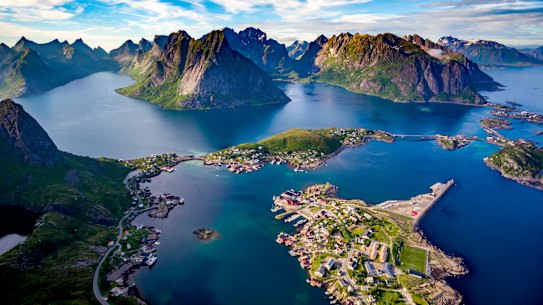
It was here where multi-generations of the same family usually lived, with and without their essential stores of sexy sock spuds.
The details
Cruise
Holland America’s seven-day Norwegian Fjords and Sognefjord, which includes Kristiansand, starts from $1879 a person twin-share, flights not included. See hollandamerica.com
More
visitnorway.com
The writer travelled as a guest of Holland America.
Sign up for the Traveller Deals newsletter
Get exclusive travel deals delivered straight to your inbox. Sign up now.
 Sue Williams is a Sydney-based freelance travel writer, author and journalist who’s filed for newspapers, magazines, radio and TV stations around the world.Connect via email.
Traveller GuidesFrom our partners