
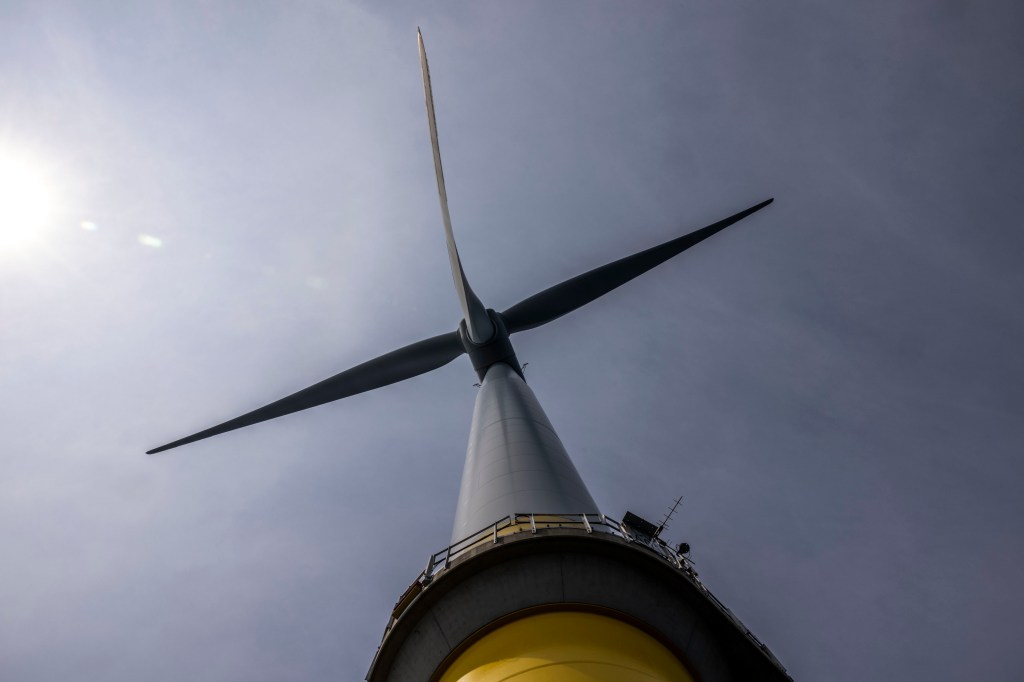
The suspension of the Coastal Virginia Offshore Wind project is very worrisome. Virginia needs to bring much more renewable energy online to meet the commonwealth’s energy needs and protect our environment. Halting the offshore wind project threatens progress on both counts.
The National Audubon has been a strong supporter of developing clean, properly located, renewable energy sources, as reflected in its January 2025 Birds and Offshore Wind Report. Offshore wind projects can produce significant amounts of energy for coastal cities. And while all energy infrastructure, including wind turbines, poses some risk to individual birds, the overall impact posed by climate change is a much greater existential risk for birds … and people.
Analysis of data indicates that unless the rate of climate change is slowed, two-thirds of bird species in North America are vulnerable to extinction. And birds are just the “canary in the coal mine.” The underlying threats to birds, such as habitat loss, the disruption of plant and insect populations due to shifting weather patterns, more frequent fires and temperature increases, affect all wildlife and ultimately all of us.
From an economic perspective, the well-respected annual report published by Lazard on “levelized” cost of energy, which calculates the lifetime cost of energy generation, finds that renewables are the “most cost-competitive form of generation,” even without subsidies. Battery storage is also becoming cost-effective; battery costs have dropped by more than 90% since 2010 and are expected to decrease further in the coming years. Once built and connected to the grid, solar and wind energy are virtually free. Solar farms can be dual-use, providing meadows for pollinators or co-located farming, such as raising sheep. Full-scale farming often occurs under land-based wind turbines. The foundations of offshore turbines function as artificial reefs for marine life and, despite misinformation, they don’t kill whales. Today, Iowa gets 65% of its electricity from solar and wind; New Mexico, 52%; California, 38%; and Texas, 30%. In Virginia, the mix is only 8%, largely due to a lack of installed wind energy systems.
Both renewable and fossil fuel generating platforms have construction, maintenance and eventual decommissioning costs. But fossil fuel plants must also pay for every cubic foot of gas, gallon of oil or pound of coal they burn; prices spike whenever supply is tight or impacted by a global event. Fossil fuels also bring a host of environmental impacts, including habitat destruction from oil and gas fracking rigs and pipelines, methane gas leaks and flaring, potential oil spills, and mountain-top removal from coal mining. The health of people living near fossil fuel power plants is harmed by smokestack air pollution, including nitrogen oxides (NOx), particulate matter (PM2.5), and volatile organic compounds (VOCs). In the case of coal-fired power plants, heavy metals and sulfur dioxide (SO2) are added to the list of pollutants.
Extracting oil, gas and coal and burning them is, of course, the source of the CO2 emissions driving climate change. Sea level rise, forest fires, long droughts interspersed with more frequent severe rainfall events and “rapid intensification” of hurricanes are now causing many tens of billions of dollars in damage in the U.S. every year. Heatwaves have grown hotter and stronger, causing the death of up to half a million people every year worldwide.
Today, the cost of this environmental impact from fossil fuels is not included in your electric bill. Nonetheless, every household pays the price through increased health insurance and health care costs, escalating home insurance bills, higher taxes to build infrastructure to defend against floods and, ultimately, the cost of losing land and homes to those storms and floods. If we aren’t successful in decarbonizing our economy, in moving away from oil, gas and coal, in the next few decades, the rate of harm to birds, to nature, and to all of us will only accelerate. For all these reasons, we must embrace clean, renewable energy.
Rogard Ross of Chesapeake is conservation chair for the Cape Henry Audubon Society and president of the Friends of Indian River.