
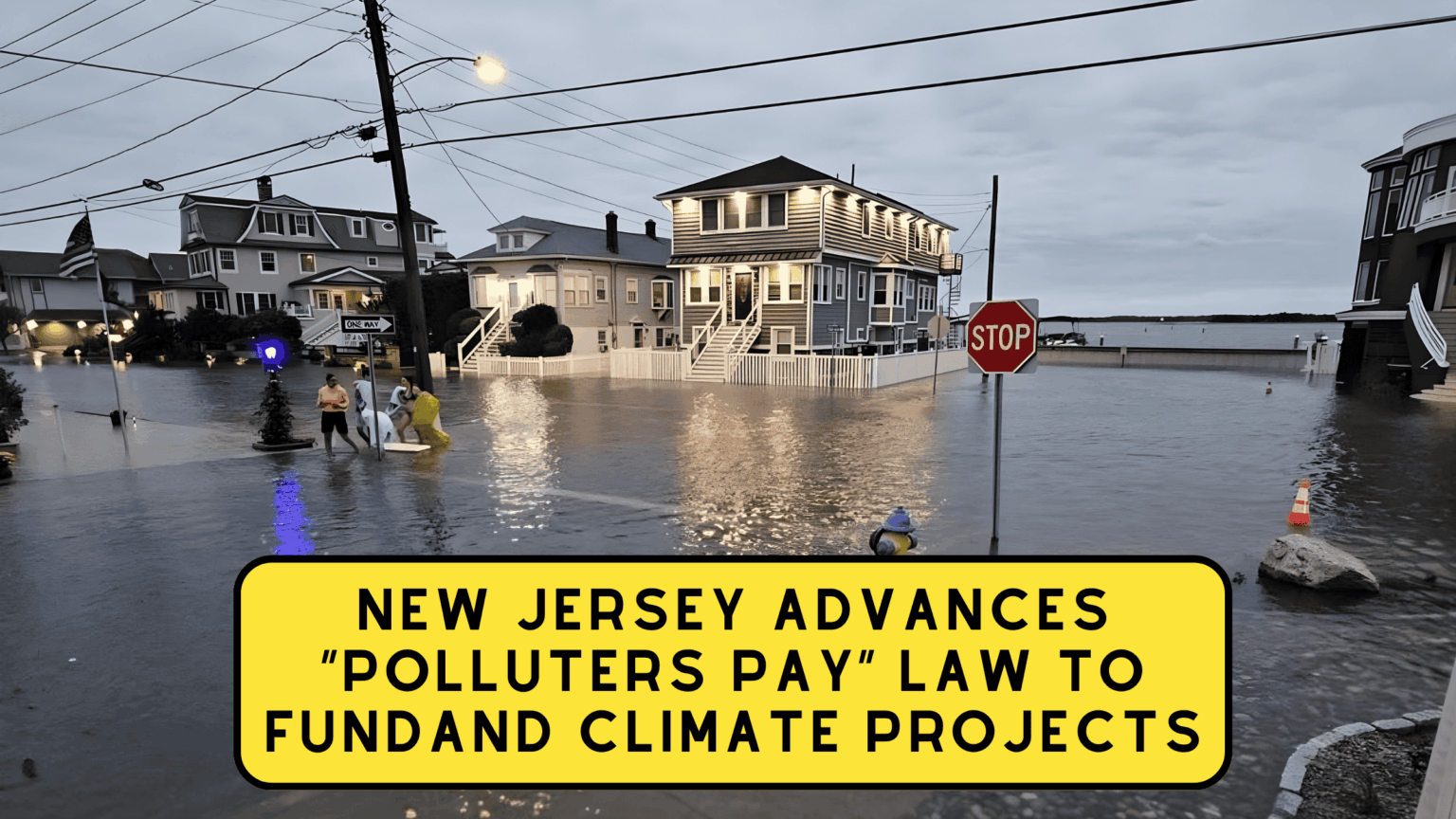
New Jersey lawmakers have advanced a sweeping new climate law designed to help pay for flood protection, storm resilience, and infrastructure upgrades across the state without raising taxes on residents. The legislation, officially known as the “Polluters Pay to Make New Jersey More Affordable Act,” shifts part of the financial burden of climate change away from taxpayers and onto large fossil fuel companies.
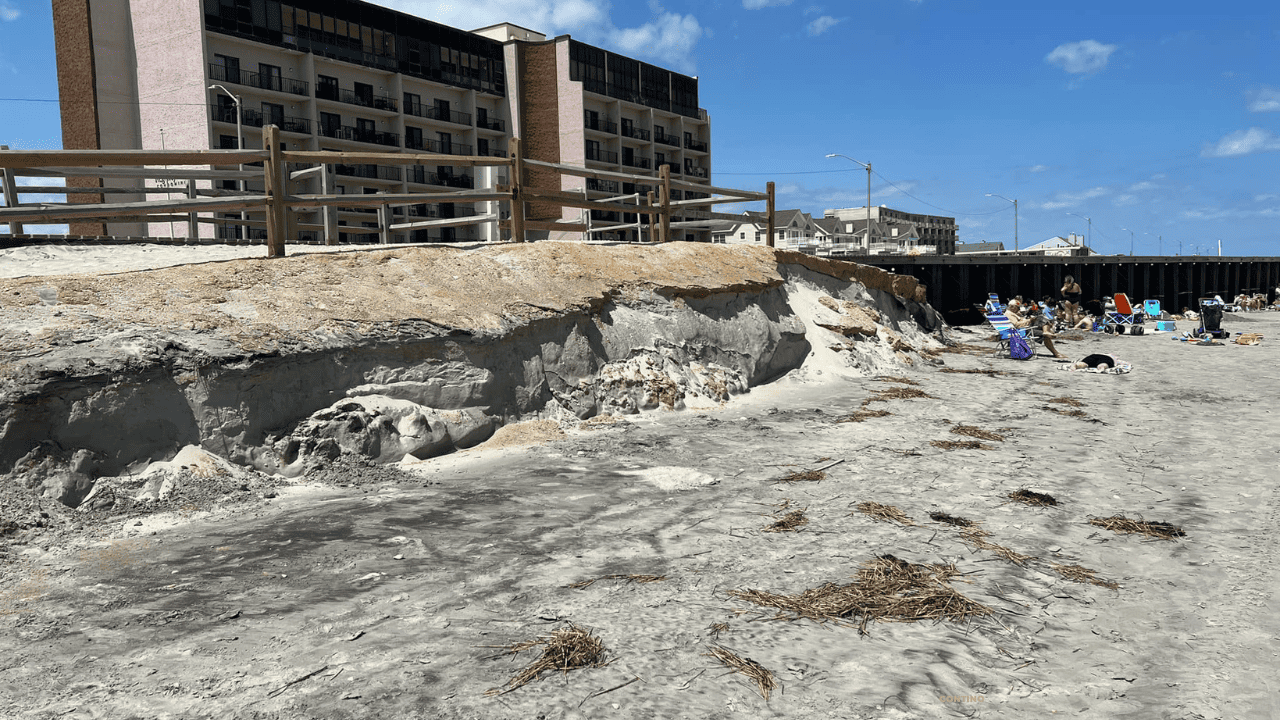
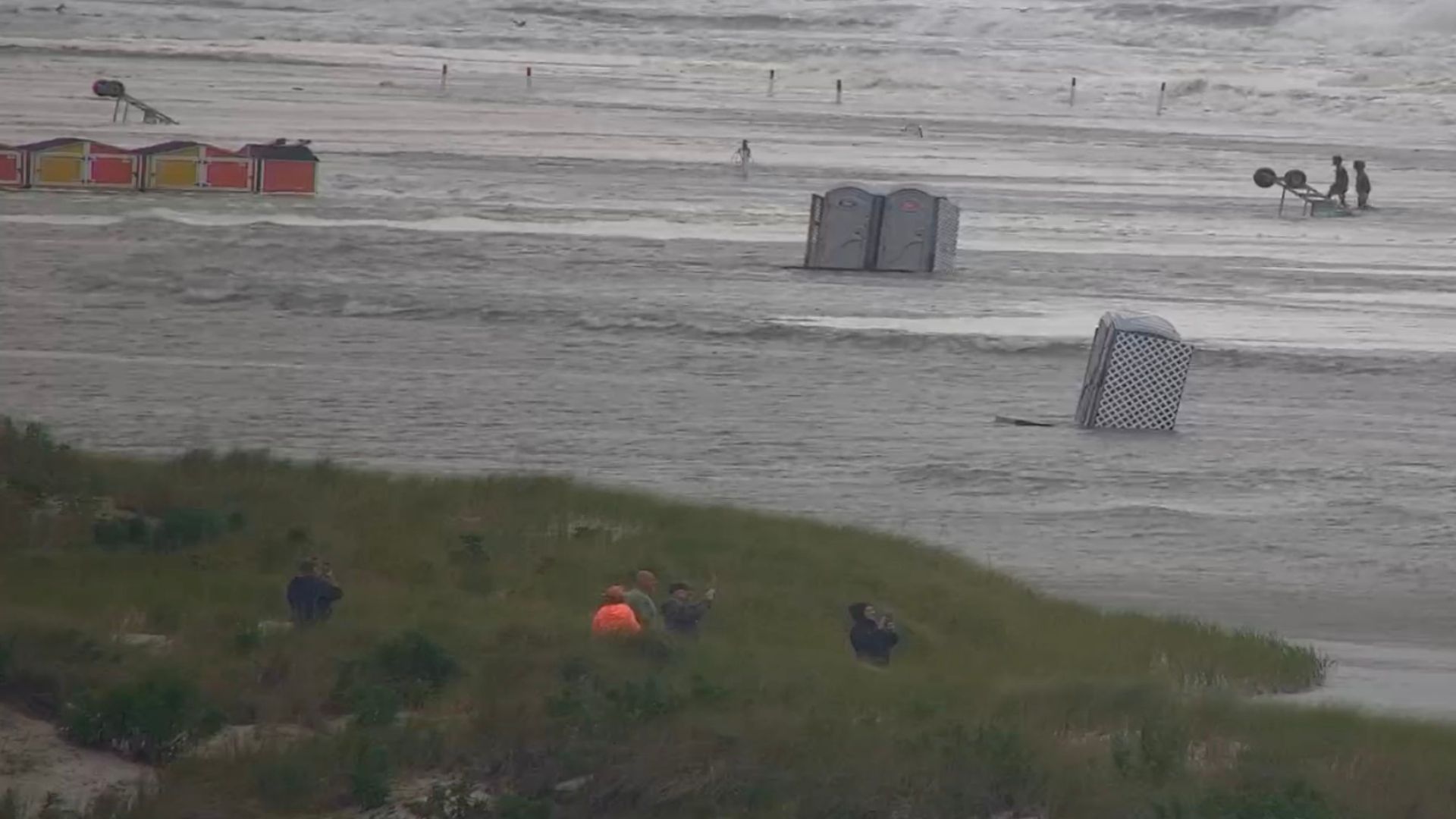
Supporters of the law argue that climate change is no longer a future concern. Rising sea levels, repeated flooding, stronger storms, extreme heat, and power disruptions are already impacting communities throughout New Jersey. Coastal and low-lying areas are especially vulnerable, with studies showing hundreds of thousands of properties at risk of flooding and billions of dollars in property value exposed to future climate damage.
Lawmakers say New Jersey residents have already spent enormous sums recovering from climate-related disasters and adapting infrastructure to changing conditions. The new law is intended to recover a portion of those costs from companies whose fossil fuel extraction contributed to climate change.
 Why New Jersey Passed the Polluters Pay Law
The Legislature points to decades of scientific research linking fossil fuel emissions to rising temperatures, stronger storms, and sea level rise. According to studies cited in the bill, climate change significantly increased the cost of major disasters like Superstorm Sandy and continues to drive expensive recovery and mitigation efforts statewide.
State officials argue that continuing to rely entirely on taxpayers to fund climate adaptation is unsustainable. The Polluters Pay law establishes a long-term funding mechanism aimed at protecting communities, infrastructure, and public health while easing the financial pressure on residents.
Who Is Required to Pay Under the New Law
The law applies only to large fossil fuel companies involved in extracting oil, gas, or coal. It does not apply to drivers, homeowners, renters, or small businesses, and it does not create new consumer taxes or utility fees.
Only companies whose historical greenhouse gas emissions exceed one billion metric tons are considered responsible parties under the statute. The law explicitly states that it does not accuse these companies of wrongdoing or negligence. Instead, it treats the payments as cost recovery for climate-related damage rather than punishment.
 How the $50 Billion Climate Fund Will Work
New Jersey has set a total cost recovery target of 50 billion dollars. Each company’s share will be calculated based on how much fossil fuel it extracted worldwide between 1995 and 2024, a period when climate science was already well established and emissions data is widely available.
Once the Department of Environmental Protection completes its assessments, companies will receive formal payment demands. They may pay the full amount upfront or spread payments over 20 years. Installment payments begin at five percent annually and are adjusted for inflation.
The law includes strict language preventing companies from passing these costs directly onto residential customers or small businesses through surcharges or fees.
New Jersey Advances “Polluters Pay” Law to Fund Flood Protection and Climate Projects
What the Money Can Be Used For
All payments will be deposited into a new Climate Adaptation, Resiliency, and Affordability Fund. By law, the money can only be used for climate-related projects and program administration.
Eligible projects include flood mitigation, stormwater and drainage upgrades, coastal and wetland restoration, elevation or protection of vulnerable infrastructure, road and bridge resilience improvements, power grid upgrades, heat mitigation projects, and public health responses related to extreme weather.
Municipalities, counties, and public entities will be able to apply for grants once the program is fully implemented.
 Why This Matters for Coastal and Shore Communities
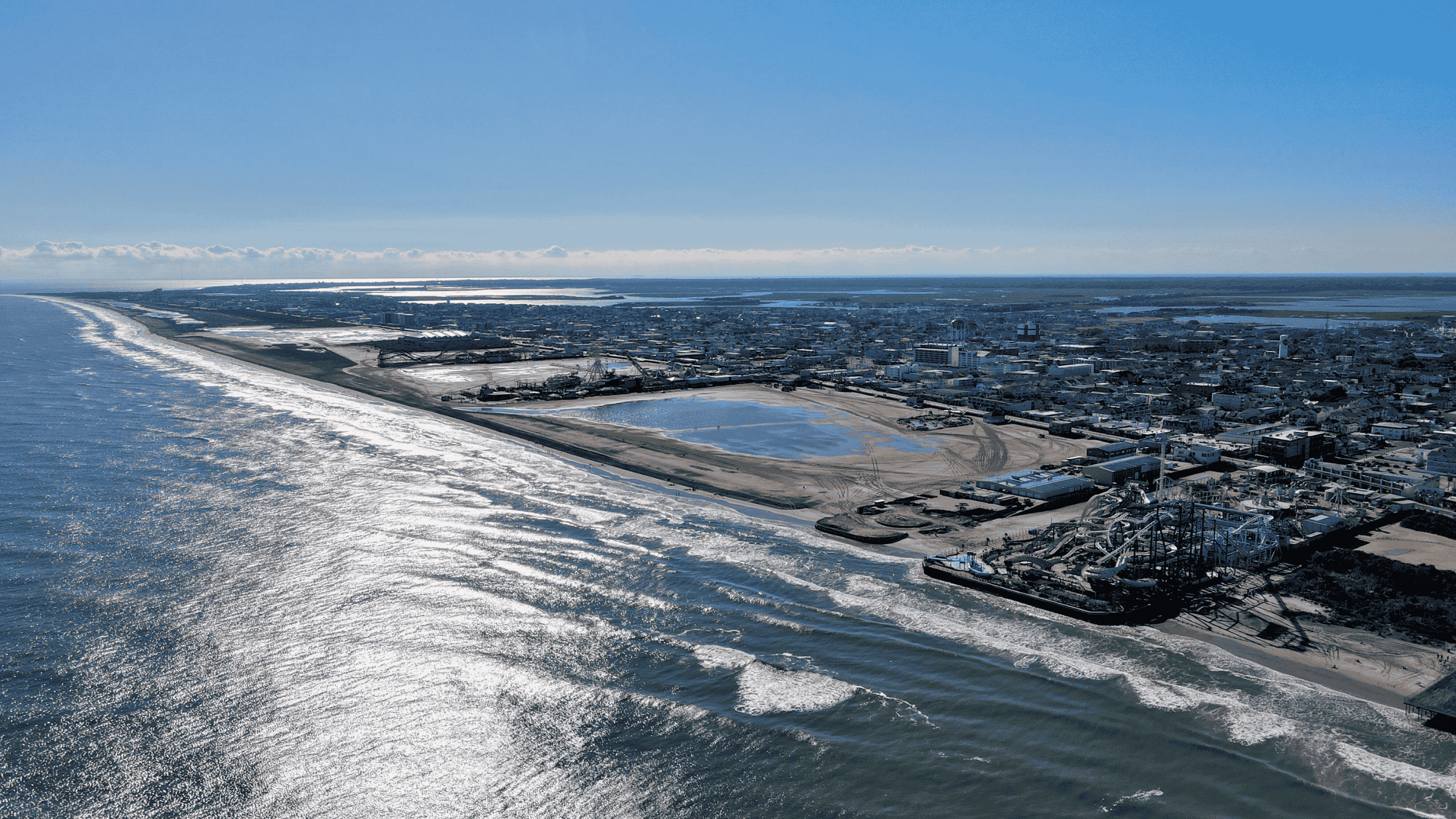
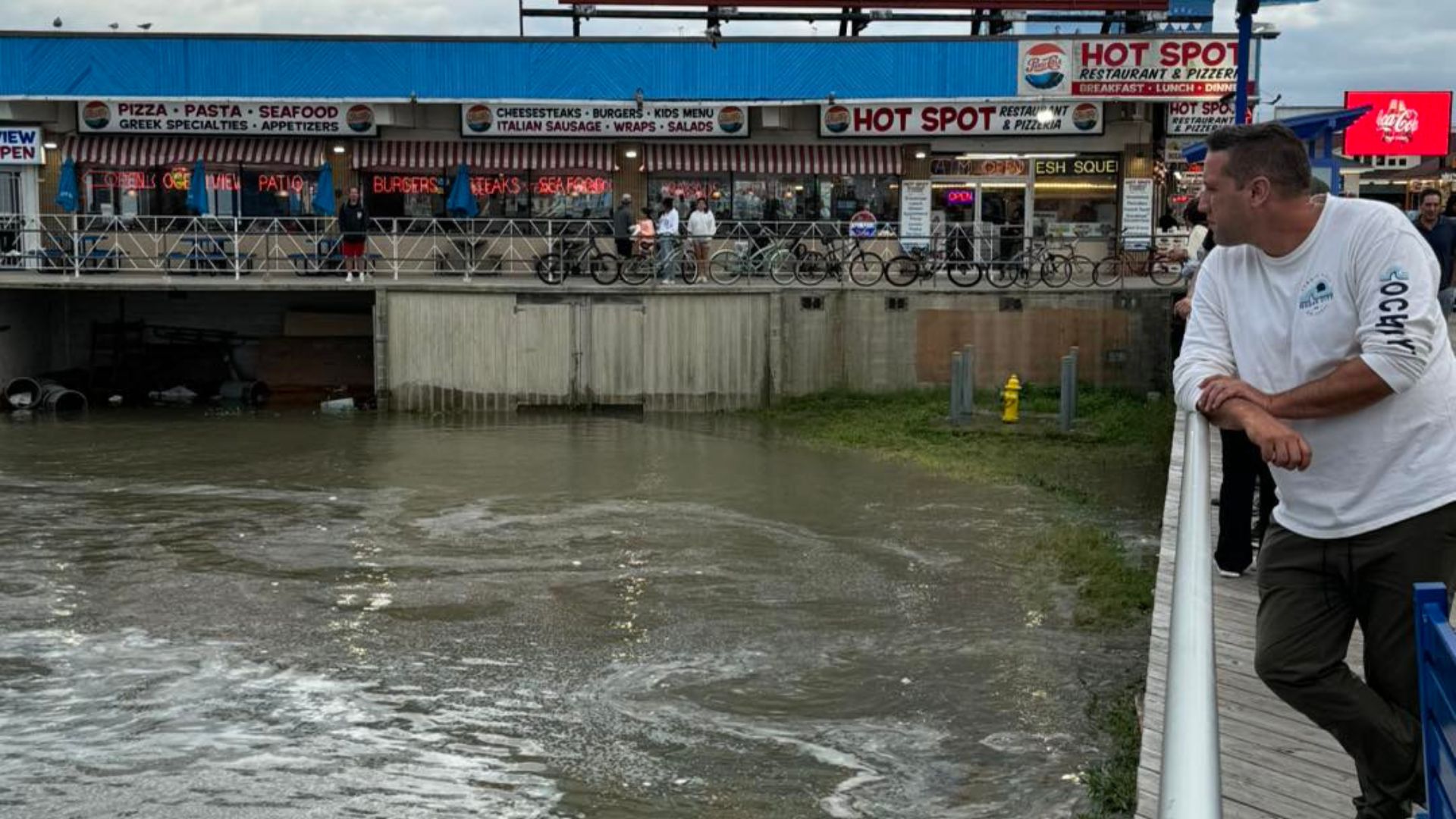
Although the law does not name specific towns, its focus closely aligns with the needs of shore communities facing repeated flooding, erosion, and storm damage. Barrier island communities, in particular, stand to benefit from funding aimed at drainage improvements, flood protection, and infrastructure resilience.
State reports referenced in the legislation identify coastal flooding as one of New Jersey’s most pressing climate threats, with future risks expected to increase as sea levels rise.
Also See: Wonderland Pier Redevelopment in Limbo After Ocean City Planning Board Deadlocks
Protections for Residents and Workers
The law contains multiple safeguards designed to protect residents and workers. It prohibits new taxes or fees on consumers and prevents companies from shifting costs onto utility bills. Any construction projects funded through the program must pay prevailing wages, and larger projects must use project labor agreements.
Existing public employees are protected, and the law prohibits job displacement or outsourcing of government work connected to funded projects.
 Oversight, Transparency, and Reporting
The Department of Environmental Protection is required to publish plain-language explanations of how company payments are calculated and to release annual public reports detailing collections, expenditures, and funded projects. These reports must be posted online and submitted to the Governor and Legislature.
The goal, lawmakers say, is to ensure transparency and allow residents to track how funds are being used.
What Happens Next
The law takes effect immediately, but implementation will unfold over the next year. The Department of Environmental Protection will adopt formal rules, finalize emissions assessments, issue payment notices, and establish grant programs.
Funding for projects will begin once payments start flowing into the new climate fund.
What are your thoughts on this new law?