
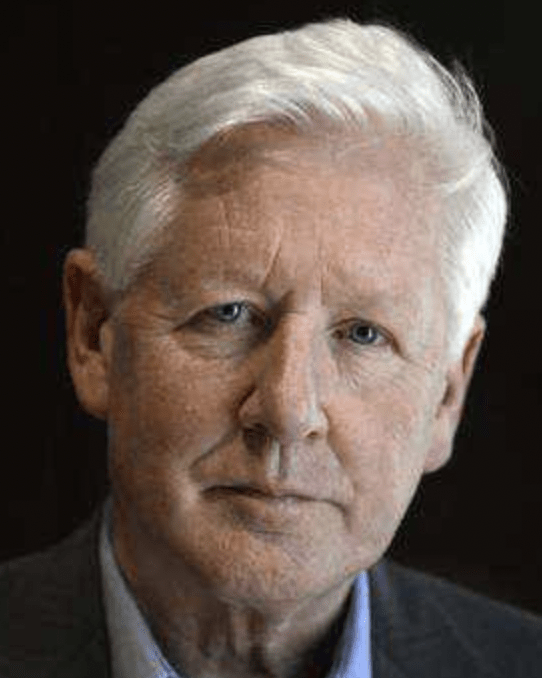
By Bob Rae
January 10, 2026
Dedicated to those who are continuing the fight against tyranny around the world, and those who have died in the struggle.
The French philosopher Blaise Pascal is famous for his sharp aphorisms. One of my favourites is this: “Justice without force is powerless. But force without justice is tyranny.”
I quoted these words in a Policy piece in 2022 after Russia launched its brutal attack on Ukraine. Despite more words, agreements, aid and arms shipped, the cause of justice in the face of raw aggression by the Russian dictatorship has been powerless.
It is convenient to blame the United Nations for this failure, just as most blame the League of Nations for failing to stop the aggressions of the 1930’s. But now, as then, the fault lies not with mechanisms or intergovernmental institutions, but with nation states and citizens who prefer rhetoric to action.
As Phillips O’Brien has carefully documented on Substack and in his most recent book, Power and War, Western governments were willing to help Ukraine “as long as it takes” but they were (and still are) incapable of imagining victory as possible, and thus failed to take the actions necessary to win the war.
President Trump’s ritual humiliations of President Volodymyr Zelensky and appeasement of Putin has meant that every attempt to supply the Ukrainians with the weaponry and support they need when they need it has been undermined by the ludicrous political pantomine taking place while Russia bombs away.
The first half of Pascal‘s aphorism is well covered. From Gaza to Sudan, Myanmar, and dozens of conflicts around the world, law without enforcement has been predictably ineffective.
President Trump, as he repeated in this week’s long interview in the New York Times, is now taking credit for imposing truces and ceasefires by the exercise of his personal power. As for international law: “I don’t need it”.
The problem is that the rest of us do. Which brings us to the second half of Pascal’s thought that unless exercised within a framework of law, power and force become tyrannical.
The most brutal expression of this thinking and action have been on full display this week. The violent (dozens killed) capture of Venezuelan President Nicolás Maduro a week ago, followed by the announcement that the Trump plan is to run Venezuela and the oil industry was framed by propaganda lectures from the White House that the unilateral exercise of brute force and raw power is the permanent law of the universe.
Every attempt to supply the Ukrainians with the weaponry and support they need when they need it has been undermined by the ludicrous political pantomine taking place while Russia bombs away.
The next meal is, apparently, Greenland, and President Trump has told us that “just because a boat turns up somewhere 500 hundred years ago doesn’t mean they own it” as the basis for America’s claim, thereby unwittingly undermining his own government’s claim to its own territory. Indigenous lawyers around the world take note: the Vatican and Donald Trump agree that the Doctrine of Discovery is dead.
What, then, replaces it? This is an issue that has preoccupied Canadians for generations. Sovereignty is not an absolute — we live in a world of multiple claims and identities. Chief Justice Antonio Lamer once put it simply; “Ee are all here to stay”. That is not just true of Canada. It is true of the world itself. Assertions of absolute power, mixed with a bucketful (or barrelful) of grift, do not make right. They make for lawlessness, tyranny and corruption — foreign and domestic.
The decapitation in Venezuela was based on alleged narcoterrorism, a rationale quickly eclipsed by the true motive of self-enrichment. Why would we think Trump’s America “owning” Greenland would be any different? If the issue is security, NATO is designed to deal with it.
The Monroe Doctrine, and the so-called Trump Corollary, are assertions of American self-interest. The statement “This is OUR hemisphere” delivered by the U.S. State Department, ignores the truth that the hemisphere is something we share, the people who call it home, nation states and indigenous governments, bound together by treaties, covenants, and laws both national and international. This is language that the Trump administration rejects, because it replaces the rule of men with the rule of law.
Canada has to be emphatic about rejecting this approach because our values and interests require it. We are next on the menu.
No generation has the right to ignore the rights of our children and grandchildren. Our time on earth is not infinite. We walk humbly, we pursue justice, and however mighty we might be, the law is always above us.
The challenge for us now is to recognize that, as Thomas Paine put it at the darkest moments of the American Revolution:
“These are the times that try men’s souls. The summer soldier and the sunshine patriot will, in this crisis, shrink from the service of their country; but he that stands by it now, deserves the love and thanks of man and woman. Tyranny, like hell, is not easily conquered; yet we have this consolation with us, that the harder the conflict, the more glorious the triumph. What we obtain too cheap, we esteem too lightly: it is dearness only that gives every thing its value. Heaven knows how to put a proper price upon its goods; and it would be strange indeed if so celestial an article as FREEDOM should not be highly rated.”
Thomas Paine was a citizen of three countries — the United Kingdom, the United States, and France. His message is universal and applies to us all. Canada faces an existential moment, but we are neither unique nor alone. Autocracy and tyranny have not been slain but we must not succumb.
Above all, we must not allow fear to prevent us from speaking publicly and acting effectively. There is nothing to be gained by pretending that the events taking place around the world, and decisions being taken in Washington and elsewhere, are somehow normal or business as usual.
When the president of the United States says “we can either do this (taking over Greenland) the nice way or the hard way” he is using the language of a Mafia don. The answer to this is not just words. It means building resilience, strengthening our economy and defences, working with other countries, and engaging candidly with Canadians about how much the world is changing.
Policy Contributing Writer Bob Rae teaches and writes on law and public policy. He is a Fellow of Massey College, the Munk School at the University of Toronto, the Forum of Federations and Queen’s University. He served as Ontario’s 21st Premier, interim leader of the Liberal Party of Canada, and Canada’s Ambassador to the UN.