
Editor’s note: Seymur Mammadov is a special commentator for News.Az and the director of the international expert club EurAsiaAz. The article reflects the author’s personal opinion and does not necessarily represent the views of News.Az.
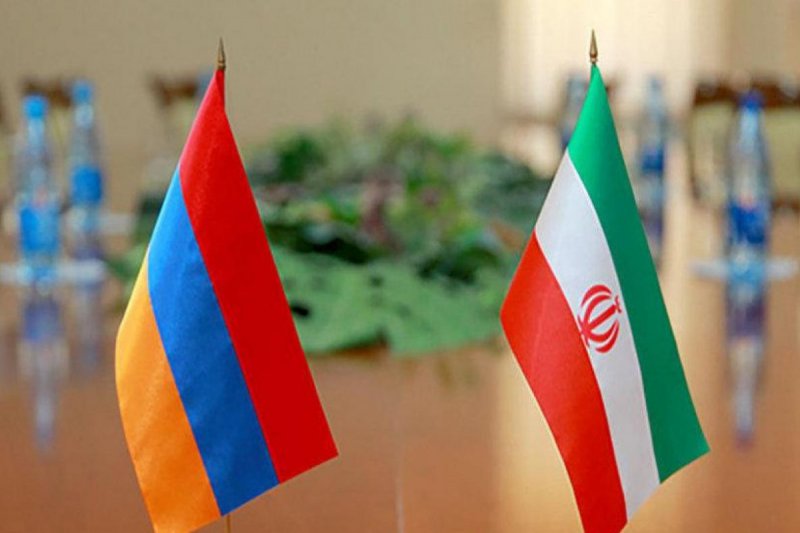
The preparation of a strategic partnership document between Armenia and Iran is not the result of a sudden diplomatic impulse but the outcome of a gradual process shaped by structural changes in the South Caucasus. This initiative reflects a convergence of vulnerabilities and interests at a moment of growing geopolitical uncertainty rather than an attempt to build a new power bloc.
The idea of formalizing relations at a higher level did not emerge in 2025 out of nowhere. Between 2021 and 2024, Armenian and Iranian experts and media increasingly discussed the need to institutionalize bilateral ties, especially after the Second Karabakh War altered the regional balance. These discussions intensified as transport routes, borders, and transit issues moved to the center of regional politics. Yet throughout that period neither Yerevan nor Tehran publicly confirmed work on a specific political document.
The first official acknowledgment of a concrete strategic partnership document came in February 2025 when the Iranian ambassador to Armenia stated publicly that the two sides were working on such an agreement. This marked a clear shift from general rhetoric to practical diplomacy. From that moment, the topic ceased to be speculative and entered an institutional phase.
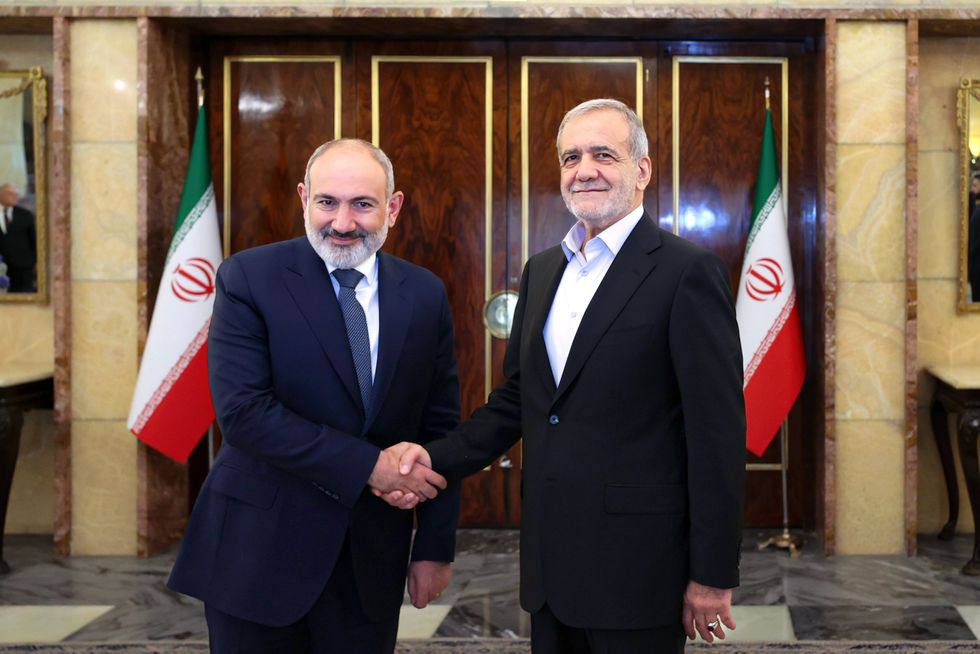
The process gained additional momentum in the summer of 2025 during high-level contacts when both sides openly spoke about elevating relations to a strategic level. The seriousness of these intentions was later confirmed by statements from Iran’s Deputy Foreign Minister for Political Affairs Majid Takht Ravanchi, who noted that the document was being prepared and could be signed during the next visit of Armenia’s prime minister to Tehran. By the end of 2025, the initiative had clearly moved into an advanced practical stage.
Source: worldcrunch
For Iran, the South Caucasus is not a peripheral space but a zone of strategic sensitivity. Any change in borders, transit routes, or the status of communications directly affects Iranian interests. Armenia occupies a special place in this calculus as it provides Iran with a land connection to the Caucasus and helps prevent the emergence of alternative routes that could reduce Iran’s transit significance.
The consistent emphasis by Iranian officials on Armenia’s territorial integrity reflects a desire to preserve the existing balance and to avoid scenarios in which Iran would be marginalized in the region.
Iranian support for the unblocking of roads should be understood in this context. Tehran interprets this process strictly within the framework of international law and recognized borders. It rejects any extraterritorial arrangements that could alter the balance of power or create new leverage points against Iranian interests. In this sense, a strategic partnership with Armenia serves as a tool to formalize red lines and define acceptable parameters for regional change.
Armenia’s motivations are different but no less pragmatic. Since 2020, the country has faced a profound strategic uncertainty. The security framework that relied on Russia has shown its limits, while closer engagement with the West has not produced concrete security guarantees. The European Union and the United States offer political support, monitoring missions, and institutional cooperation but avoid binding commitments in the sphere of hard security.
Against this background, Iran is perceived in Yerevan as a regional actor willing to consistently oppose the use of force and to defend the principle of unchanged borders.

Source: promarket
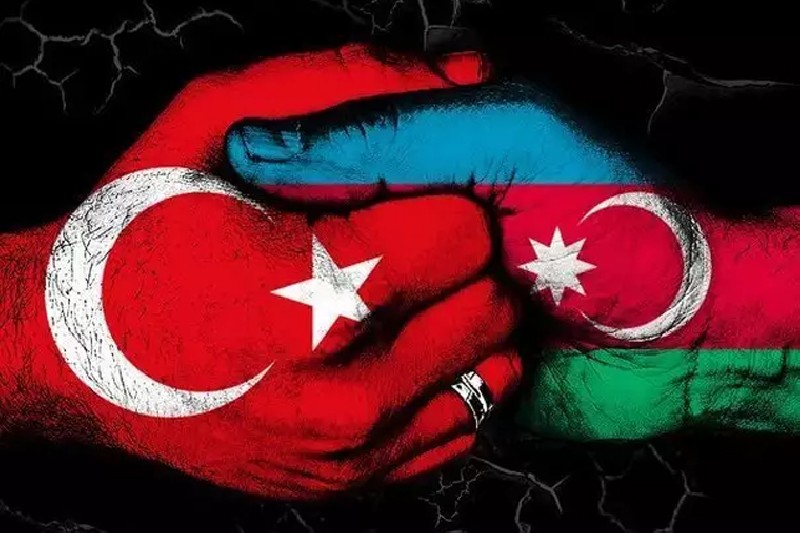
At the same time, the Armenia–Iran rapprochement should not be misinterpreted as an ideological alignment or a long-term alliance in the Western sense. It is a pragmatic and defensive partnership based on overlapping threat perceptions. Iran is concerned about the growing influence of Türkiye and the strengthening of the Azerbaijan–Türkiye axis, as well as the indirect presence of Israel near its northern borders. Armenia seeks to diversify its external ties and reduce its vulnerability after the erosion of previous guarantees.
The economic dimension of the future document will likely be present but secondary. Cooperation in energy, transit routes along the Iran–Armenia–Georgia line, and mechanisms to mitigate the impact of sanctions may be included. However, these elements serve political objectives rather than define them. Neither side views the other as a transformative economic partner capable of reshaping its strategic position.
The timing of this initiative is closely linked to broader regional dynamics. Negotiations over transport communications, the growing role of Türkiye, the weakening of Russian influence, and uncertainty about the future security architecture of the South Caucasus have pushed both Tehran and Yerevan toward preemptive steps. A strategic partnership document allows them to clarify positions and lock in certain principles before new rules are set without their participation.
Source: News.Az
The signaling aspect of this move is also important. For Azerbaijan and Türkiye, it underscores that Iran remains an active stakeholder in regional affairs. For Western actors, it suggests limits to external pressure on Armenia and highlights Yerevan’s search for alternative partnerships. For Russia, it is another indication that vacuums of influence in the South Caucasus are being filled by regional players.
It is nevertheless important not to overestimate the depth of the forthcoming partnership. Iran is not prepared to enter direct confrontation on Armenia’s behalf, and Armenia does not intend to become an outpost of Iranian interests. Both sides aim to preserve room for maneuver and avoid rigid obligations. The document is therefore likely to be framework oriented, emphasizing principles and directions of cooperation rather than concrete collective security mechanisms.
In the final analysis, the strategic partnership between Iran and Armenia should be seen as a product of a transitional moment in the South Caucasus. It is a partnership of caution rather than ambition, designed not to alter the regional balance but to avoid being sidelined by it. As the old security architecture has eroded and a new one has yet to take shape, such agreements become tools of geopolitical self preservation, marking presence and defining limits before irreversible decisions are made elsewhere.
(If you possess specialized knowledge and wish to contribute, please reach out to us at opinions@news.az).