
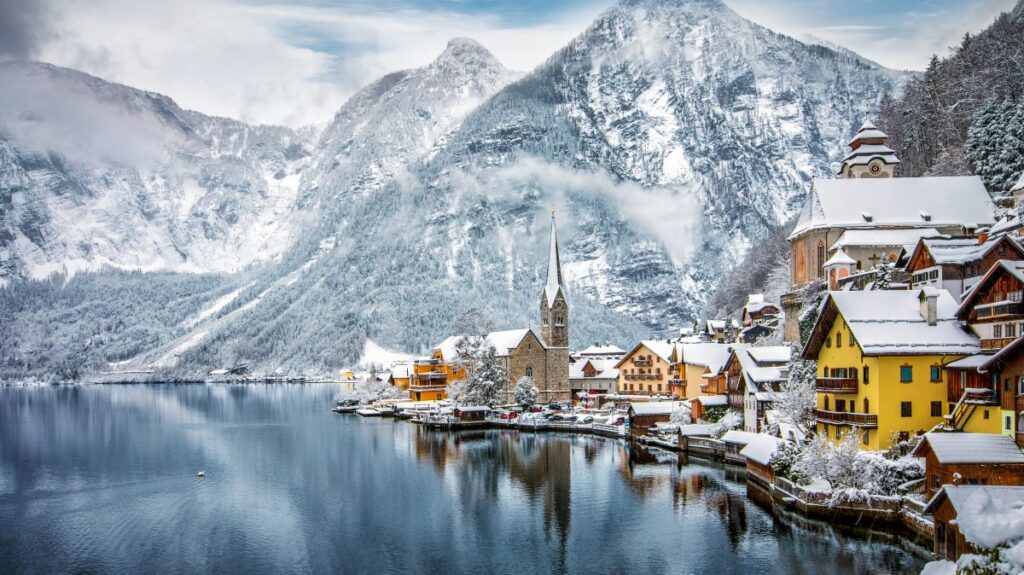
The children of Bolton-born Casey Gorris are true Europeans, with a British mother, a Dutch father, Ruud, and a home in the Austrian Alps. The two boys, Jackson, 10, and Riley, 8, are also fluent in English, Dutch and German — one of the many benefits of living in Austria, Gorris says.
“I adore the freedom and safety the boys have here,” Gorris says. “They call on local friends or meet up outside to play, just as I did growing up in the UK in the 1980s, and I never worry about them. Austria in general, and certainly the countryside where we live, is very safe. I walk my dog at night and have no concerns about security if Ruud is away. That level of personal safety is such a good feeling.”
Casey and Ruud moved to the ski resort of Saalbach-Hinterglemm, about 90 minutes’ drive from Salzburg airport, in 2011. Gorris, 44, works as an English teacher, while her husband is assistant general manager at Saalbach’s Adler Resort.
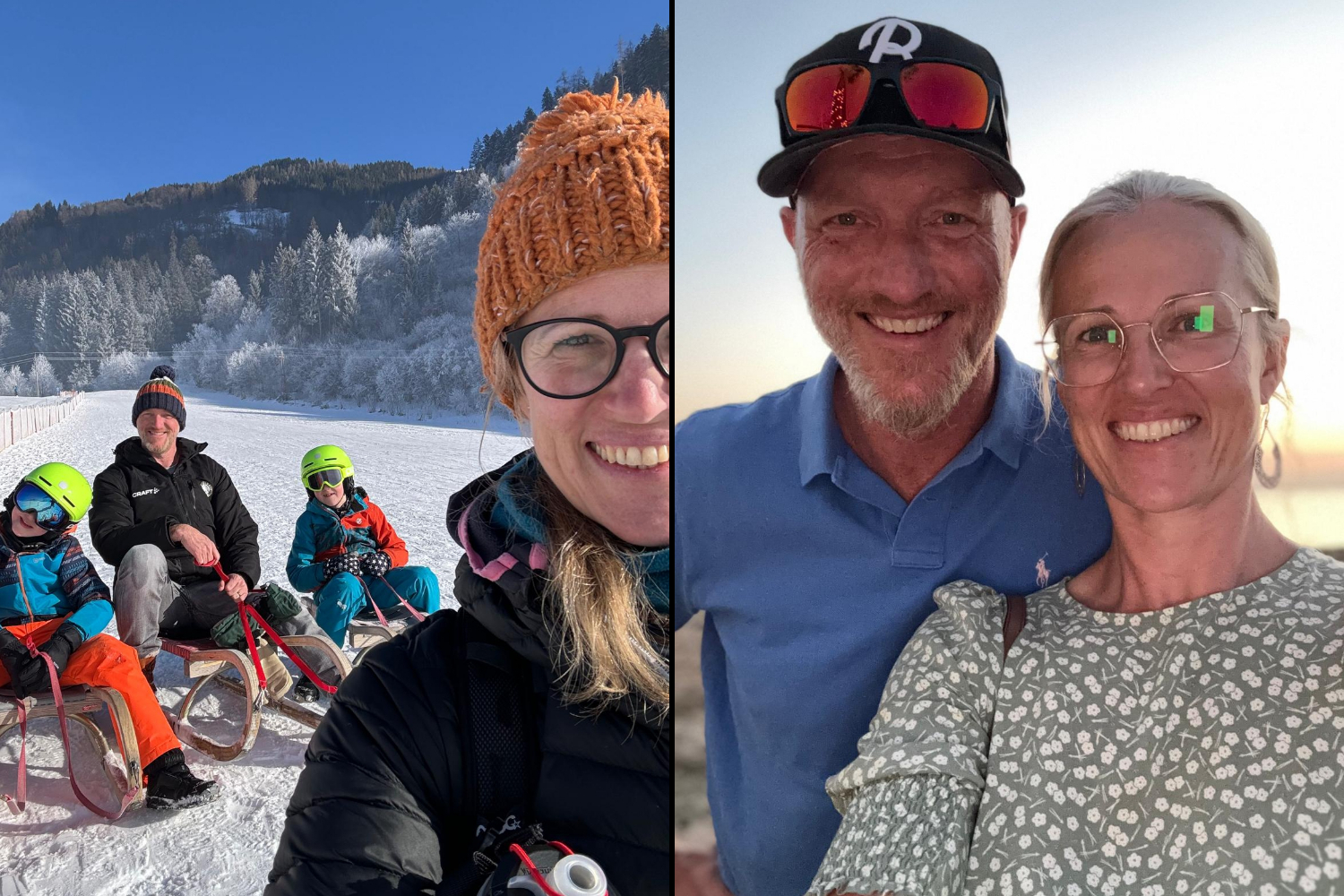
Left: Casey Gorris takes a family selfie with husband, Ruud, and sons, Jackson and Riley. Right: Casey and Ruud, who moved to Austria in 2011, before their children were born
“Although I came when it was straightforward to settle here, I still had to go through the process of applying for residency post-Brexit,” Gorris says. “It was an uncomplicated and clear process. The Austrian authorities were very helpful and once I had submitted the paperwork, I received permission one month later. I haven’t heard of people having great difficulties when applying.”
The family’s active outdoor lifestyle takes in skiing and ice hockey in winter and hiking, tennis, paddleboarding and swimming on the lake in summer. There are some key cultural differences too. Austrians tend to be fairly reserved, Gorris says, and building a strong network can take time — and the school day is short, finishing at lunchtime.
“Initially I found it hard to adapt to the boys coming home so early but I have grown to love it,” Gorris says. “The afternoon is a time to play sports and be together. It’s a good balance. I would say, move to Austria for the great quality of life and the opportunities to follow your own hobbies and interests —sports, for example — and along the way you’ll make good friends. And definitely learn to speak German [the most-spoken language in Austria].”
Why make the move?
There are many reasons to love Austria: it has a grand cultural legacy and a quality of life that consistently ranks as one of the best worldwide, not to mention some of the best skiing (and après-ski) in the world. The country also has a wellness wonderland of lakes, charming towns, Alpine peaks and green pastures, plus a reputation for hospitality: check out all those traditional dirndls and cosy strudel-serving coffee houses.
Austria also consistently ranks in the top five most peaceful and safe countries globally, healthcare is excellent and so are the transport and digital infrastructures. All probable reasons why the country scores highly — 17th out of 147 nations, above the UAE, the UK and the US — in the UN’s annual World Happiness Report. And while Austria’s economy has been in recession since 2023, Vienna, its capital, was rated in 2024 as the second best city globally for quality of living (behind Zurich) and 24th globally for cost of living (source: Mercer). Figures from the global database Numbeo, meanwhile, show Manchester and London’s cost of living (including rent) are 4.4 per cent and 47 per cent higher than Vienna’s, respectively.
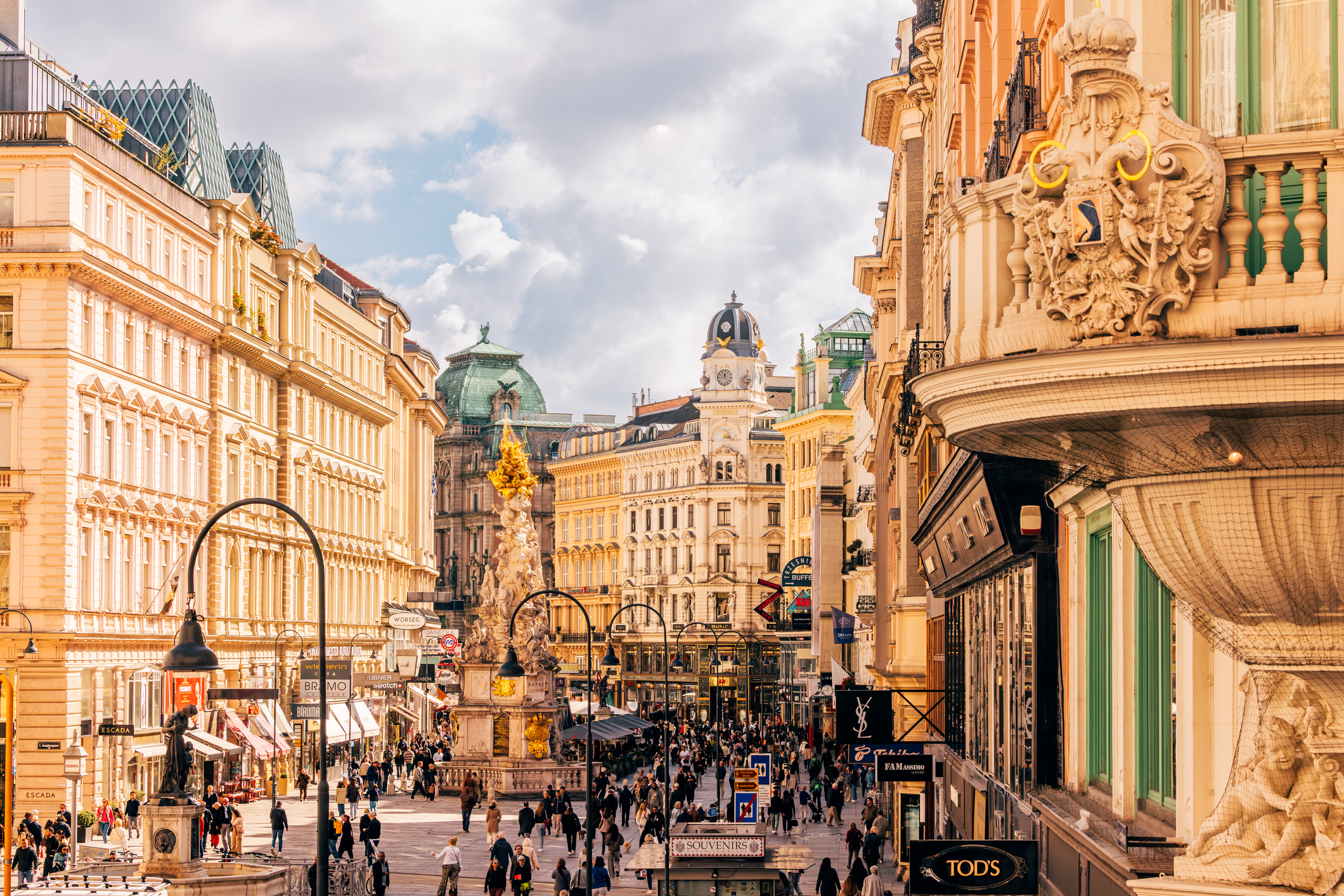
Vienna, Austria’s capital, rates highly for quality of life
GETTY IMAGES

Momento, a colourful new development in Vienna, has 382 apartments to rent, from €1,269.40 a month; momentoliving.com
“Austria attracts sporty people who are into outdoor activities, and I would guess that most young people are here for the mountain lifestyle,” says Giles Gale, founder of Alpine Property Finders. “Austria looks after its seasonal workers very well, with the government stepping in to subsidise them in the off-season. There are only a limited number of visas available to ski schools for non-EU workers every year so Brits are better off applying to the less popular resorts, those in Carinthia for example, where there will be fewer applicants.”
‘Austria has such a good work-life balance’
As a Brit who was living and working in Austria before December 2019, Leo Hopper applied for an EUV50 (article 50) card after Brexit. That gave him Austrian residency for five years, recently extended for a further ten years, after which he can choose to take citizenship. Hopper, 35, is a director with Bramble Ski, a luxury chalet company. He lives in St Anton, one of Austria’s oldest and best-known resorts.

Leo Hopper with his partner, Sam. Hopper lives in St Anton, where he is director of a luxury chalet company
“I grew up in Devon and did my first winter season in the Alps in 2008 before heading to university in Bournemouth,” he says. “In 2014 I came to work in St Anton and fell in love with Austria, the people, the mountains and the culture. They have such a good work-life balance and really value their family time. Unlike London’s 24/7 lifestyle you’ll struggle to find a supermarket open on Sunday here — and I like that.”
Bramble Ski has relied heavily on UK seasonal staff, Hopper says, but post-Brexit rules made the process of employing them “much more laborious, with no guarantee of success”. Most roles have been filled instead by workers from New Zealand, Australia, Ireland and Sweden.
“Austria has a set quota of working holiday visas to give to non-EU nationals from certain countries to come for six to twelve months, and Brits don’t qualify for that,” Hopper says. “There’s talk of young British people being allowed to return and that would be a good thing.”
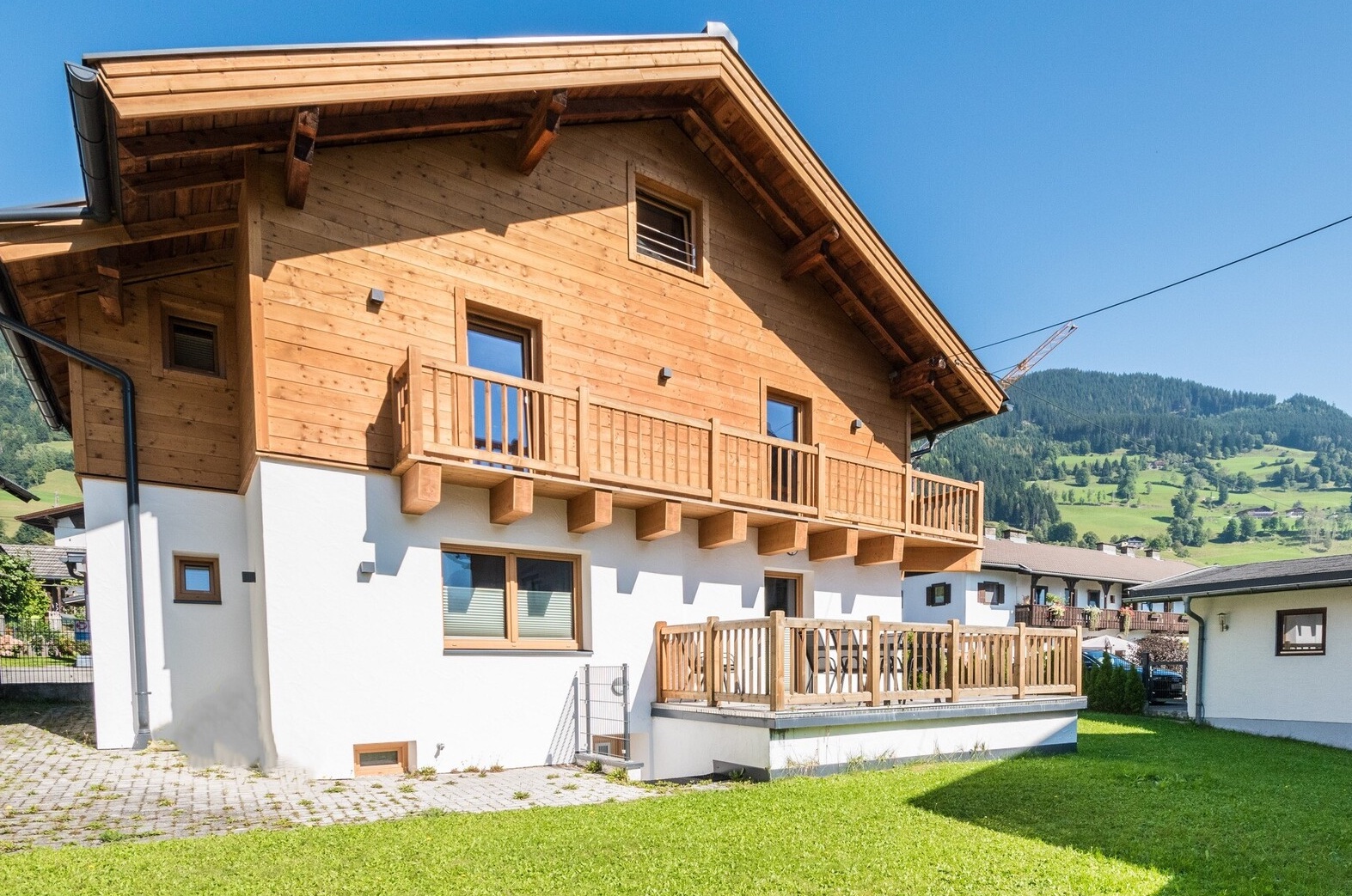
A renovated three-bedroom chalet in Piesendorf, in the Alpine region of Zell am See, is on the market for €769,000 with Alpine Property Finders
How to make the move
British passport holders can stay in Austria for 90 days within any 180-day period but cannot work there. Stays of up to six months require a visa, while stays of more than six months require a residence permit.
A Schengen C visa allows the holder to live and work in temporary jobs in Austria for up to 90 days, useful for seasonal Alpine workers. Applications are assessed by the Austrian embassy and managed by VFS Global, the government’s official visa partner, at centres in London, Edinburgh, Manchester and Birmingham.
A D visa allows gainful employment in Austria for stays of 91 days to six months. It costs €195 per person. Apply via the Austrian embassy in Belgravia, London.
Residency permits for stays of more than six months can be applied for while already in Austria during your 90-day permitted stay, or from the Austrian embassy in London. Most permits demand that applicants have at least basic proficiency in German and demonstrate a regular monthly income (€1,273.99 per person or €2,009.85 for couples).
Residency permit options
Red-White-Red card
Awarded on a points structure based on applicants’ qualifications, age, language skills and previous salary. It’s a route for highly skilled workers, skilled workers in occupations with a labour shortage, self-employed key workers, graduates from Austrian universities and workers in hospitality and forestry. Application costs are about €150 per adult.
The permit is issued for two years initially and valid for only one specified employer. After two years holders can apply for a Red-White-Red Plus card allowing settlement and unrestricted employment. The list of jobs (most requiring German language skills) regarded in 2026 as “shortage occupations” includes graduate nurses and nursing assistants, train drivers, roofers, engineers, early childhood educators, payroll accountants and chimney sweeps.
Job-seeker visa
Those who meet the minimum points-based criteria set out above can live in Austria for six months while they find work and apply for a Red-White-Red card. This visa costs €195.
After ten years of legal residency, you may be eligible for Austrian citizenship. Austria does not allow its citizens to hold dual nationality. It does, however, offer an “extraordinary merit” citizenship programme for those who “actively invest in the Austrian economy”. Citizenship is granted entirely at the discretion of its government.
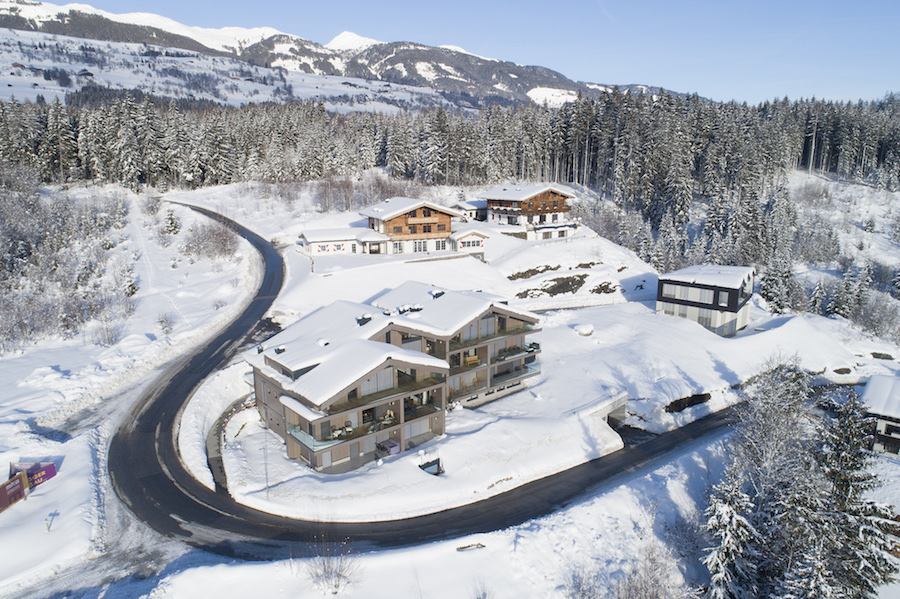
A three-bedroom apartment in Hollersbach, in the Hohe Tauern national park, is on the market for €1.095 million with Alpine Property Finders
Favourable taxes
Income tax in Austria starts at 20 per cent for annual salaries over €13,309, rising to 55 per cent for those earning more than €1 million. Employees in Austria typically receive 14 salary instalments a year — the 13th and 14th payments are holiday bonuses.
Residents staying more than six months in a calendar year in Austria will be taxed on their worldwide income.
Austria abolished inheritance tax in 2008. Neither is there a wealth tax. Standard capital gains tax is 27.5 per cent.
Buying property
“Austria is a series of self-governing provinces, so while British passport holders can still buy in Vienna, the mountain regions of Salzburg and Tyrol have been totally closed to them since Brexit,” Giles Gale says. “Very rare exceptions include designated second-home areas, created in the 1970s to encourage tourism to less popular areas.”
Renting
Vienna is one of Europe’s most renter-dominated markets with rental properties accounting for about 75 per cent of main residences. That’s in part due to extensive and good quality social housing stock that accounts for over 40 per cent of all rental homes, some owned by local government and some by housing associations. While this means a rental market with two-tier pricing, the sheer number of social housing options also acts as a check on the price of much of the private rental market. To qualify for social housing, you must be an EU national and have lived in Vienna for two years full-time.
For new arrivals from the UK, private rent is the only option. Expect to pay €800 to €1,300 a month for a one-bedroom city centre apartment and €600-€900 outside the centre.
Useful contacts
Austrian embassy in London: bmeia.gv.at
Living and working in Austria: migration.gv.at
Austrian Business Agency: immigration-guide.workinaustria.com
Austria’s Citizenship by Investment programme: globalcitizensolutions.com