
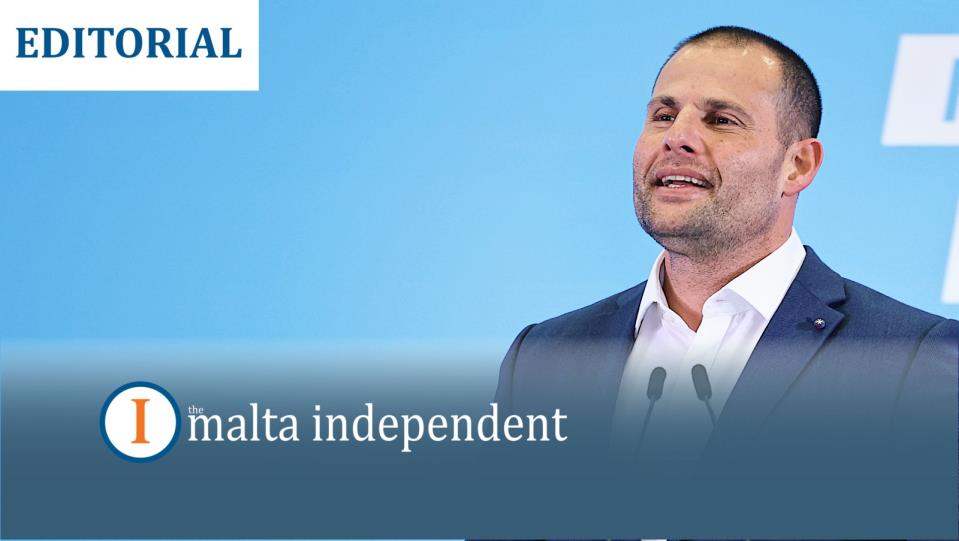

The six years of Robert Abela as Prime Minister have been defined by genuine achievements, undeniable crises, and a growing sense that some of the deeper structural problems Malta faces have persisted, and in certain cases have worsened. On this anniversary, a fair assessment requires acknowledging both the competence shown in moments of national emergency and the troubling direction taken on governance, accountability, and long-term sustainability.
Abela assumed office in January 2020 under circumstances that offered little margin for consolidation. Within weeks, Malta – like the rest of the world – was confronted by the Covid-19 pandemic. It was a moment that would have tested any leader, let alone one newly installed. The government’s response was, by most objective measures, effective. Health restrictions were introduced swiftly, economic support was rolled out at scale, and Malta earned international praise, including from the World Health Organisation. The early vaccination rollout, which saw Malta become the first European country to reach the 70% benchmark, remains one of the administration’s strongest credentials.
The pandemic period was not without missteps – the permissiveness shown towards mass events during critical moments undermined public trust – but overall, Abela steered the country through a crisis without the catastrophic outcomes many feared. That achievement deserves recognition.
Electorally, Abela’s record is more uneven. The 2022 general election delivered him a decisive mandate and removed any lingering doubts about his legitimacy as leader, having previously inherited the premiership from Joseph Muscat. Yet the sharp reversal in fortunes during the 2024 European Parliament elections was a shock to the Labour Party and a warning signal that he could not ignore. A reduced margin and visible internal unease suggested that voter loyalty, long assumed to be unshakeable, had begun to erode.
The economy has remained Abela’s most reliable political asset. Malta weathered the pandemic-induced downturn better than most European states, unemployment remained low, and growth figures stayed robust. In the face of inflationary pressures following Russia’s invasion of Ukraine, the government shielded households through energy and fuel subsidies, price caps, and social support measures. For many families, these interventions mattered, and politically they reinforced the perception of economic stability.
But this stability has come at a significant cost. Government debt has continued to balloon and is now nearing €12 billion, more than double the level at the start of Abela’s tenure. Persistent overspending, prolonged subsidies, and a steady expansion of social commitments have deferred hard choices rather than resolved them. The short-term political dividend is clear; the long-term fiscal risk is equally evident. That concern has now also been expressed by the Malta Fiscal Advisory Council gives the problem a non-partisan dimension that the government needs to listen to.
If the economy has been Abela’s shield, governance has been his weakest flank. To his credit, his administration enacted reforms that reduced the Prime Minister’s direct control over key institutions, including the appointment of the police commissioner and members of the judiciary. These changes addressed long-standing recommendations and should not be dismissed.
Yet this progress has been undermined by a series of decisions that point in the opposite direction. Most notably, the government rushed through amendments to the law regulating magisterial inquiries, making it harder for citizens to request investigations into those in power. Regardless of the government’s stated intentions, the perception was unavoidable: accountability mechanisms were narrowed precisely when they were proving most uncomfortable.
This instinct to close ranks was also evident in Abela’s reaction to the fallout from the hospitals concession scandal. The criminal charges brought against senior figures from the Muscat era placed Abela at a crossroads. Instead of drawing a clear line between his administration and the past, he chose confrontation – questioning institutions, casting suspicion on magistrates, civil society, and the media.
His decision to stop publication of ministerial assets, citing a reform which is taking too long to materialise, also goes against the spirit of transparency and raises many questions.
Similar patterns have emerged repeatedly: hesitation over ministerial resignations, reversals under pressure, and a sense that decisions are often shaped more by internal party dynamics than by principle. The U-turn on the Jean Paul Sofia public inquiry remains emblematic. Abela’s initial refusal, followed by a u-turn only after mass protest, reinforced the impression of a leader reactive rather than resolute, particularly when faced with civil society mobilised against perceived proximity to the construction industry.
This proximity remains another unresolved contradiction. In recent months, Abela has spoken passionately about environmental protection, unveiling ambitious plans for large public parks and family spaces. Yet these announcements sit uneasily alongside continued permissiveness towards large-scale development, as the construction industry keeps reshaping towns and skylines with little evidence of restraint. The result is scepticism: a sense that environmental concern is embraced rhetorically while the underlying economic model remains untouched.
Six years after taking office, Robert Abela remains a leader defined by contrast. His government has delivered stability in moments of upheaval and prosperity in economic terms, achievements that continue to resonate with a large segment of the electorate. Yet alongside these successes sits a growing unease about the direction of the country: about weakened checks on power, hesitant leadership in the face of ethical controversy, and a development model that prioritises short-term growth over quality of life. Whether Abela’s legacy is ultimately remembered for resilience and reform, or for missed opportunities to reset Malta’s political culture, will depend on whether the lessons of the past six years translate into firmer choices in the years ahead.