
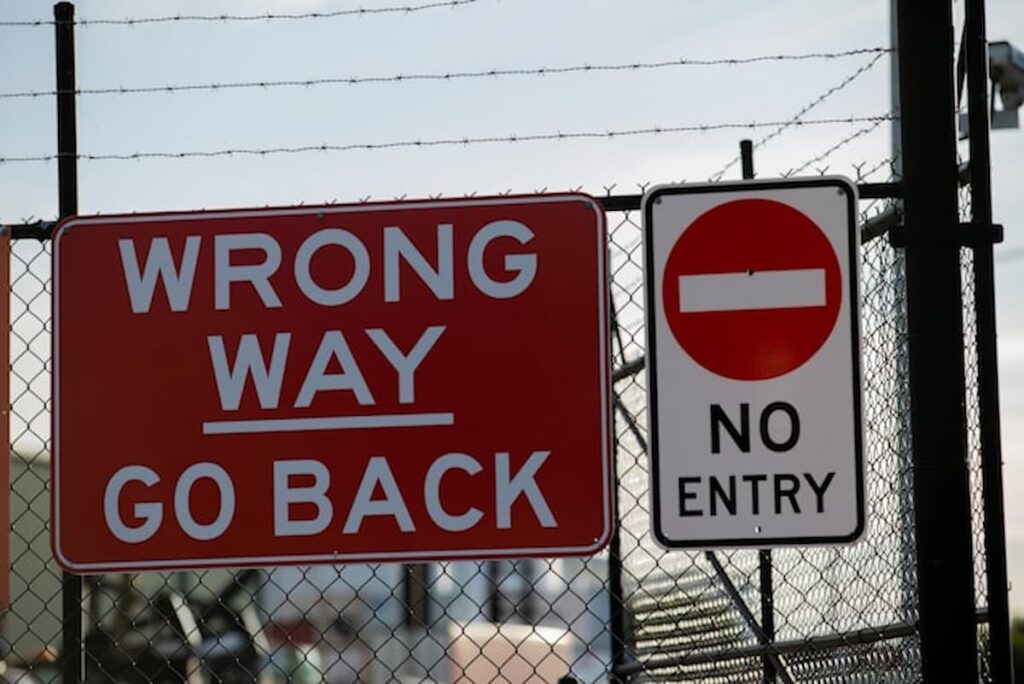
The Tennessee Sports Wagering Council (SWC) has sent cease-and-desist letters to Crypto.com, Polymarket, and Kalshi. It calls on these prediction market sites to immediately stop accepting business from customers in the state, to void any pending contracts, and to issue total refunds by the end of January.
Photo by Marcus Reubenstein on Unsplash
The action marks Polymarket’s first major state enforcement since the crypto-based platform re-entered the U.S. earlier this year.
Tennessee Alleges Prediction Markets Violate State Gaming Law
The letters, dated January 9, claim that prediction market operators are violating Tennessee law. They allege that the platforms are offering sports contracts without a license, as is required under the Tennessee Sports Gaming Act, which was signed into law in 2019. They also don’t pay any local tax that the law mandates.
The SWC argues that prediction market sites also violate the state’s 21-year-old minimum age requirement by allowing users as young as 18 to participate. Additionally, the letters cite a lack of specific anti-money laundering controls, non-adherence to bettor eligibility rules, and limited responsible gambling protections for users. They also say that prediction markets breach consumer protections and pose an “immediate and significant threat.”
The SWC warned that it will impose fines on platforms that fail to comply with the order. Those penalties start at $10,000 for a first offense, then increase to $15,000 for a second, and $25,000 for each subsequent offense. The SWC will also look for injunctive relief if prediction sites continue operating in this jurisdiction.
The SWC warned that running illegal gambling operations constitutes a Class B misdemeanor. Meanwhile, aggravated gambling promotion qualifies as a Class E felony. It intends to refer any examples of such unlawful gambling to law enforcement if operators don’t comply with the letter’s demand.
SWC Executive Director Mary Beth Thomas signed the letter. Meanwhile, Tennessee’s Attorney General, Jonathan Skrmetti, and SWC Chairman Billy Orgel are cc’d.
Kalshi is Fighting Back
According to reports, Kalshi is the only operator to respond to the letter. It reiterated that it’s subject to “exclusive federal jurisdiction,” as “other courts have recognized.” It says that its products are “very different” from state-regulated sportsbooks. Kalshi has filed a federal court lawsuit to stop “the unlawful attempt.”
The case in Tennessee adds to Kalshi’s growing list of legal battles. In August, a federal judge in Maryland denied Kalshi’s request for a preliminary injunction against state regulators. The judge stated that Kalshi failed to clearly show that federal law supersedes Maryland’s state gambling laws.
The ruling marked the first significant judicial rejection of Kalshi’s federal preemption argument. It allowed Maryland regulators to issue cease-and-desist orders against Kalshi and its rivals.
Similarly, a federal judge ruled in November regarding the Nevada case that Kalshi must follow state gaming regulations. The decision overturned an April injunction that had prevented state regulators from enforcing gambling laws.
Kalshi scored an initial win in New Jersey’s federal district court in April. The judge agreed that its contracts fall under the Commodity Exchange Act (CEA) and, as such, are under the CFTC’s jurisdiction. New Jersey is now appealing the matter in the U.S. Court of Appeals for the Third Circuit. Thirty-four state attorneys general support the Garden State in its legal challenge.
No End in Sight to the Legal Challenges
Kalshi has also moved to block enforcement actions in Ohio, New York, Connecticut, and now Tennessee, following the issuance of cease-and-desist letters by those states targeting its sports-related contracts. A federal judge in Connecticut temporarily paused enforcement in December while that case proceeds.
In Massachusetts, the state attorney general has separately brought an enforcement action against Kalshi over its sports-event contracts, adding another front to the company’s legal exposure.
After regulators in Connecticut, Illinois, and Michigan issued cease-and-desist letters, Coinbase filed counter suits in December.
Regulators in Montana and Arizona have also issued cease-and-desist orders against prediction market sites.
The eventual resolution of these disputes could have significant knock-on effects on whether platforms can proceed with offering event-based contracts nationwide without requiring state gaming licenses, or whether state gambling laws will ultimately prevail over federal derivatives regulation.
Stay updated with GI
Follow Gambling Insider for independent news, analysis and industry expertise.


Gambling Insider delivers the latest industry news, in-depth features, and operator reviews that you can trust. Our team combines rigorous editorial standards with decades of specialized expertise to ensure accuracy and fairness. We are committed to delivering clear, impartial, and dependable coverage across the global gambling sector.