
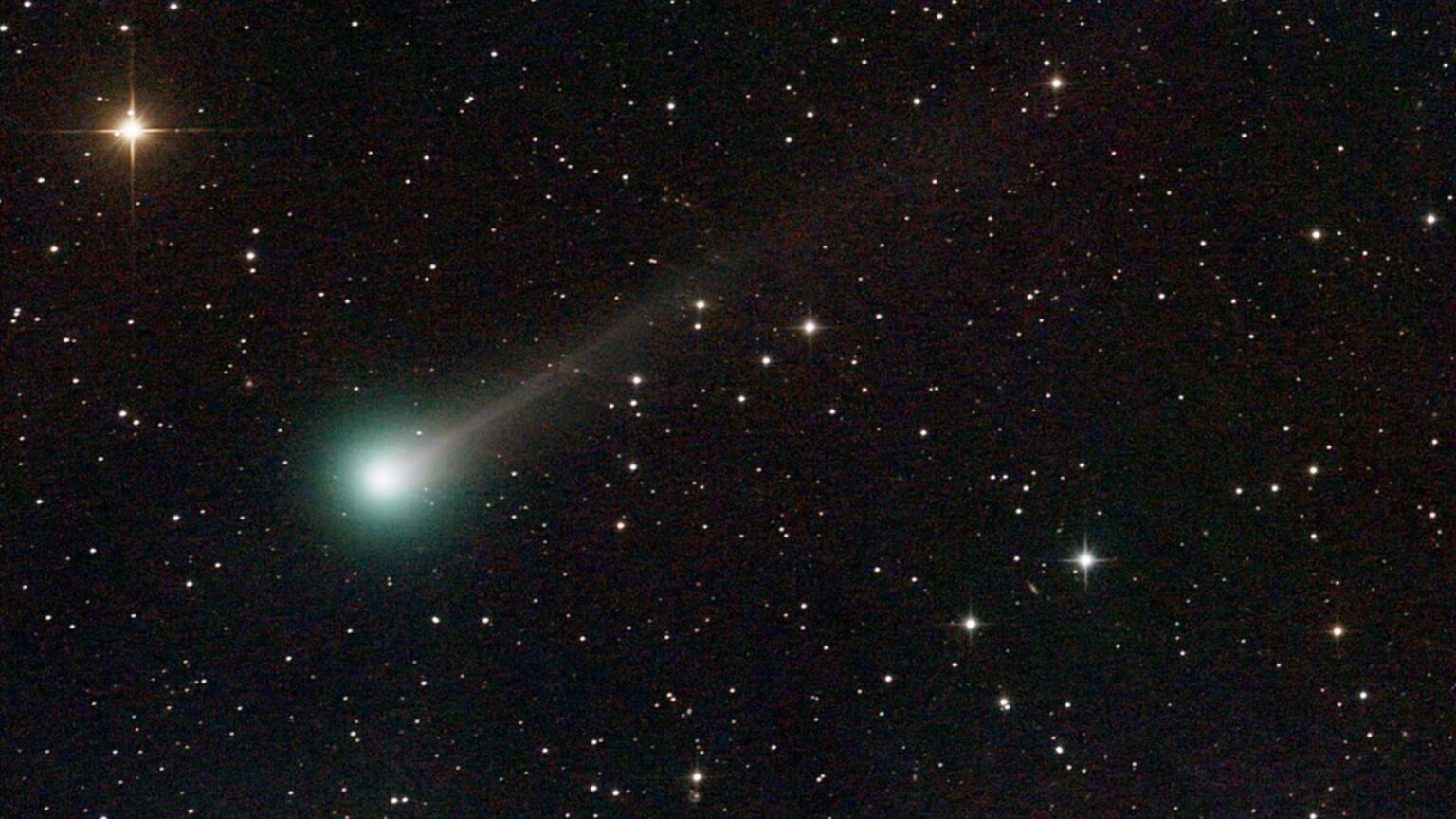
We may be less than two weeks into 2026, but a new comet is already leading the charge to become the “Great Comet” of the year. The highly anticipated ice ball, which could potentially be seen with the naked eye, will reach its closest point to us less than four months from now.
Scientists discovered the incoming comet, dubbed C/2025 R3 (PanSTARRS), on Sept. 8, 2025, in images captured by the Panoramic Survey Telescope and Rapid Response System (Pan-STARRS) — a pair of 5.9-foot (1.8 meters) reflector telescopes located on the summit of Hawaii’s Haleakalā volcano. It is currently around 216 million miles (348 million kilometers) from Earth, around halfway between the orbits of Jupiter and Mars, according to TheSkyLive.com.
You may like
C/2025 R3 is currently speeding toward the sun and will reach perihelion — its closest point to our home star — on April 20. It will come within 47.4 million miles (76.3 million km) of the sun, which is somewhere between the orbits of Mercury and Venus.
Just one week later, on April 27, the comet will make its closest approach to Earth, coming within 44 million miles (70.8 million km) of our planet, which is more than 180 times farther from us than the moon is.
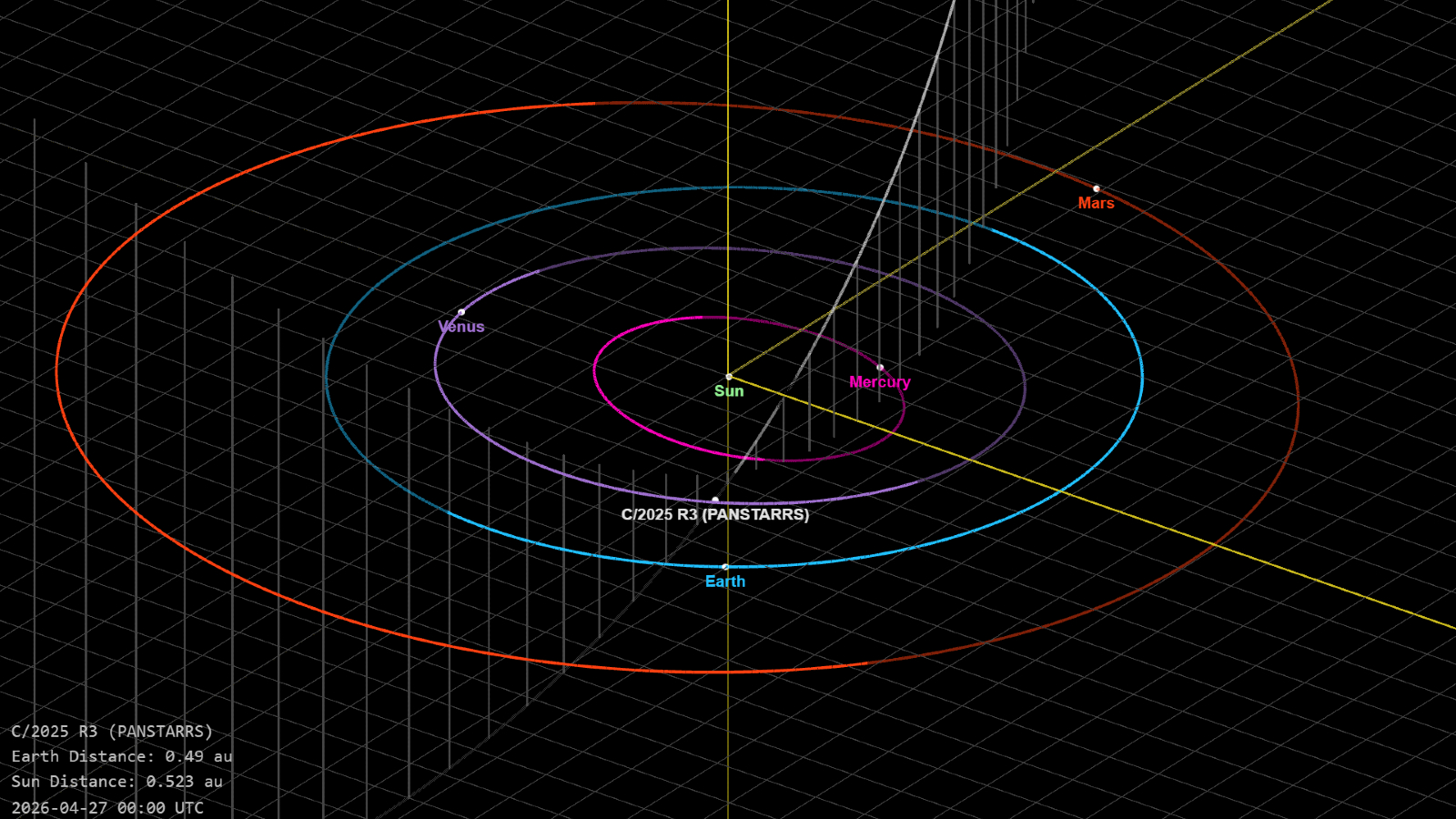
C/2025 R3 (Pan-STARRS) will reach its closest point to Earth on April 27. However, it will be most visible around a week earlier when it is near perihelion. (Image credit: NASA/JPL/Small-Body Database Lookup)
Astronomers don’t yet know how brightly the comet will shine during its solar flyby, Live Science’s sister site Space.com recently reported. Some researchers have predicted that it will reach an apparent magnitude of 8, meaning it would be visible only via a decent telescope or pair of stargazing binoculars. But others estimate that it could reach magnitude 2.5, which would make it clearly visible to the naked eye. (Apparent magnitude is measured on a reverse logarithmic scale, meaning a lower number equates to a greater brightness.)
When to see comet C/2025 R3
The best chance to see C/2025 R3 will likely be just before perihelion, around April 17, when a new moon will darken the night sky, making it easier to spot objects on the cusp of naked-eye visibility. But by its closest approach to Earth, the comet may become obscured by the sun, making it harder to spot. Viewers in the Southern Hemisphere may also get a good look at the comet in early May.
Whether the comet becomes visible to the naked eye may depend on a phenomenon known as forward scattering, which occurs when a comet is positioned directly between Earth and the sun, as C/2025 R3 will be. If this happens, the comet’s tail will likely scatter more sunlight, thereby increasing its brightness, according to Space.com.
A comet’s brightness also depends on how it reacts to increased solar radiation: When a comet gets closer to the sun, it soaks up more sunlight, causing it to release trapped ice and gases, which reflect sunlight toward Earth. But it is too early to predict exactly how this will affect C/2025 R3.
During its perihelion and flyby of Earth, C/2025 R3 will be located in the constellation Pisces, just beneath the Great Square of Pegasus, according to Space.com.
You may like
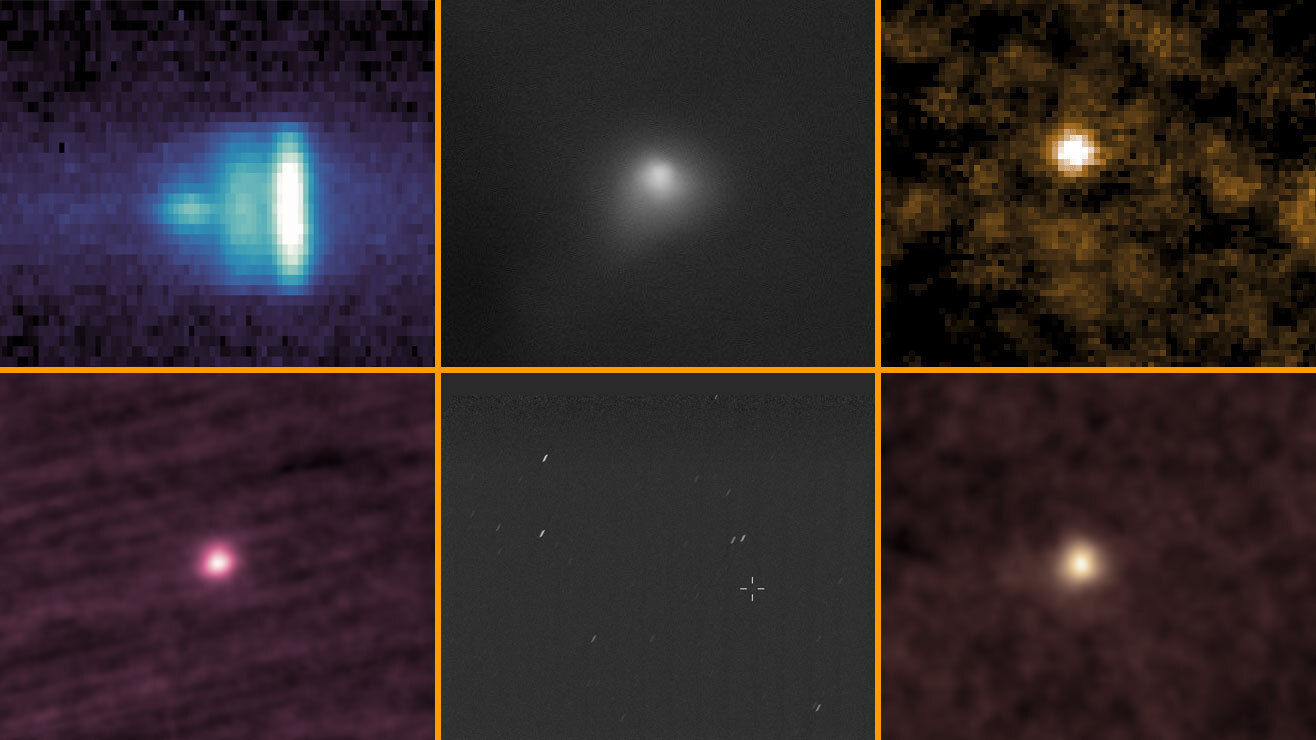
A number of interesting comets passed us by in 2025, including the interstellar visitor 3I/ATLAS. These photos of the alien comet were taken by various NASA spacecraft during its flyby of Mars. (Image credit: NASA/Goddard/LASP/CU Boulder/JPL-Caltech/University of Arizona/Southwest Research Institute/Lowell Observatory/Qicheng Zhang/ASU/MSSS)The next “Great Comet”?
Several stunning comets have passed by Earth in recent years, including the explosive “devil comet” 12P/Pons-Brooks and the “once-in-a-lifetime” Comet Tsuchinshan-ATLAS, which passed by in 2024, as well as the superbright comets Lemmon and SWAN, which simultaneously lit up our skies last year.
In 2025, astronomers also discovered the interstellar comet 3I/ATLAS, which dominated headlines due to wild and unfounded rumors that it was an alien spaceship. It reached its closest point to Earth in December but is now rapidly moving away from us, and will soon disappear forever.
At present, there are not many noteworthy comets predicted to pass by us this year, which has led many to speculate that C/2025 R3 will be 2026’s “Great Comet” — a superlative title often used to describe the brightest comet of a given year.
However, there is always a chance that an even better and brighter comet will soon be discovered and make a similar spectacular flyby later in the year.