
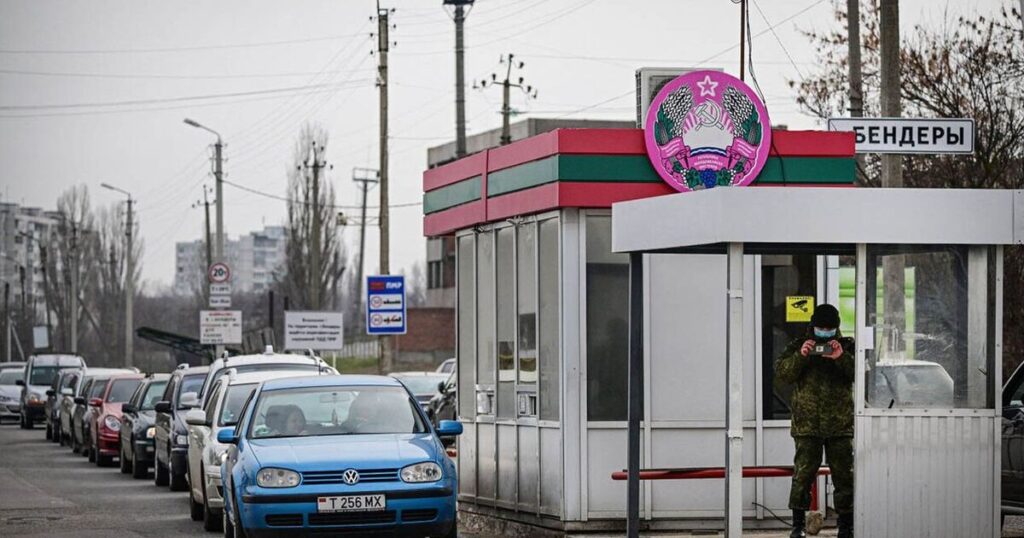
A coordinated blockade with Moldova has effectively surrounded and isolated approximately 1,500 Russian troops stationed in the breakaway region of Transnistria, cutting off all supply lines without firing a shot, Ukraine has claimed. The measures, implemented at midnight on January 1, 2026, involve stringent controls on Ukraine‘s roughly 450-kilometre border with Transnistria and reinforced Moldovan checkpoints, mobile patrols, and airspace restrictions.
Movement of people, goods, fuel, military equipment, or provisions now requires explicit approval from both nations, closing previous loopholes and informal routes, according to reports from Euromaidan Press and United24 Media. This non-military strategy aims to erode Russia‘s longstanding influence in the unrecognised separatist region — a foothold Moscow has maintained since the 1992 ceasefire following Moldova’s brief civil war. The approximately 1,500 Russian forces, officially designated as “peacekeepers,” depend on steady logistics for fuel, equipment, rotations, and daily supplies.
With land, rail, and air access tightly restricted, the troops face growing isolation amid broader pressures, including the end of Russian gas transit through Ukraine in early 2025, which already strained Transnistria’s energy security.
Transnistria, a narrow strip along the Dniester River, serves as a strategic outpost for Russia near Ukraine’s southern border and a tool for hybrid influence over Moldova, an EU candidate state pursuing closer Western integration.
Moldovan President Maia Sandu has repeatedly criticised Moscow’s actions, framing the blockade as part of efforts to reduce pro-Russian leverage without provoking direct confrontation.
Ukrainian sources describe the move as a “New Year’s midnight” escalation in response to ongoing Russian aggression, including shelling near Odesa. “Grey” trade routes have vanished, leaving the separatist leadership politically and logistically vulnerable and potentially more dependent on Chisinau.
Moscow’s reaction has been notably muted. No immediate official statements from the Kremlin or major state media outlets like TASS have addressed the blockade as of January 12, 2026.
Some Russian-affiliated commentators, such as Deputy Foreign Minister Andrey Rudenko, have suggested extreme countermeasures like capturing Odesa to resolve logistics issues, but these remain speculative. Analysts warn of risks including hybrid provocations or destabilisation attempts in Moldova.
Social media discussions highlight the development, with posts from accounts like @TTheBattlefield and @ChuckPfarrer emphasising reinforced borders and trapped troops.
However, some reports note that while pressure from prior measures (e.g., Ukraine’s 2022 border closures) is ongoing, the full “total blockade” narrative has faced scrutiny, with Euromaidan Press issuing a retraction on related claims of sudden new actions.
The blockade builds on years of tension, including Moldova’s restrictions on Russian troop rotations via Chisinau airport since 2022. Experts suggest it could accelerate Transnistria’s reintegration into Moldova, aligning with EU aspirations, though no immediate humanitarian crisis has emerged. Observers continue monitoring for Russian responses amid the broader Russo-Ukrainian war.
As Moldova strengthens central authority and Ukraine defends its sovereignty, this low-risk squeeze on one of Russia’s frozen conflict tools underscores shifting dynamics in Eastern Europe.