
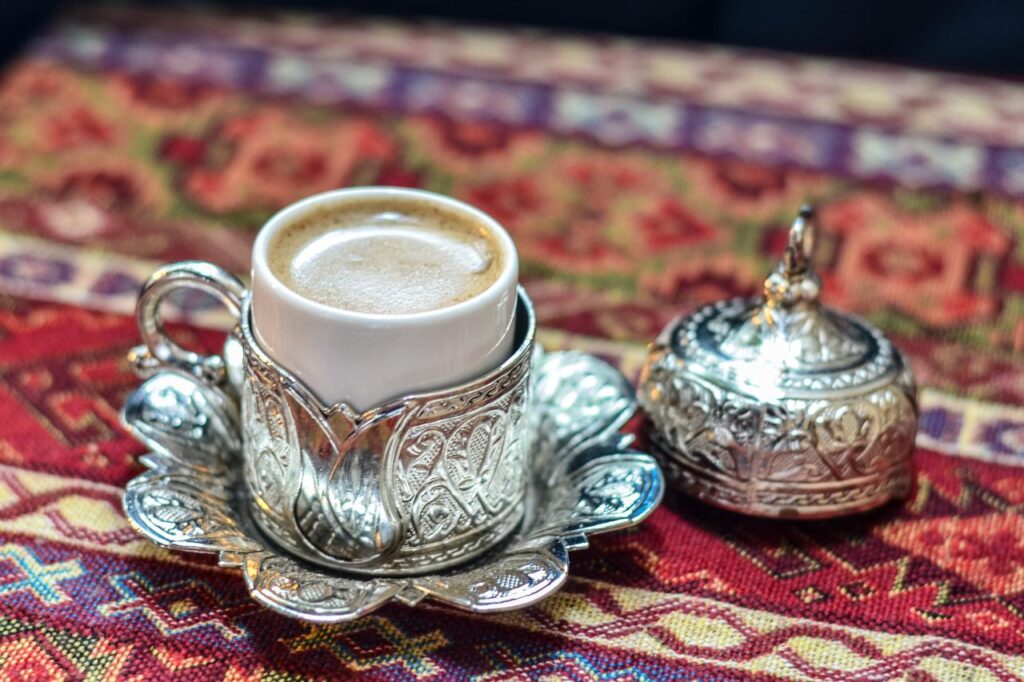
A caffeine-free drink made from wild pistachio fruit continues to shape daily life in Gaziantep, even as modern cafes spread across the city.
Menengic coffee, produced from roasted and ground terebinth tree fruit, remains central to local identity and recently gained wider recognition through its European Union geographical indication status.
The drink has a nutty and slightly bitter flavor, contains no caffeine, and residents in southeastern Türkiye have consumed it for generations. In northern Iraq, people know it as gazwan. In Gaziantep, locals view it as more than a coffee alternative and many families serve it as a home remedy during winter illnesses.
Menengic coffee now stands at the intersection of tradition, science, and tourism. The article describes its presence in homes, bazaars, and historic cafes, including Tahmis Kahvesi, which opened in 1635 and ranks among the world’s oldest coffee houses.
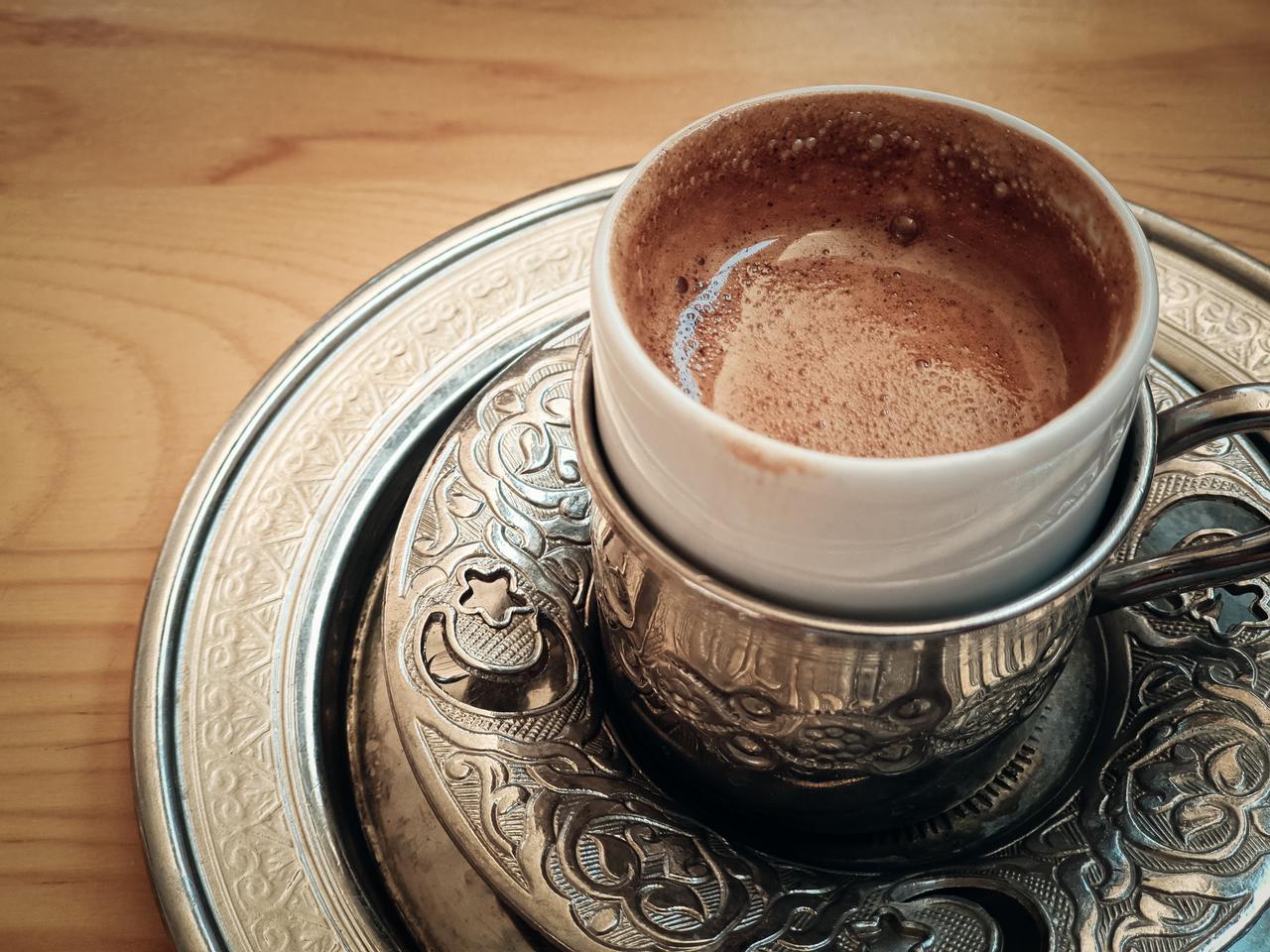

A cup of menengic coffee sits in a traditional metal holder on a patterned textile, served in Gaziantep, Türkiye, accessed on January 12, 2026. (Adobe Stock Photo)
Caffeine-free Turkish drink rooted in family tradition
Food specialist Filiz Hosukoglu, who grew up in Gaziantep, said that her family always offered menengic when someone became sick.
“When I coughed or caught a cold in winter, my family would say, ‘Please drink this,’ and give me a glass of menengic,” she said to the BBC. She added that families usually serve tea or Turkish coffee when they gather, but menengic appears when someone feels unwell.
Local producer Mustafa Zor began making menengic in the 1970s and still runs a shop filled with jars of ground fruit ready for boiling with water or milk. He said older women in his village passed recipes through generations. “My grandmother was my doctor,” Zor said. “She and other elderly women knew menengic recipes inherited from their grandmothers.”
Scientific research on menengic remains limited. However, early studies indicate that terebinth fruit contains high levels of protein and minerals. Researchers also found antioxidant and anti-inflammatory properties, supporting its reputation as a winter remedy.
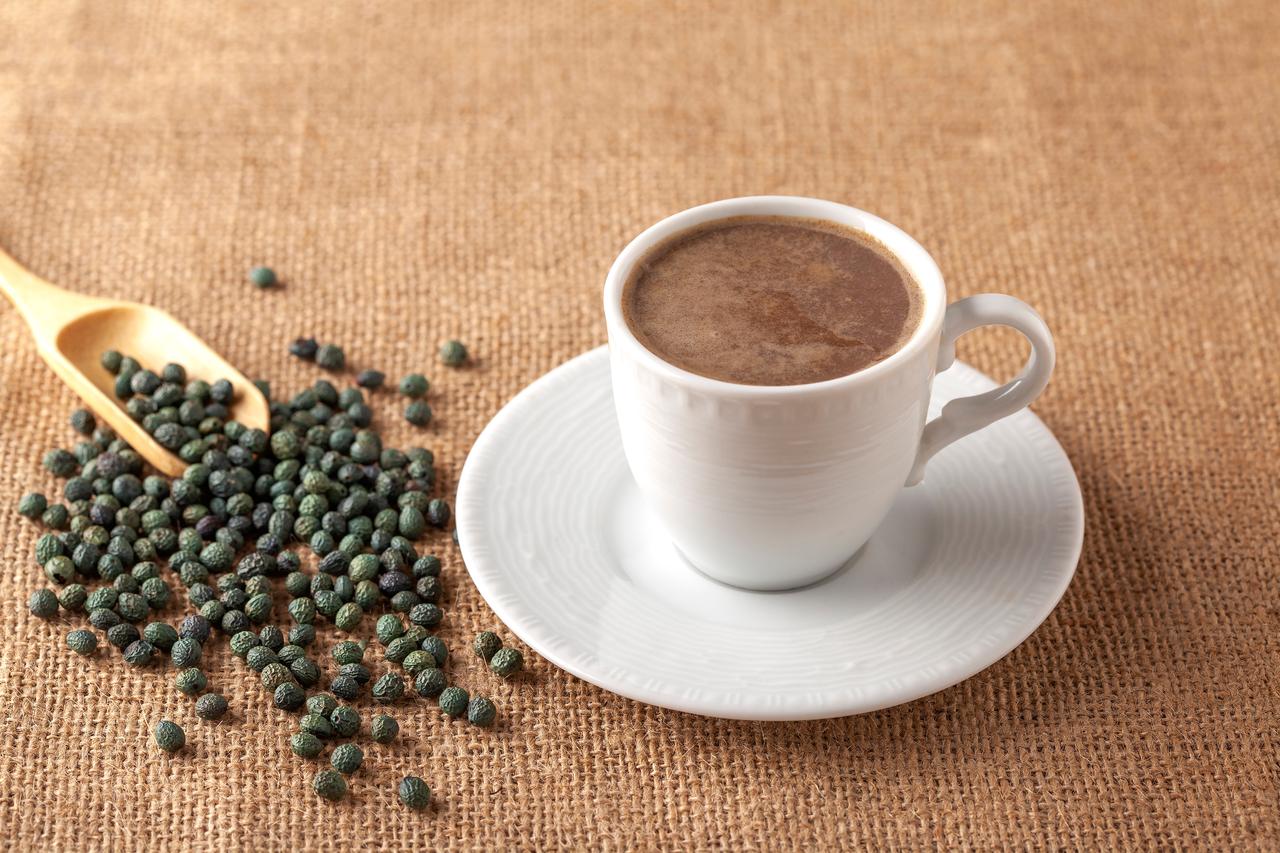
Menengic coffee served beside raw terebinth tree fruit on a burlap cloth, Gaziantep, Türkiye, accessed on January 12, 2026. (Adobe Stock Photo)
From Neolithic forests to Ottoman coffeehouse culture
Menengic also carries a story that stretches beyond family kitchens.
Archaeological findings near Gaziantep suggest the practice may trace back thousands of years. At Gobeklitepe, located about two hours east of the city, researchers found remains of wild pistachios inside structures dated to roughly 12,000 years ago.
Scholars believe early hunter-gatherers collected these fruits from forested landscapes and processed them with grinding stones discovered at the site.
These stones form the largest known collection from Neolithic Mesopotamia. Researchers suggest ancient communities may have crushed fruits into pastes similar to those still sold in Gaziantep markets today.
Local legend adds an Ottoman layer to the story. A sign outside Tahmis Kahvesi states that Sultan Mehmet IV tasted the drink when passing through Gaziantep in the seventeenth century.
While the account remains part of local lore, it reflects how deeply the beverage sits in the city’s historical imagination.
Menengic remains visible across the city’s commercial and social spaces. Market streets display baskets filled with blue-green fruit. Grinding machines produce a steady background hum in covered bazaars.
Cafes in renovated courtyard houses serve foamy cups of menengic late into the night.
One such venue, Menengic Kafe, operates inside a house built in the early twentieth century in Gaziantep’s historic center. Its owner, Zeynel Abidin Tahtaci, said that life without menengic is unthinkable for locals. “We can never forget it. It is part of our identity,” he said.
While researchers warn that some traditional food uses of menengic now face disappearance, the beverage itself shows no sign of fading.
In 2024, the drink received European Union geographical indication status, giving formal protection to its link with Gaziantep’s culinary heritage.

January 13, 2026 03:31 AM GMT+03:00