
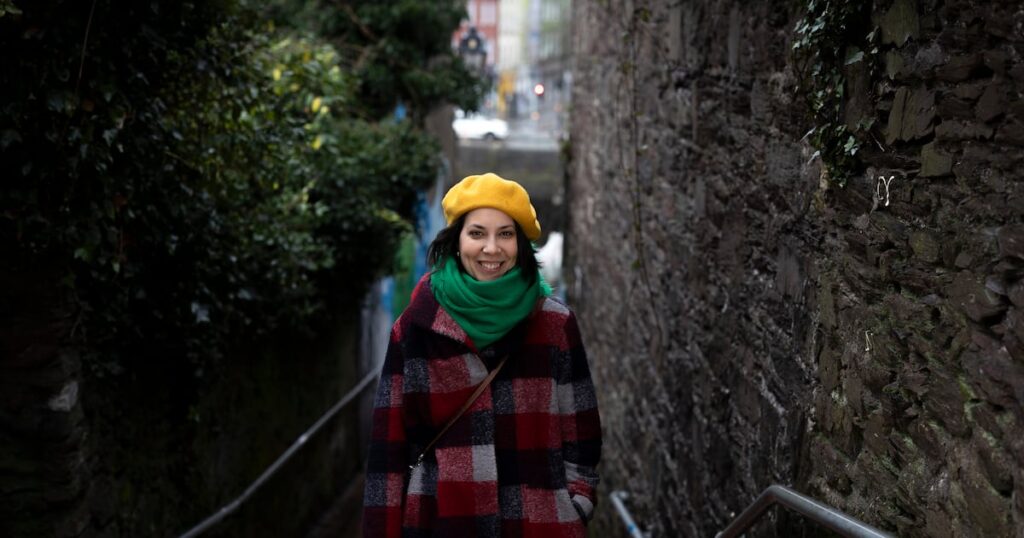
Blanka Tachscherer (35) experienced her first culture shock in Ireland upon moving to Ireland, when she walked out of Shannon Airport for the first time.
“I remember I exited the airport, and I saw that there was grass in front of us. I was like, oh my God, what is this? It was a small hill, and people were just laying on the hill. Then the bus took me to Cork’s city centre. I remember seeing the cows everywhere. That was the biggest culture shock for me, that there were animals everywhere.”
She had imagined Cork to be a city on the scale of Budapest, which has a population of 1.7 million.
“Even though they call Cork a city, it is smaller than a city would be in Hungary.”
Tachscherer grew up in a small town just outside of Budapest. Born in 1990, she grew up in the USSR’s shadow.
“My mum used to tell me that before 1990 they didn’t have oranges or bananas as they didn’t sell them in the shops. But when I grew up, they were very normal.”
At school Tachscherer took a special interest in German, which she said is a popular choice among students in Hungary as the country was once a part of the Austro-Hungarian Empire.
Tachscherer studied German at university in Budapest, whilst there she began taking private English lessons. She was also awarded a scholarship to do an internship in Berlin.
“This was the first time I lived outside of Hungary. When I came back I knew that I wanted to see more. And then I basically started applying for jobs everywhere in Europe.”
In 2016 she secured a job working for Apple in Cork.
“I didn’t know anything about Ireland. I googled Cork and checked it out on Wikipedia. I watched a movie about leprechauns when I was a child. That was the only thing I knew about Ireland.”
She packed her life into two suitcases and fly from Hungary to Cork on a Saturday, beginning her job at Apple on the Monday. She arrived only knowing one woman from her university.
“She told me that she lived in Dublin and how different it was to Hungary.”
In order to make friends she signed herself up to an evening salsa class.
“I met a Spanish girl there and I became friends mostly with Spanish girls. We had a circle, a girl circle. This is how I met my husband,”
Tachscherer was first introduced to her husband, Israel Ruiz Molina, in a pub in Cork.
“He liked me. He didn’t stop chasing me, basically. And I said, okay, let’s go on a date.”
The couple briefly moved back to Hungary in 2018 as Tachscherer was homesick but quickly decided to move back to Ireland.
“It was so difficult for him in Hungary. He didn’t speak the language. He tried. He went to a language school to learn Hungarian. He also couldn’t find work in his profession because his job is very unique.”
[ Coming to Ireland after a broken heart: ‘I needed a year to get over the pain’Opens in new window ]
Molina works as a welding inspector and does nondestructive testing for Lufthansa at Shannon Airport.
In 2019 the couple got married in Gibraltar as that was one of the easiest places for couples of different nationalities to get married.
“There were only two witnesses, our best friends from Cork. Then later we came back to Hungary and his family came too, we had a big party. This is how our two families met.”
Today she works for Amazon as a fraud investigator with German sellers.
In 2021 the couple welcomed their first son, followed by another boy in 2023. Tachscherer has struggled to find suitable housing and childcare.
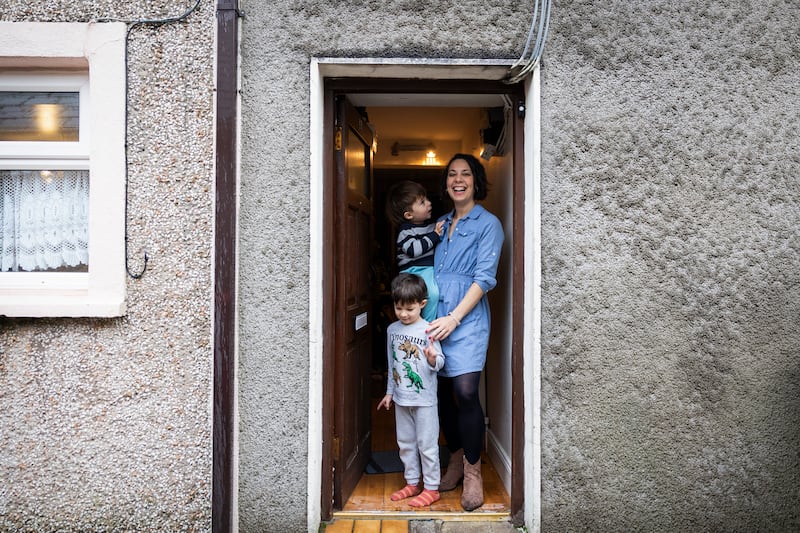
Blanka Tachscherer with her two sons. Photograph: Clare Keogh
“When I was pregnant, I didn’t even know that you have to apply for the creches when you are pregnant. I had no clue about this as I didn’t have any friends who were also pregnant or had children before.”
She has found navigating Ireland’s public health institutions very difficult.
“Our oldest son, when he was two years old, he didn’t say words in either Hungarian or Spanish.”
Her son’s public health nurse referred him for speech and language therapy, the therapist in turn referred him for an autism assessment.
“We have waiting for an autism assessment for two years. This week I got a call for an appointment in two weeks’ time.”
[ ‘We have never been refused help in Ireland’Opens in new window ]
If her family have a health issue, she now tries to get it solved privately in Hungary. While it is about the same price as it would be in Ireland, they get seen a lot faster.
“I didn’t expect the public special care would be like this. In my mind, I thought that this is the best. It should be better. It should be faster than in Hungary.”
The couple have also been trying for some time to move closer to Molina’s work in Shannon, to reduce the length of his commute, which is one hour and forty minutes each way.
“My husband started working there in October, so we started applying for houses on Daft right away. In two months we only got one house viewing. Before no one even replied to my emails and many people don’t even put a phone number there, so I cannot even call anyone.”
Despite the difficulties that living in Ireland today brings Tachscherer said, “I like that Ireland is very welcoming and that people are very friendly, very chatty. I like that also I can have a better lifestyle than in Hungary.”
We would like to hear from people who have moved to Ireland in the past 10 years. To get involved, email newtotheparish@irishtimes.com or tweet @newtotheparish