
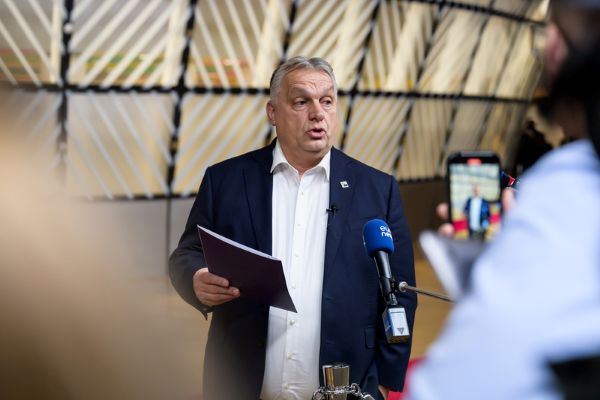
Viktor Orbán, the far-right Prime Minister of Hungary, is set to face a formidable challenger in Hungary’s parliamentary elections on 12 April, marking the first significant opposition he has encountered in 16 years. The outcome of these elections could have profound implications for Hungary, the wider region, Europe, and the dynamics of far-right political movements across the continent.
As an ally of Vladimir Putin, Orbán has often aligned himself with Russian interests within the European Union. Recently, he has sought to cultivate a relationship with U.S. President Donald Trump as part of an effort to garner support against the European Union. The forthcoming elections could signify a pivotal shift in Hungary’s political landscape, possibly ending the authoritarian practices associated with Orbán’s administration and challenging the legal protections that currently shield him from accountability.
Since his landslide victory in 2010, Orbán has transformed Hungary into what he terms an “illiberal democracy.” His tenure has been marked by contentious relations with the European Union, particularly concerning regulations on independent media, his firm stance against immigration, and the diminishing rights of LGBTQ people. Furthermore, his government has been criticised for fostering an environment of disinformation, promoting hate speech, and allowing corruption to proliferate.
Over the past 25 years, Orbán’s leadership has led to negligible GDP growth while prices have risen by 50% over five years. The involvement of his family and associates in various business enterprises has prompted many foreign investors to withdraw from the market, resulting in a significant decline in investment. In light of the inflationary pressures stemming from Russia’s 2022 invasion of Ukraine, Orbán is now confronted with the urgent task of revitalising the stagnant economy ahead of the elections, amid a challenging cost-of-living crisis.
Orbán’s primary opponent is Péter Magyar, a former government insider whose centre-right Tisza Party has significantly altered Hungary’s political landscape since its establishment in 2024. Orbán’s Fidesz party promotes itself with the slogan “The Safe Choice,” asserting its commitment to keeping Hungary out of the war in Ukraine and preventing illegal immigration. In contrast, Magyar’s party currently leads in most polls, though a significant share of voters remains undecided. A December survey conducted by Publicus indicated that the Tisza Party garnered support from 48% of decided voters, while Fidesz accounted for 40%.
Magyar has expressed his intention to maintain Hungary’s strong ties with the European Union and NATO, while also striving for pragmatic relations with Russia. He has pledged to unlock billions of euros in frozen EU funds to revitalise the economy through measures to curb corruption.
A potential defeat of Orbán could restore democratic institutions in Hungary and facilitate the country’s reintegration into the European Union. Additionally, such a shift could diminish the influence of pro-Moscow governments within the Visegrad Group, particularly affecting leaders such as Robert Fico in Slovakia and Andrej Babiš in the Czech Republic. This change would also eliminate a significant anti-EU ally for the Trump administration. Ultimately, Orbán’s defeat would represent a setback for the European far-right, which, although primarily led by Marine Le Pen, often draws upon the provocative rhetoric associated with the Hungarian prime minister.