
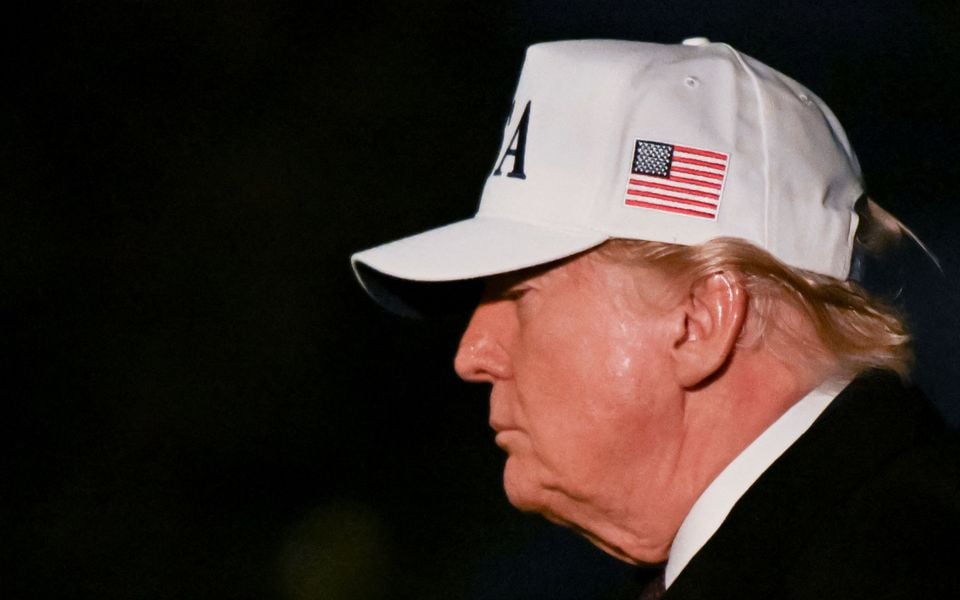
US President Donald Trump walks after arriving on the South Lawn aboard Marine One, at the White House in Washington, D., US, on January 11, 2026. [Annabelle Gordon/Reuters]
Hopes for an even closer cooperation on defense, energy and other fields, but also uncertainty about the impact Donald Trump’s foreign policy might have on the traditionally tense relations between Greece and Turkey, characterized the first year of the US president’s second term, in the eyes of the Greek political world.
Trump’s return to the White House for a second term in January 2025 triggered both concerns and expectations within Greece’s government where views are divided. The liberal wing of the ruling center right New Democracy – as well as most of the opposition parties – have serious reservations about the US president’s intentions, while members of the right wing of ND have welcomed many of his policies, especially with respect to the “woke agenda” and immigration.
The one thing the different factions within the government and across the political spectrum seem to agree on is their concern about what a possible involvement in some kind of mediation between Greece and Turkey will lead to, as they worry that Trump’s publicly declared affinity for Turkish President Recep Tayyip Erdogan will not allow him to act as an honest broker.
Over the last few months there has been periodic talk about a possible initiative by the US president to bring the two allies closer, although no such move appears imminent.
Washington’s recent actions in Venezuela and the confrontational rhetoric with respect to Greenland, have added to the uneasiness in Athens.
In any case, the first year of the Trump administration has seen a continuation and deepening of bilateral ties culminating in the signing of energy agreements last November in Athens – from the US part, by secretaries of the Interior Doug Burgum, and Energy Chris Wright – in the context of which Greece became the first country to conclude a long-term deal for bringing US liquefied natural gas into Europe, including for potential transfer to Ukraine.
The deals were seen as consolidating Greece’s position as an anchor of geopolitical stability and engine for economic growth in Southeastern Europe, while highlighting the ever closer ties between Athens and Washington, which both sides describe as a solid strategic partnership in a volatile region that is further enhanced by the trilateral cooperation scheme of Greece, Cyprus and Israel, which the US supports.
Still, Athens feels that till now Washington has not highlighted in a public, loud and clear manner, the appreciation this special relationship – which includes the significant role played by the Greek-American community – deserves.