
WASHINGTON: American evolutionary biologist Toby Kiers has been awarded the Tyler Prize for Environmental Achievement for her work illuminating vast, hidden fungal networks beneath the Earth’s surface.
Often called the “Nobel for the environment,” the prize recognises her research into mycorrhizal fungi, which form underground trading systems with plant roots.
These networks draw down an estimated 13.12 billion tons of carbon dioxide annually, acting as critical global climate regulators.
Kiers, a 49-year-old University Research Chair at Vrije Universiteit Amsterdam, helped launch a worldwide Underground Atlas last year to chart the global distribution of these fungi.
Her work brings into focus a previously underestimated “biological marketplace” essential for plant life and carbon storage.
“I just think about all the ways that soil is used in a negative way — you know, terms like ‘dirtbag,’” Kiers told AFP.
“Whereas a bag of dirt contains a galaxy!”
Her landmark 2011 paper in *Science* showed fungi behave like shrewd traders, moving nutrients based on supply and demand.
Using lab experiments, her team demonstrated that fungi actively transport phosphorus to areas of scarcity, securing more carbon from plants in return.
The fungi can even hoard resources to drive up demand, displaying behaviour that echoes tactics used by financial traders.
More recently, Kiers co-authored two *Nature* papers that made this hidden world newly visible.
One unveiled a robotic imaging system to watch fungal networks grow and redirect resources in real time.
The other global analysis delivered a sobering finding: most hotspots of underground fungal diversity lie outside ecologically protected areas.
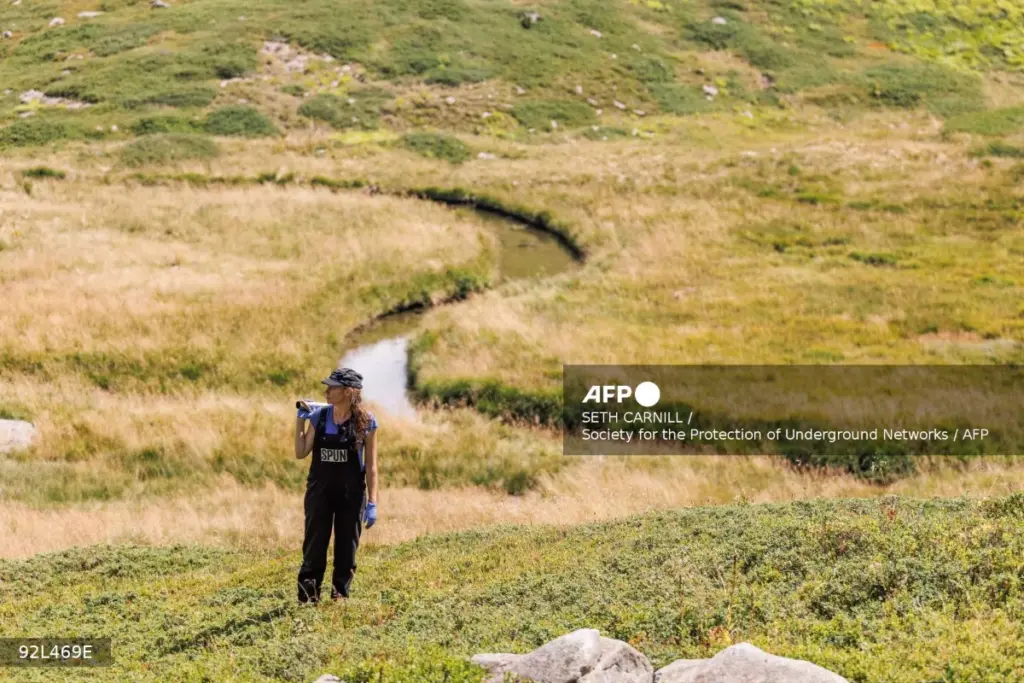
To address this, Kiers co-founded the Society for the Protection of Underground Networks (SPUN) to map and advocate for fungal biodiversity.
Coinciding with the $250,000 prize, SPUN is launching an “Underground Advocates” program to train scientists in legal tools for protection.
“Life as we know it exists because of fungi,” Kiers said.
She explained that a partnership with fungi enabled the algal ancestors of modern land plants to colonise terrestrial environments.
Her aim is to shift how people think about life on Earth, from the surface down.