
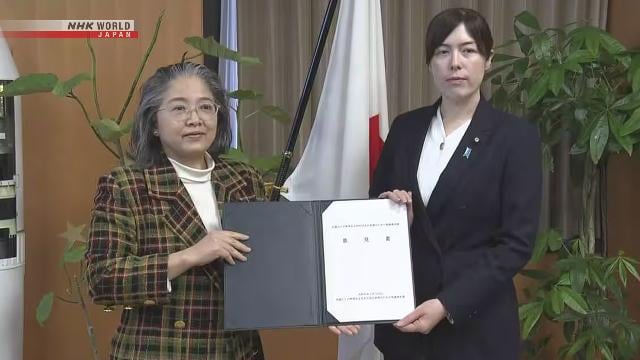
A Japanese government panel of experts has proposed setting up a program to help foreigners who will be or recently began living in Japan learn the country's language and rules of society.
…
The panel says any actions that deviate from social norms should be dealt with strictly and impartially, regardless of nationality.
https://www3.nhk.or.jp/nhkworld/en/news/20260114_14/
17 Comments
Not sure but if this mean forcing foreigners to obey all Japanese “social norms”, it probably is going the wrong way. Diversity is needed to teach Japanese about social norms in other countries because Japan is heavily dependent of other countries. For more Japanese to go overseas and reach out, learning from foreigners here is probably a good and free education.
I’ll just link to another post I made at the start of this year.
https://www.reddit.com/r/japanlife/s/eREakBxKkn
Yeah, fat chance I’m going to follow all “social norms”. What are they gonna do, send me out of the country because I tried to piss off my boss during New Year’s?
How does this work? Are they going to send the social norms enforcement people to your house?
In theory, it seems they’re going to implement sophisticated education centers with experts in languages and cultural instruction, but the reality is that it will be a few half-hour classes in the city hall taught by old people and volunteers who don’t know English.
This is good.
I really would like to move to Japan someday.
Which social norms, I wonder? What will be the punishment for not following them? How are we defining “strictly and impartially” here? It’s a social norm to keep your bag in front of you when on the train. Will the Japanese person to my right on the Yamanote carrying his backpack on his back be subject to the same strict and impartial punishment? Then there’s something as simple as where people stand on escalators in Osaka versus Tokyo. Will I need to be sure I’m following the social norm in each area lest I be reported? It’s a social norm to not speak on my phone on the train. What about the older Japanese woman who calls her grandson to see if she’s approaching the right station?
Are my existence and my labor really so much of a nuisance that I need be held to a higher standard or face consequences for not complying with norms that are not law?
This is a good thing for both sides yet the usual twisted Redditors will find a way to bash Onoda-san.
As long as you can say unn, and sou desu ne. Isn’t that what we always do ?
They gonna give us bowing classes
> any actions that deviate from social norms sounds be dealt with strictly and impartially
What the fuck does that mean? If I wear spaghetti straps or sunglasses or get a tan I’m going to get sent to a reeducation camp or something?
This is the concerning line:
> The panel says any actions that deviate from social norms should be dealt with strictly and impartially, regardless of nationality.
What does that mean? It’s easy to speculate and let your mind wonder to some Kafkaesque or Orwellian dystopia, but the article completely lacks useful information.
Whenever I see think tanks and other similar orgs getting all excited about this shit, I just think: “great, they are gonna to find a way to squeeze foreigners for money and claim it’s for our own benefit because we need civilizing”.
Great. Start with Japanese oyajis here who think rules don’t apply to them
Calling this an education issue assumes repeated behavior is confusion. That’s generous. It mostly signals that enforcement and clarity are off the table. When behavior doesn’t change after being corrected, the issue isn’t education. It’s that no one wants to deal with the actual friction. This isn’t about foreigners learning, it’s about the government being seen doing something while changing nothing.
Regardless of Nationality isn’t a wholesome blanket statement.
It welcomes espionage and terrorism.
North Korea and China would be reasonable exceptions.
The problem is: who is going to persuade these people to attend the classes? If you expect a foreigner who has already worked hard in a factory or on a farm to sit through a Japanese etiquette class, you need to give them a good reason. That reason certainly can’t be, ‘If you don’t go, we’ll arrest you.’
Then there’s the even more important question: who is going to pay the teachers?
> regardless of nationalities
Will they start teaching Japanese people proper 電車マナー?
Will they start teaching Japanese people how not to smoke in public ?
And not calling on their 携帯 in the gym?
And don’t be a 泥酔 public nuisance in the train?
If im forced in this kind of class ima going troll as hard as possible without being kicked out. As I have PR maybe they will give me more social credits to burn. /s
Im think bringing blown up photos of trash in the mountains, People passed out on the street (mochiron, with their face mosaiced), and a picture of any other rude thing that usually happens in the real Japan and is completely ignored in their heads.