
Share
 AirFence7: Sensofusion’s state-of-the-art passive drone detection system used by military and law enforcement
As we approach the fourth anniversary of the full-scale invasion of Ukraine on 24th February, 2026, Chris Price talks to Sensofusion’s Mikko Hyppönen about how drone warfare is evolving…
In the historic “Musta Hevonen” (Black Horse) dining room of Helsinki’s Sea Horse restaurant, a venue that has hosted artists and thinkers since 1933, Mikko Hyppönen, Chief Research Officer of Sensofusion, details the technical and geopolitical realities of a new era of warfare.
Hyppönen, a globally recognized authority on cybersecurity, has shifted much of his focus of late towards drones – in particular, how these devices, which were once seen as important tools for civilian security, have become a vital tool of warfare.
It’s a transition that’s perhaps not all that surprising for a nation sharing a 1,340-kilometre border with Russia.
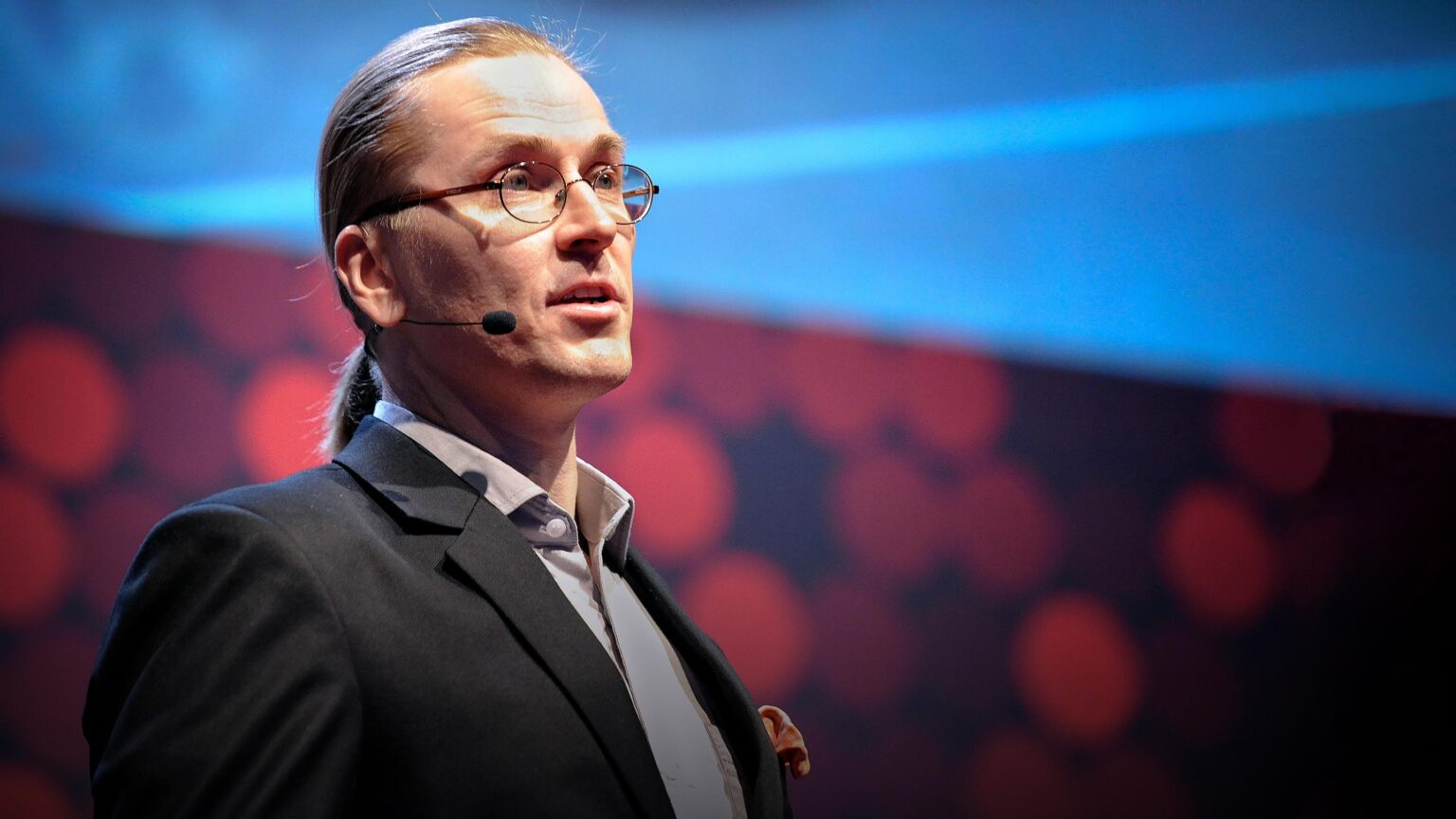
 Mikko Hyppönen gives a TEDx talk about the surveillance state in 2013. https://www.ted.com/talks/mikko_hypponen_how_the_nsa_betrayed_the_world_s_trust_time_to_act
Drone warfare
According to Hyppönen, the conflict in Ukraine has undergone a radical transformation in the last four years. During the initial phase of the invasion, the combat largely mirrored the trench warfare of World War I, characterized by infantry and heavy armour. However, the battlefield rapidly evolved into what is now defined as a “drone war.”
“Today in Ukraine, drones kill more people than all the other weapons combined,” Hyppönen states during his talk in Helsinki. “Rifles, grenades and artillery combined have killed fewer people than drones.”
The escalation began with consumer-grade quadcopters adapted to drop small munitions, but it has since developed into a sophisticated hierarchy of systems. These include long-range reconnaissance wings that provide constant surveillance as well as high-speed “kamikaze” or FPV (First Person View) drones used for precision strikes.
Hyppönen believes this change is permanent: “This is the new reality of warfare. It’s no longer about who has the most tanks, but who can control the lower airspace.”
From prisons to battlegrounds
Sensofusion’s entry into the defence sector was not the company’s original intent. Initially, the firm focused on protecting civilian infrastructure, such as parliament buildings and airports, and preventing the smuggling of contraband into prisons. The pivot to active combat was driven by the immediate needs of the Ukrainian military at the onset of the full-scale invasion in February 2022.
Hyppönen recounts how the company’s founder, Tuomas Rasila, received an urgent inquiry from Ukraine regarding whether their technology could withstand a live battlefield environment. “Tuomas answered that we have no idea, but we’ll come over and we’ll try,” Hyppönen recalls. Within days, the founders packed a van with their drone defence equipment and drove directly into the conflict zone.
“They left two million euros worth of gear in Ukraine on their first trip, and we’ve been operating in Ukraine ever since,” he adds. Currently, more than 100 Sensofusion systems are active in Ukraine, with deployments saving lives by providing early warnings of incoming aerial threats that would otherwise go undetected.
 A pocket-sized anti-drone device, Airfence Mini is the most portable Airfence solution
Airfence: The architecture of passive defence
The core of Sensofusion’s defensive capability is its flagship product, Airfence. While popular media often focuses on “hard kill” solutions such as lasers or kinetic interceptors, Hyppönen argued that the most effective defence begins with intelligence and signal analysis.
Airfence is a portable, 10-kilogram unit designed to meet rigorous military standards as well as IP67 certification for water and dust resistance. Unlike traditional radar systems, which are “active” and emit radio waves to detect objects, Airfence is a “passive” system. That’s because, in a modern conflict, broadcasting a signal is hazardous as it allows enemy electronic intelligence (ELINT) units to locate and target the defender.
“Airfence tells you where the drones are without telling the enemy where you are,” Hyppönen explains. “You get a map that tells you there’s a drone at a specific height, going in a specific direction, and it identifies the serial number of the drone.”
Beyond simple detection, the system exploits the communication link between the drone and its operator. “In many cases, it will also tell you where the pilot is. Here’s the drone, here’s the pilot – this is critical information in a battlefield,” Hyppönen adds. By identifying the operator’s location, the system allows for a counter-response that addresses the source of the threat, rather than just the expendable drone itself.
Autonomous and fibre-optic drones
Inevitably, the technical battle is a continuous cycle of measures and countermeasures. Hyppönen highlights two emerging challenges that are complicating drone defence: autonomy and physical tethers.
As electronic warfare (EW) becomes more prevalent, drone operators are moving toward “autonomous” flight, where the drone no longer requires a constant radio link to its pilot. Once a target is identified, the drone’s onboard AI takes over the final approach, making traditional jamming ineffective.
Furthermore, some specialized drones now use fibre-optic cables to communicate, completely bypassing the radio frequency (RF) spectrum.
“When there is no radio link, there is nothing to jam,” Hyppönen explains. This evolution necessitates advanced sensor fusion—combining RF detection with optical and acoustic sensors—to ensure comprehensive coverage. Sensofusion is currently developing its software to address these “dark” drones that do not broadcast traditional signatures.
Finland’s ‘deep tech’ ecosystem
The development of Airfence is a product of Finland’s unique technological landscape. As one of the most digitized countries in Europe, the Nordic country has created an ecosystem characterized by high R&D investment and a “culture of trust.” This environment allows for “deep tech”to move quickly from the laboratory to the field.
Hyppönen points out that Finland’s proximity to Russia necessitates a proactive approach to security. “Finland lives next to a very large and a very unpredictable country. Right now, we are two hours away from the Russian border,” he says. Certainly this geographic reality has focused Finnish innovation on resilience and dual-use technologies that serve both civilian and military purposes.
The Finnish government, through agencies such as Business Finland, supports this innovation by fostering collaboration between private companies and research institutions. This synergy ensures that Finnish companies can develop high-end signal processing and AI capabilities that are world-leading.
Civilian applications
While the current focus is understandably heavily weighted toward defence, Hyppönen explains that the drone threat is also a civilian concern. Sensofusion continues to serve customers in the civilian sector, protecting airports and critical infrastructure from disruption. He cites instances where consumer drones have shut down major airport traffic, causing massive economic loss.
“98% of our customers today are military, but the technology remains essential for civilian safety,” Hyppönen adds. Most commercial drones from major manufacturers such as DJI have “no-fly zone” warnings, but these do not physically prevent a drone from entering restricted airspace if the operator chooses to bypass them.
Passive detection systems such as Airfence allow authorities to monitor these incursions without interfering with legitimate communication networks, such as emergency services or airport Wi-Fi.
Conclusion: Engineering a secure future
The briefing at Sea Horse underscored that the era of drone warfare is not a transient phase but a permanent shift in global security. For Sensofusion and Mikko Hyppönen, the objective is to stay ahead of the rapid technological curve.
By leveraging Finnish expertise in software-defined radio and AI, Sensofusion is providing the tools necessary to neutralize a pervasive and lethal threat. As Hyppönen concludes, the mission is much more than just hardware; it is about providing the situational awareness required to protect lives in an increasingly complex aerial environment.
In a world where drones now dominate the front line, the silent, watching eye of Airfence serves as a vital shield for both Finland and its international partners.
Chris Price was talking to Sensofusion’s Mikko Hyppönen as part of an AI Media tour of Finland, which he attended as a guest of Business Finland.
Related Posts
Discover more from Tech Digest
Subscribe to get the latest posts sent to your email.