
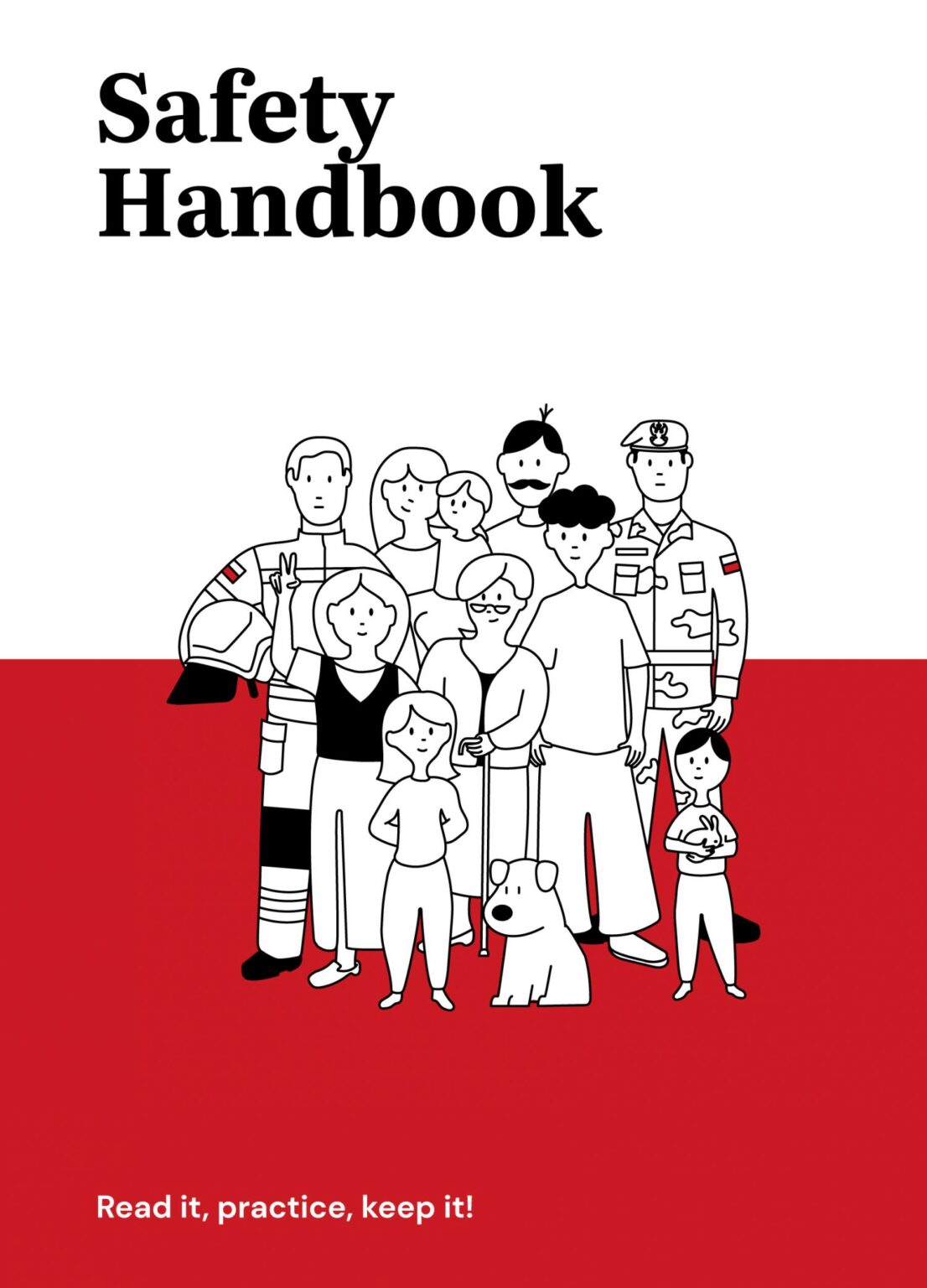
The introduction to the guide, which is published by the defense and interior ministries and the Government Security Centre (RCB) states: “The threats Poland faces have substantially grown in the last few years. Disinformation, cyberattacks, hybrid threats, hostile disruption and sabotage are used to destabilize the country.”
The booklet includes sections on fire, flood and crowd safety as well as information on what to do in the event of air attacks, terrorist threats, and use of chemical, biological and nuclear weapons.
The handbook was originally published online in August 2025. Last month, the government began distributing 17 million hard copies with every household in Poland expected to receive one by Jan. 31, 2026.
The handbook states: “The war beyond our eastern border impacts our sense of safety as well,” in reference to Russia’s war in Ukraine. Last September, around 20 Russian drones violated Polish airspace after crossing its eastern borders.
The handbook “aims to prepare citizens for various threats – from cyberattacks and disinformation to natural disasters, military situations and infrastructural crises.”
It includes the “ten commandments” of safety, including: preparing enough home supplies to last for three days as well as a first-aid kit and identity cards for children and senior citizens; checking where the nearest shelter is; and assembling an evacuation backpack.
The handbook was originally published online in August last year. Then, last month, the government began distributing 17 million hard copies. Around 4 million have already been sent out, and every household in Poland will receive one by 31 January, reports news website Portal Samorządowy.
“I’d ask people to check their letterboxes and look at the most important information,” said deputy defence minister Cezary Tomczyk, speaking to Polsat News. “Everyone should read it, talk to their children, to their family.”
“We want to prepare…Poles so that we are all wiser before the event,” added deputy interior minister Magdalena Roguska, quoted by Portal Samorządowy.
However, Marcin Samsel, a public security expert, told the Dziennik Gazeta Prawna daily that the handbook is not without flaws. “People are told what to do, but without any attempt to explain why they should act in this way,” he said.
Samsel also pointed to conflicting information. For example, on page 13 of the guide, people are told to keep their car fuelled for a potential evacuation. But, three sentences later, they are advised to limit the use of a car during a crisis in order to keep roads clear for the emergency services and military.
Since Russia’s full-scale invasion of Ukraine in 2022, Poland has rapidly sought to improve its military and civil readiness for emergency situations.
Two years ago, it adopted a new law on civil defence and protection of the population – inspired by the civil protection strategies of Nordic countries – that introduced mandatory training for officials and new rules for managing protective infrastructure such as shelters.
Last month, the interior ministry launched a mobile application and website that allows people to find their nearest shelter in times of war or other emergencies.
The government also faced criticism in 2024 over its response to deadly floods that hit parts of the country, with the opposition calling for Prime Minister Donald Tusk to be held criminally responsible for his alleged failings.